Source: Wikimedia Commons
Sarracenia
BeginnerSarracenia spp.
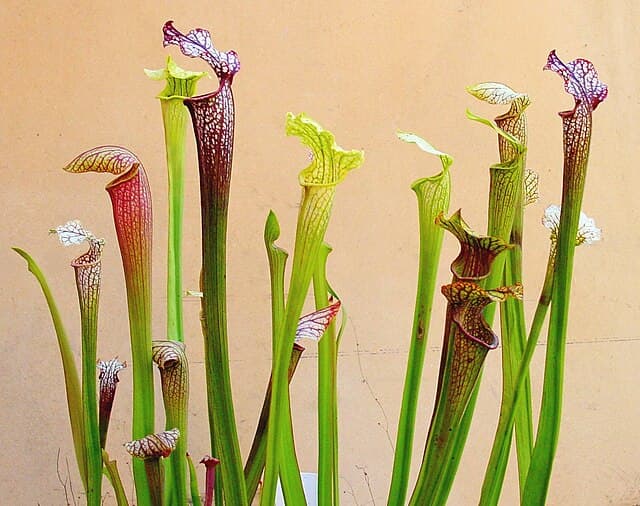
North American tube-shaped pitcher plant with beautifully patterned and colored upright traps. Cold-hardy enough for outdoor cultivation in Japan. Many hybrids exist for collectors.
Difficulty
Beginner
Temperature
-10〜35℃
Lifespan
20+ years
Size
15-100cm (varies by species)
Humidity
50〜80%
Diet
Photosynthesis + insects captured in tubular pitchers
About
Sarracenia, commonly called North American pitcher plants or trumpet pitchers, is a genus of 8 to 11 species native to the wetlands of eastern North America, from the Gulf Coast to the subarctic bogs of Canada. The plants form upright, tubular pitchers with nectar-secreting rims that attract insects; downward-pointing hairs inside the tube prevent escape, and a pool of digestive fluid at the base dissolves and absorbs prey. Striking patterns of red veining and translucent windows on the pitcher and lid make many species highly ornamental, and their spring flowers are also attractive. Cultivation requires acidic, nutrient-poor media such as sphagnum or a peat-perlite mix, with tray watering using only pure or rainwater. Full sun is essential for good coloration, and a cold winter dormancy is critical for the plants' long-term health.
Source: Wikipedia (CC BY-SA 4.0)
Basic Info
Origin
Eastern North America, from the Gulf Coast to subarctic bogs of Canada
Lifespan
20+ years
Size
15-100cm (varies by species)
Temperature
-10〜35℃
Humidity
50〜80%
Diet
Photosynthesis + insects captured in tubular pitchers
Care Guide
Soil
Sphagnum or peat + perlite. No fertilizer
Watering
Tray watering to keep moist. Use distilled or rain water
Light
Full sun essential. Insufficient light causes pale, weak traps
Notes
Above-ground parts die back in winter but rhizome survives. Regrows in spring
Beginner-friendlyCold-hardyOutdoor OKTubular trap
Sarracenia FAQ
QHow difficult is it to keep Sarracenia?
A
Beginner. This is a beginner-friendly species. No special equipment or experience is required, and it can be kept successfully with basic care setup.
QWhat is the ideal temperature for Sarracenia?
A
The ideal temperature for Sarracenia is -10〜35℃. Recommended humidity is 50〜80%. Avoid sudden temperature changes and maintain a stable environment.
QWhat is the lifespan of Sarracenia?
A
Sarracenia Q&A
Find listings for this species