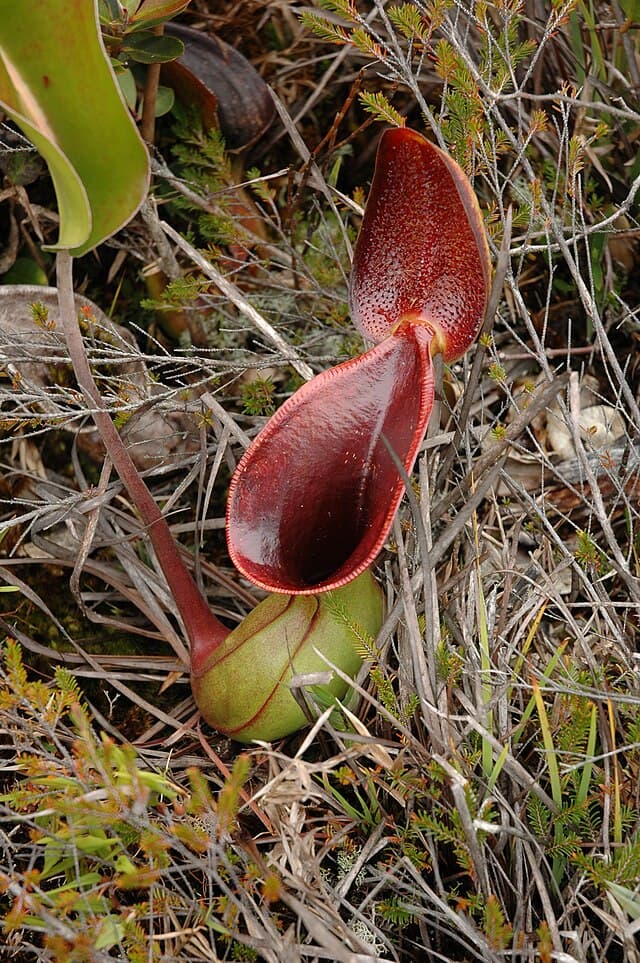
Source: Wikimedia Commons
Nepenthes Lowii
AdvancedNepenthes lowii
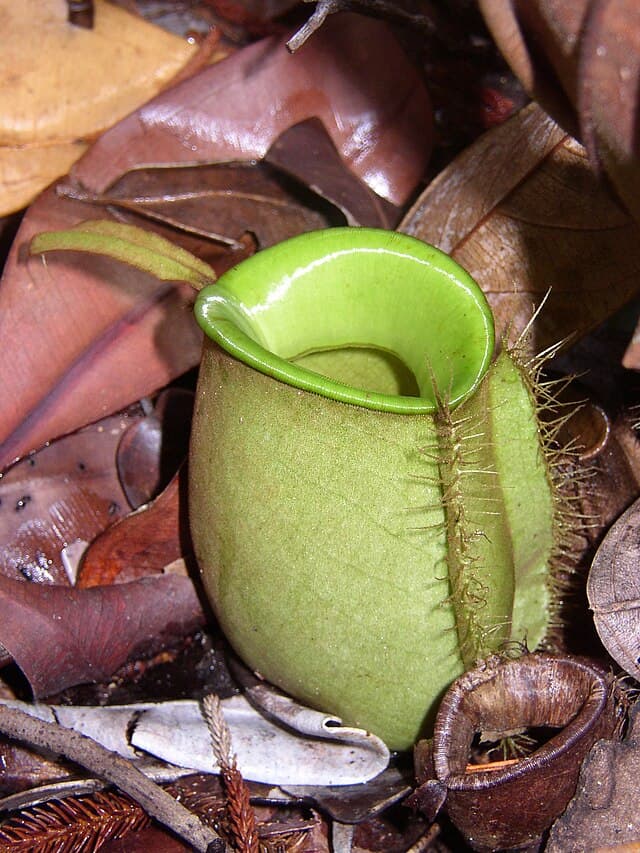
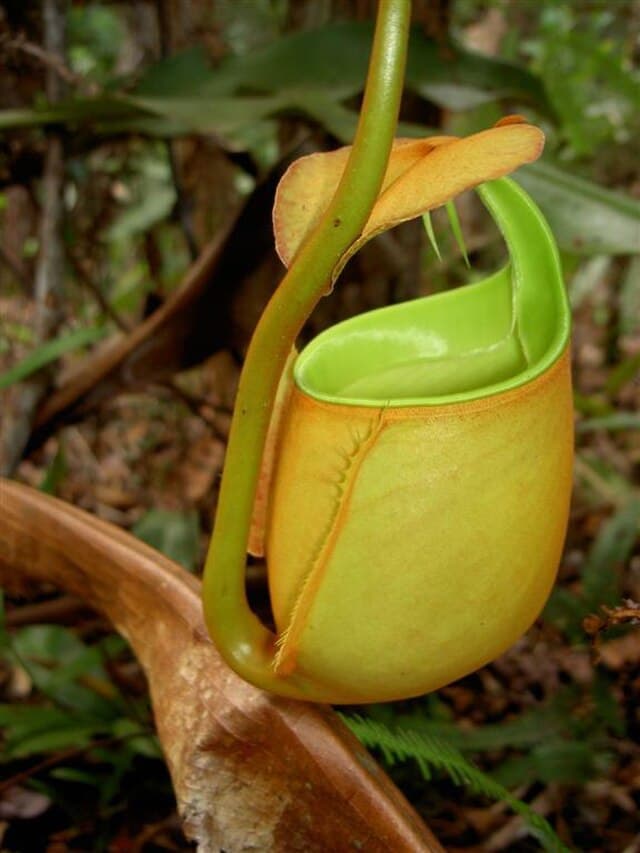
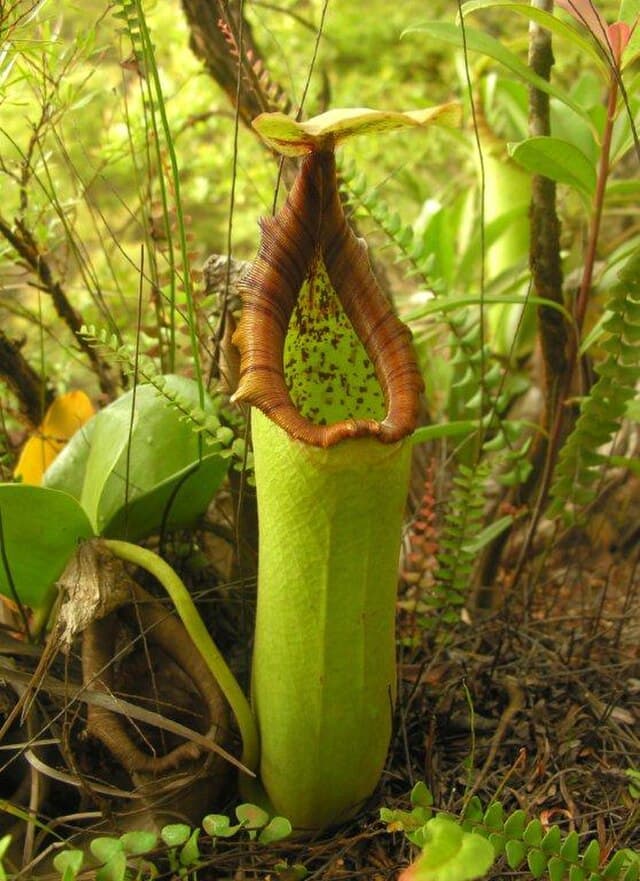
A Nepenthes with toilet-shaped pitchers that collect tree shrew droppings as nutrition.
Difficulty
Advanced
Temperature
10〜30℃
Lifespan
10+ years
Size
Vine 30-150cm
Humidity
60〜90%
Diet
Animal droppings, insects
About
Nepenthes lowii is a highland species native to Borneo, occurring at altitudes of approximately 1,600–2,600 m in montane mossy forests on Mount Kinabalu and several other peaks. The species is celebrated for its unusual mutualism with treeshrews (Tupaia spp.) and mountain tree rats: the underside of the pitcher lid secretes a nutritious exudate that attracts these mammals, which perch on the pitcher rim to feed and defecate directly into the pitcher fluid, providing a significant proportion of the plant's nitrogen intake. This relationship has driven the evolution of the species' characteristically wide-mouthed, stable pitcher shape. Cultivation requires highland temperature conditions (days 20–25°C, nights 10–15°C), sphagnum-based media with good drainage, and moderate to high humidity. It is considered one of the more rewarding highland Nepenthes for experienced growers.
Basic Info
Origin
Borneo (Mount Kinabalu and other peaks), montane mossy forests at approximately 1,600–2,600 m elevation
Lifespan
10+ years
Size
Vine 30-150cm
Temperature
10〜30℃
Humidity
60〜90%
Diet
Animal droppings, insects
Care Guide
Feature
Toilet-shaped pitcher
Diet
Tree shrew droppings
Temperature
12-25°C, highland
Culture
Difficult
CarnivorousNepenthesToiletTree Shrew
Nepenthes Lowii FAQ
QHow difficult is it to keep Nepenthes Lowii?
A
Advanced. This is an advanced-level species. It requires specialized equipment and advanced husbandry skills with precise environmental control.
QWhat is the ideal temperature for Nepenthes Lowii?
A
The ideal temperature for Nepenthes Lowii is 10〜30℃. Recommended humidity is 60〜90%. Avoid sudden temperature changes and maintain a stable environment.
QWhat is the lifespan of Nepenthes Lowii?
A
The average lifespan of Nepenthes Lowii is 10+ years. With proper care and nutrition, they can live a long and healthy life.
QHow large does Nepenthes Lowii get?
A
Nepenthes Lowii typically reaches Vine 30-150cm as an adult. Size may vary depending on care conditions and individual genetics.
QWhat should I feed Nepenthes Lowii?
A
Nepenthes Lowii feeds on: Animal droppings, insects. Aim for a balanced diet with appropriate feeding frequency.
QWhat is the typical price for Nepenthes Lowii?
A
The price of Nepenthes Lowii varies significantly depending on morph, size, and lineage. Check our market price page for the latest pricing information.
Nepenthes Lowii Q&A
Related Species
Find listings for this species
Browse Carnivorous Plant ListingsRelated Articles
Highland vs Lowland Nepenthes: Complete Temperature Management Guide
Highland vs lowland Nepenthes differences: temperature ranges, day-night drops, seasonal management, and beginner-friendly species recommendations.
Nepenthes Care — Techniques for Growing Larger Pitchers
Growing Nepenthes: basic care and advanced techniques for producing large, beautiful pitchers through humidity, temperature, and light management.
Highland Nepenthes Growing Guide — Cool Climate Management
Highland Nepenthes growing guide: characteristics, summer cooling strategies, and humidity/temperature control methods.
Growing Nepenthes Without a Greenhouse — Indoor Pitcher Formation
Growing Nepenthes indoors without a greenhouse: pitcher formation tips, humidity solutions, species selection, and winter care.