Source: Wikimedia Commons
Drosera Scorpioides
IntermediateDrosera scorpioides
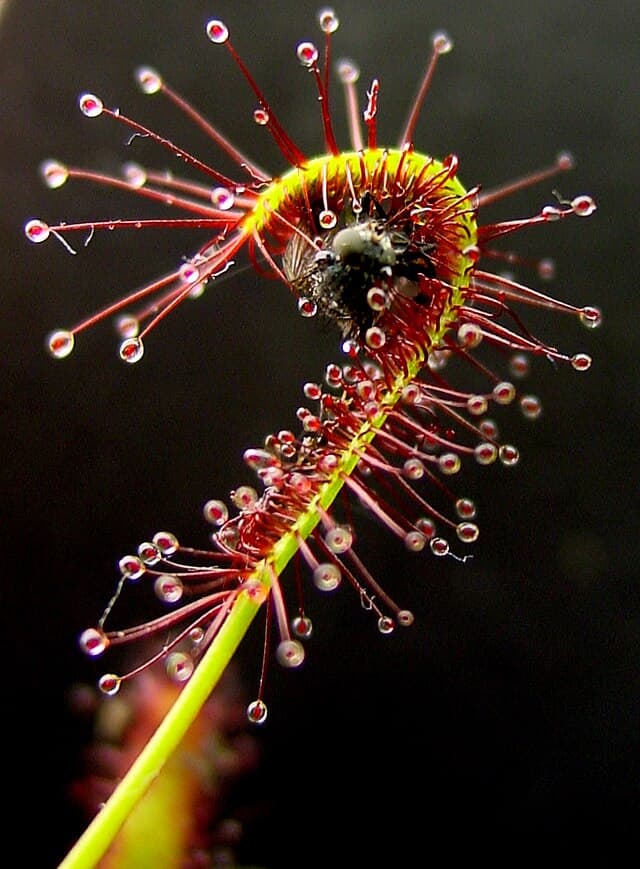
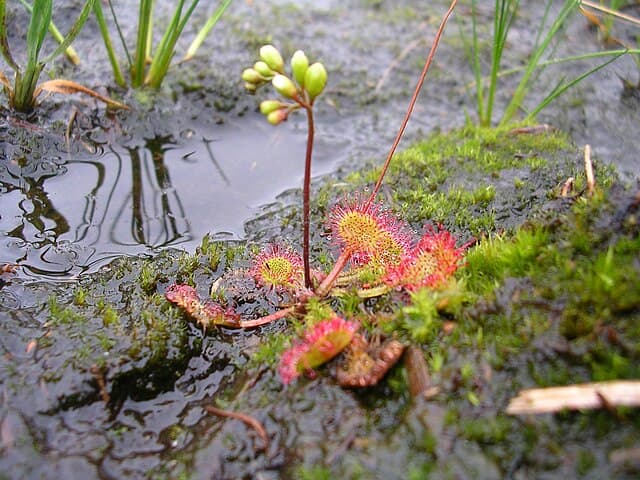
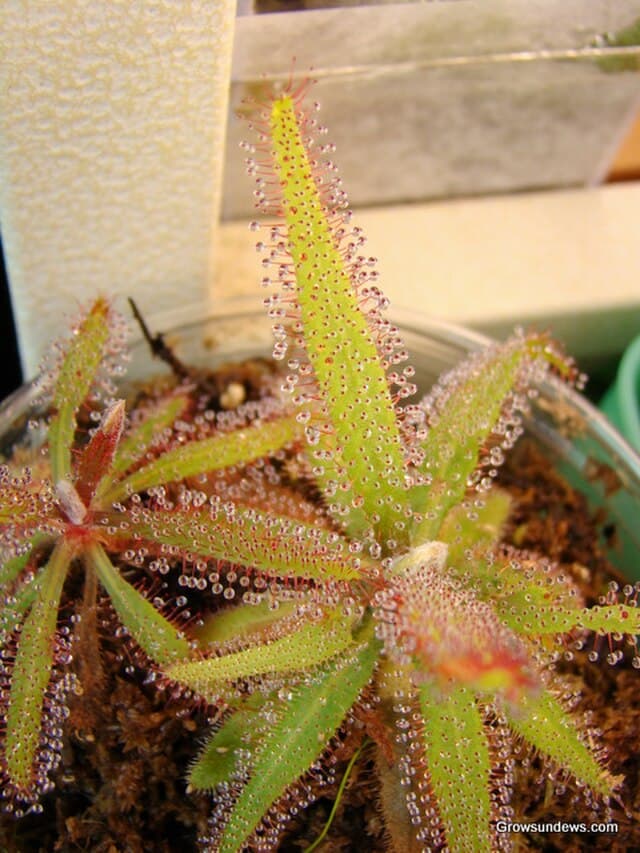
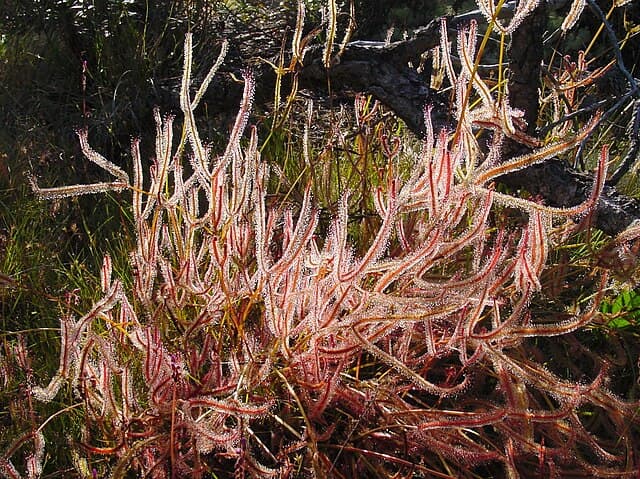
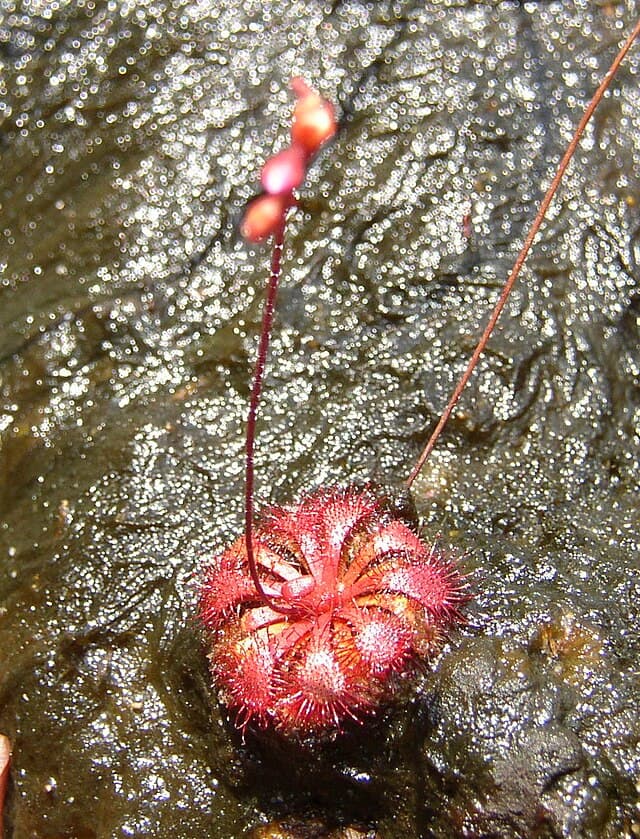
An Australian sundew propagating by gemmae with scorpion-tail-like flower stalks.
Difficulty
Intermediate
Temperature
10〜30℃
Lifespan
5+ years
Size
3-8cm
Humidity
60〜90%
Diet
Insects (auto-capture)
About
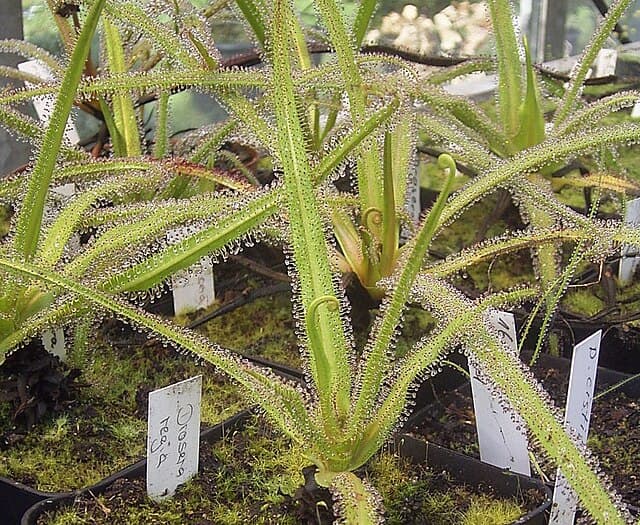
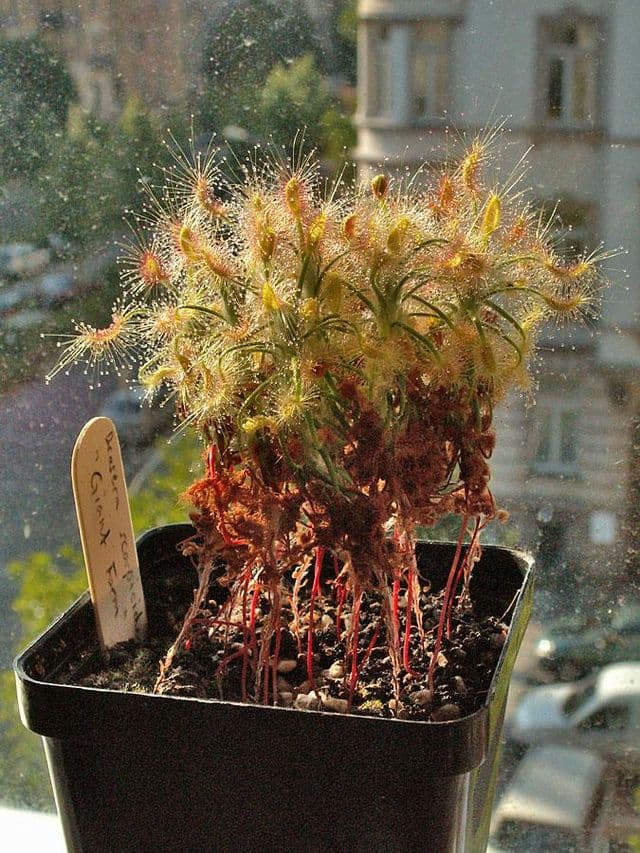
Drosera scorpioides is a tuberous sundew from the sandy wetlands of southwestern Western Australia. Its most distinctive feature is the production of abundant gemmae (vegetative propagules) at the base of the leaves during the winter growing season—each gemma, once dispersed, can germinate into a new plant, making propagation extremely easy. The coiled, scorpion-tail-like appearance of the flower stalk gives the species its name. The narrow, glistening leaves are ornamentally attractive. Cultivation requires nutrient-poor sphagnum or peat-perlite media, tray watering with pure or rainwater, strong direct light, and moderately cool temperatures (15–25°C); high summer heat is poorly tolerated and the plant typically rests during the hottest months. Its prolific gemma production and attractive form make it a favorite among sundew collectors.
Basic Info
Origin
Southwestern Western Australia, sandy coastal wetlands and heathlands
Lifespan
5+ years
Size
3-8cm
Temperature
10〜30℃
Humidity
60〜90%
Diet
Insects (auto-capture)
Care Guide
Propagation
Propagates by gemmae
Stalk
Scorpion-tail-like
Light
Full sun
Growing
Winter growing
CarnivorousSundewGemmaeScorpion
Drosera Scorpioides FAQ
QHow difficult is it to keep Drosera Scorpioides?
A
Intermediate. This is an intermediate-level species. Some prior experience and knowledge of environmental management are recommended.
QWhat is the ideal temperature for Drosera Scorpioides?
A
The ideal temperature for Drosera Scorpioides is 10〜30℃. Recommended humidity is 60〜90%. Avoid sudden temperature changes and maintain a stable environment.
QWhat is the lifespan of Drosera Scorpioides?
A
Drosera Scorpioides Q&A
Find listings for this species