Source: Wikimedia Commons
Drosera Binata
BeginnerDrosera binata
A sundew with uniquely forked leaves, large and impressive, very hardy.
Difficulty
Beginner
Temperature
10〜30℃
Lifespan
5+ years
Size
15-30cm
Humidity
60〜90%
Diet
Insects (auto-capture)
About
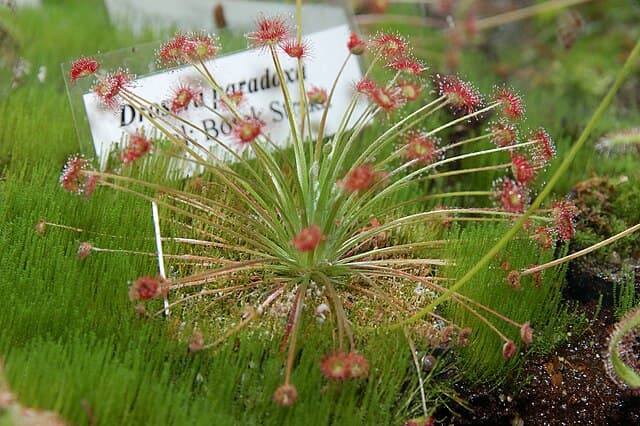
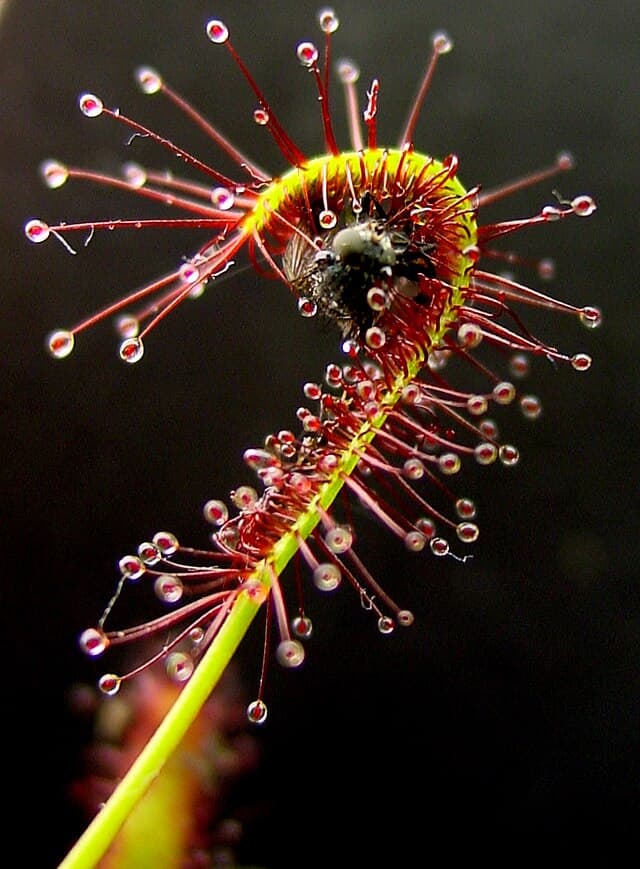
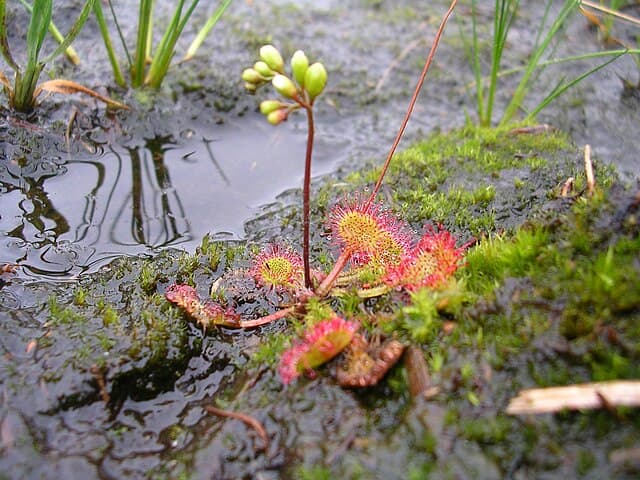
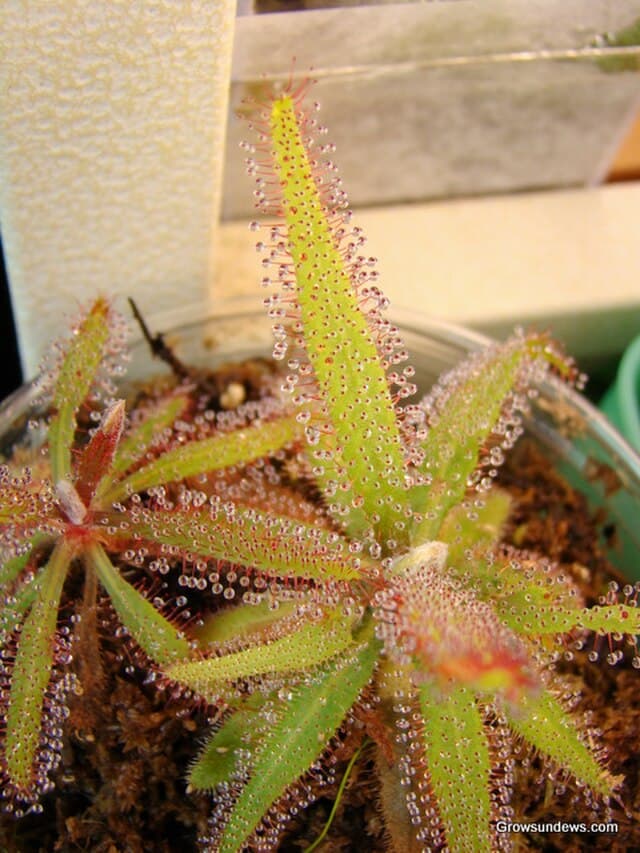
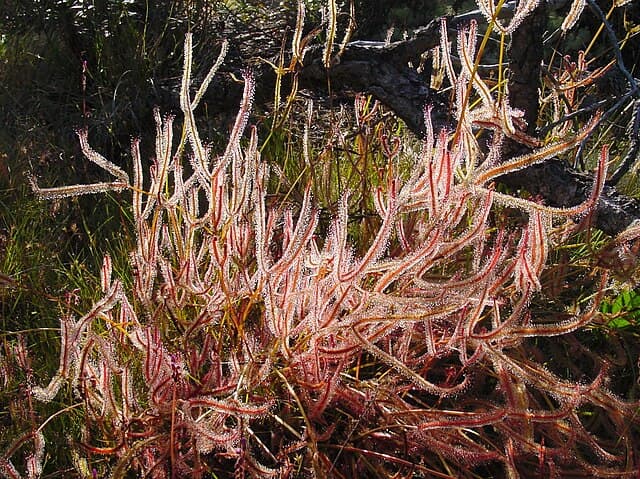
Drosera binata, the forked sundew, is native to southeastern Australia and New Zealand, inhabiting seeps, stream banks, and damp grasslands. It is immediately distinguished by its uniquely bifurcate (forked) leaves, which divide one, two, or more times depending on the form—a feature reflected in its Latin name meaning 'twinned.' The plant grows large by sundew standards, reaching 30 cm or more, with slender, glistening tentacle-covered segments that create a spectacular display when well-grown. It is one of the more robust and easily cultivated sundews, tolerating a wide range of conditions, growing readily in sphagnum or peat-perlite media with tray watering and full sun. The plant dies back to its rootstock in winter and regenerates vigorously in spring.
Basic Info
Origin
Southeastern Australia and New Zealand, seeps, stream margins, and damp grasslands
Lifespan
5+ years
Size
15-30cm
Temperature
10〜30℃
Humidity
60〜90%
Diet
Insects (auto-capture)
Care Guide
Leaves
Forked
Size
Large
Hardiness
Hardy
Light
Full sun
CarnivorousSundewForkedLarge
Drosera Binata FAQ
QHow difficult is it to keep Drosera Binata?
A
Beginner. This is a beginner-friendly species. No special equipment or experience is required, and it can be kept successfully with basic care setup.
QWhat is the ideal temperature for Drosera Binata?
A
The ideal temperature for Drosera Binata is 10〜30℃. Recommended humidity is 60〜90%. Avoid sudden temperature changes and maintain a stable environment.
QWhat is the lifespan of Drosera Binata?
A
Drosera Binata Q&A
Find listings for this species