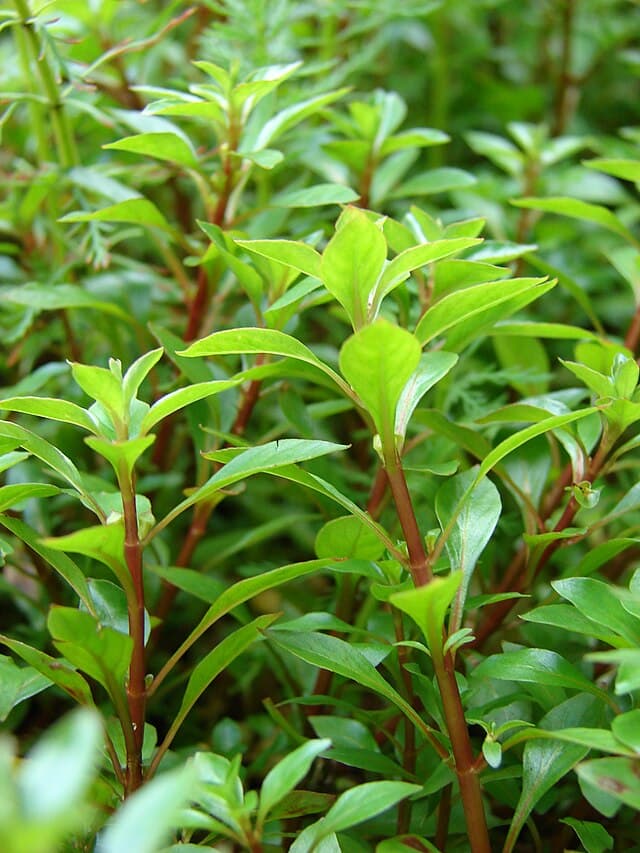
Source: Wikimedia Commons
Ludwigia Palustris
BeginnerLudwigia palustris
A hardy stem plant that turns red. Easy for beginners and perfect for adding color to aquariums.
Difficulty
Beginner
Temperature
20〜28℃
Lifespan
Perennial
Size
15-40cm
Diet
Root tabs
About
Ludwigia palustris is a stem plant in the family Onagraceae, widely naturalized across Europe, North Africa, and North America where it inhabits ditches, marshes, and riparian margins. Its oval leaves transition from green to red depending on light intensity, and unlike many red aquatic plants it achieves some red coloration even without CO2 injection, making it one of the most accessible red species for beginners. Under high illumination with CO2 supplementation the coloration becomes markedly more vivid. Growth rate is relatively fast; dense backgrounds are achieved by replanting trimmed stems. Broad tolerance of pH and hardness reflects its cosmopolitan nature — in Europe it has naturalized so readily in waterways that its sheer vigor is legendary, a quality that translates directly to reliability in the aquarium.
Basic Info
Origin
Europe, North Africa, and North America
Lifespan
Perennial
Size
15-40cm
Temperature
20〜28℃
Diet
Root tabs
Care Guide
Notes
CO2なしでも赤くなるが添加で更に鮮やか
Lighting
強光で赤みが増す
Grooming
トリミングに強く脇芽を出す
Housing
ソイルでの育成が最も容易
Notes
水上葉でも水中葉でも育つ
LudwigiaRed typeHardyBeginner-friendly
Ludwigia Palustris FAQ
QHow difficult is it to keep Ludwigia Palustris?
A
Beginner. This is a beginner-friendly species. No special equipment or experience is required, and it can be kept successfully with basic care setup.
QWhat is the ideal temperature for Ludwigia Palustris?
A
The ideal temperature for Ludwigia Palustris is 20〜28℃. Avoid sudden temperature changes and maintain a stable environment.
QWhat is the lifespan of Ludwigia Palustris?
A
The average lifespan of Ludwigia Palustris is Perennial. With proper care and nutrition, they can live a long and healthy life.
QHow large does Ludwigia Palustris get?
A
Ludwigia Palustris typically reaches 15-40cm as an adult. Size may vary depending on care conditions and individual genetics.
QWhat should I feed Ludwigia Palustris?
A
Ludwigia Palustris feeds on: Root tabs. Aim for a balanced diet with appropriate feeding frequency.
QWhat is the typical price for Ludwigia Palustris?
A
The price of Ludwigia Palustris varies significantly depending on morph, size, and lineage. Check our market price page for the latest pricing information.
Related Species
Find listings for this species
Browse Aquatic Plant ListingsRelated Articles
Complete Guide to Aquatic Plant Pearling
Learn the science of aquatic plant pearling: how light, CO2, and fertilizer balance produce oxygen bubbles, and how to maximize this beautiful phenomenon.
Complete Guide to Quarantining New Aquatic Plants
How to quarantine newly purchased aquatic plants: remove snail eggs, wash off residual pesticides, prevent algae, and keep shrimp tanks safe.
Complete Beginner's Guide to Aquatic Plants
Everything beginners need to start growing aquatic plants: equipment, planting, trimming, and recommended easy-care species.
Aquatic Plant Encyclopedia — Popular Species & Care Guide
An encyclopedia of popular aquatic plants with growth difficulty, CO2 requirements, and layout examples for each.