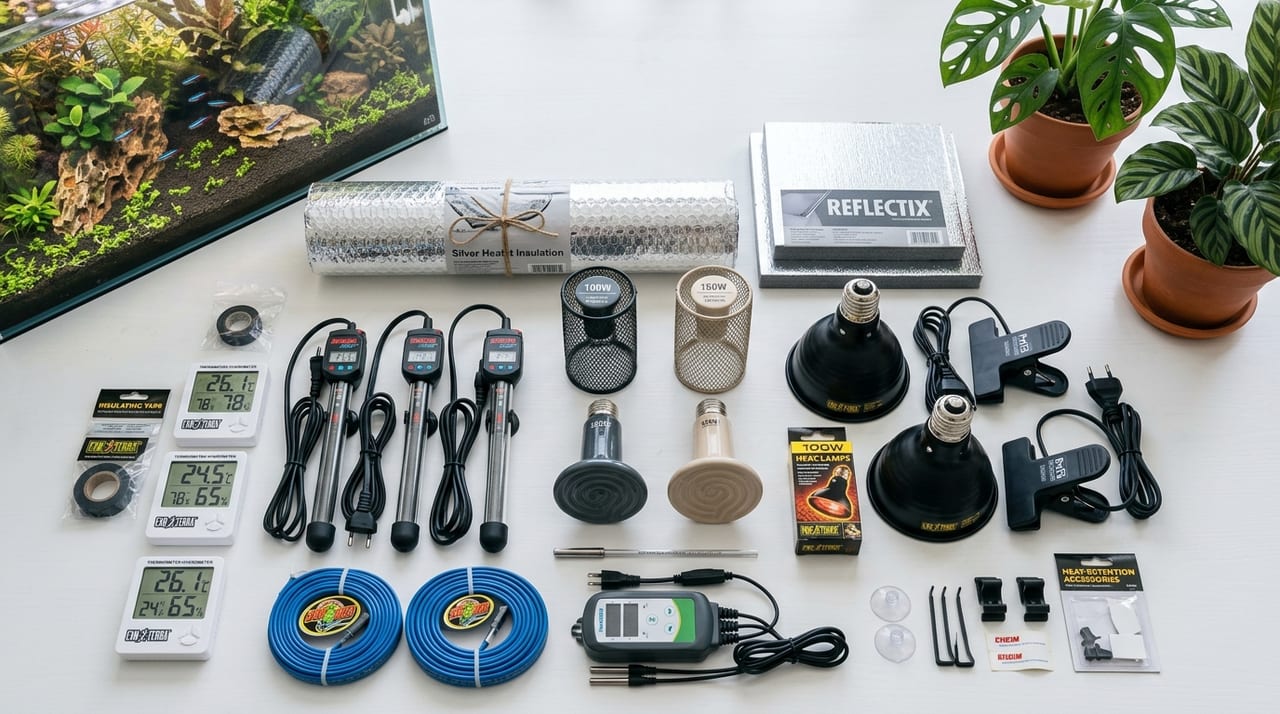
Winter warmth essentials: heater types, insulation materials, condensation prevention, and cold protection for plants.
要點總結
Winter warmth essentials: heater types, insulation materials, condensation prevention, and cold protection for plants.
Winter cold poses life-threatening risks
Choosing the right heater for your environment is the foundation of winter temperature management.
Aquarium Heaters - Auto heater: Fixed temperature (usually 26°C). Convenient but no fine adjustment - Thermostat-equipped heater: Adjustable to any temperature. Enables species-specific or breeding temperature management - Sizing guide: Approximately 1--2 watts per liter (150--200W for a 60 cm tank) - Note: Heaters are consumables; replace every 1--2 years. Failure causes sudden temperature changes, so keep spares
Reptile/Small Animal Heaters - Under-tank heater (panel heater): Warms from below. Promotes digestion by warming the belly - Heat lamp (infrared): Gently warms entire cage. Infrared type works at night too - Overhead ceramic heater (Dantotsu): Panel type mounted on cage ceiling. Warms via radiant heat from above - Ceramic heat emitter: Produces heat without light. Suitable for nocturnal species
Thermostat Importance - Heaters alone risk overheating -- always pair with a thermostat - Digital thermostats offer precision and easy temperature monitoring - Position temperature probes where animals can't touch them directly
Combining insulation with heaters maintains temperature efficiently.
Tank Insulation - Apply insulation boards (styrofoam or reflective thermal sheets) to back and sides - Place insulation under the tank stand to prevent cold from below - Keep tank lids secure to reduce surface heat loss - Even cardboard surrounding the tank provides effective simple insulation
Cage Insulation - Cover cage perimeter with vinyl sheets or thermal covers (maintain ventilation) - Don't let room temperature drop too low either - For multiple cages, group on metal racks and enclose collectively for efficiency - Install temp/humidity gauges and check regularly
Winter temperature differentials between indoors and outdoors cause condensation, leading to mold and electrical hazards.
Condensation-Prone Situations - Window areas where cold outdoor air meets warm indoor air - Temperature differences between tank/cage lids and ambient air - Rooms using humidifiers
Prevention Methods - Position tanks and cages away from windows - Ventilate rooms periodically to prevent excessive humidity - Keep condensation away from electrical equipment (lights, heaters, pumps) - Outlet area condensation poses leakage and fire risks -- pay special attention
Winter cold significantly stresses tropical plants.
Indoor Management Tips - Window areas cool at night; move plants away from windows in the evening - Avoid spots with direct heater airflow (causes drying and temperature fluctuation) - Ensure nighttime minimums stay above 10°C when heating is off
Watering Precautions - Reduce frequency as winter growth slows - Water during warm morning hours - Don't use cold tap water directly; let it reach room temperature first - Always empty saucer water to prevent root rot
Outdoor Plant Protection - Bring cold-sensitive plants indoors - If immovable, cover with frost cloth or horticultural fleece - Mulch root zones with bark chips or compost to prevent freezing - Elevate potted plants off ground on stands to prevent bottom chill
BreederDirect features many breeders experienced with keeping live animals. If you're uncertain about winter temperature management or heating measures, consult breeders before purchasing. Get species-specific practical advice from experienced professionals.