豹紋守宮的繁殖完全指南|冷卻・交配・孵化・幼體飼養方法
想要嘗試豹紋守宮繁殖的飼養者必讀的完全指南。說明冷卻繁殖準備、公母辨別方法、確認交配、設置產卵盒、卵孵化管理、幼體飼養方法。開始豹紋守宮繁殖前的準備 豹紋守宮(豹紋壁虎)在爬蟲類中相對繁殖難度較低,只要環境適當,室內繁殖完全可行。但即使「相對容易」,準備不足也會導致孵化率下降或母體狀況惡化。繁殖前必須確認以下幾點。

要點總結
想要嘗試豹紋守宮繁殖的飼養者必讀的完全指南。說明冷卻繁殖準備、公母辨別方法、確認交配、設置產卵盒、卵孵化管理、幼體飼養方法。開始豹紋守宮繁殖前的準備 豹紋守宮(豹紋壁虎)在爬蟲類中相對繁殖難度較低,只要環境適當,室內繁殖完全可行。但即使「相對容易」,準備不足也會導致孵化率下降或母體狀況惡化。繁殖前必須確認以下幾點。
相關品種
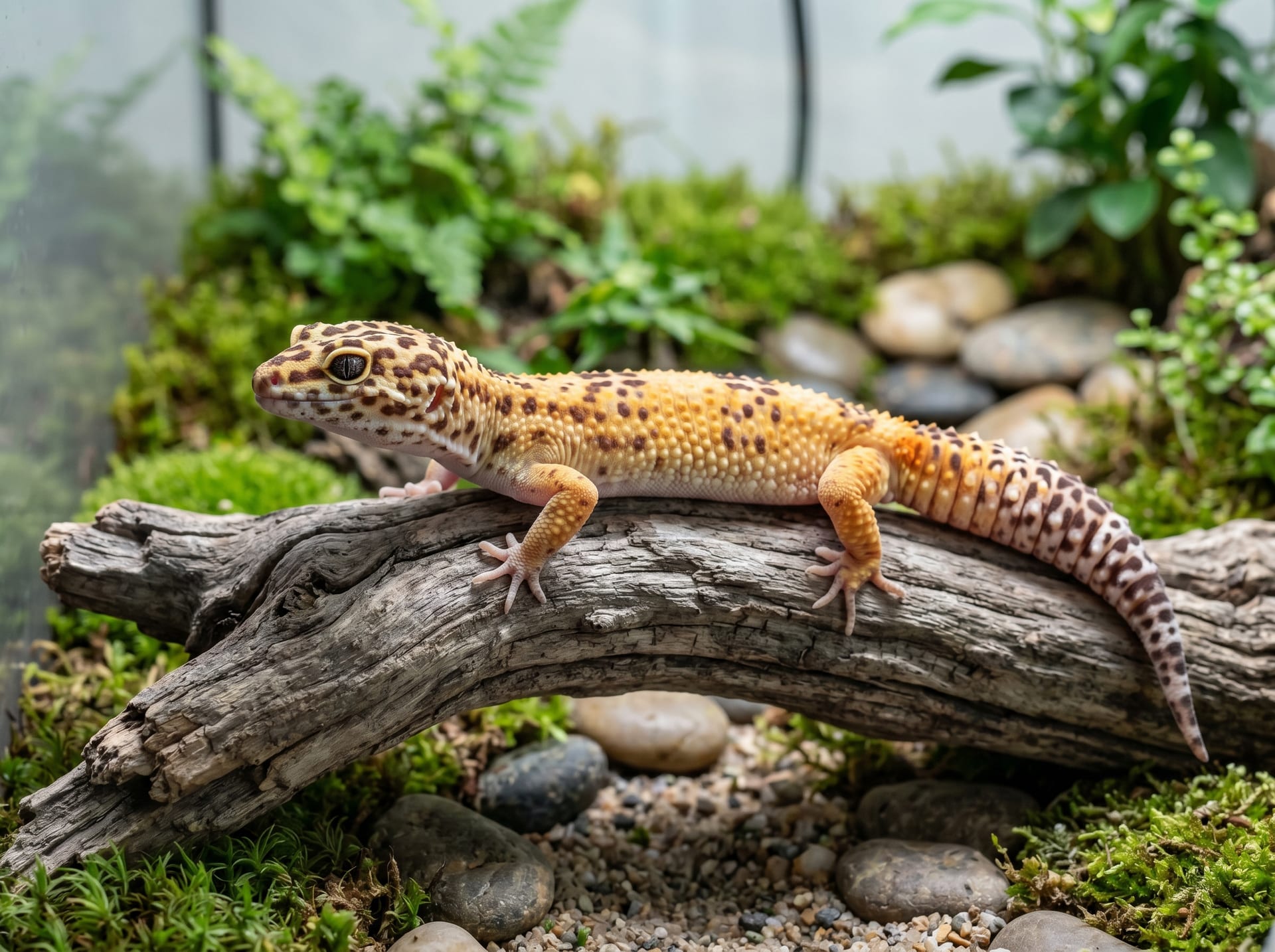
開始豹紋守宮繁殖前的準備
豹紋守宮(豹紋壁虎)在爬蟲類中相對繁殖難度較低,只要環境適當,室內繁殖完全可行。但即使「相對容易」,準備不足也會導致孵化率下降或母體狀況惡化。繁殖前必須確認以下幾點。
- 母體需滿足:18個月以上齡、體重60克以上(建議70克以上)
- 公體需滿足:12個月以上齡、尾部兩側能確認到半陰莖囊
- 兩隻個體在過去3個月能正常進食和排泄
- 沒有寄生蟲、呼吸道疾病、隱孢子蟲感染
特別地,母體體重管理至關重要。產卵會大量消耗母體的鈣質和體力。繁殖季節前應每週至少進行2次鈣質+D3撲粉,充分提高骨密度,這樣才能確保繁殖過程安全無虞。
冷卻(模擬冬眠)啟動繁殖開關
野生豹紋守宮棲息在中亞至南亞的半乾旱地帶,冬季氣溫降至10°C以下。這種季節變化促進激素分泌,誘發翌春的繁殖行為。飼養環境中重現這種「冷卻」過程,能大幅提高繁殖成功率。
冷卻步驟:
- 10月至11月期間用2週時間逐漸降低溫度(避免急劇溫度變化)
- 保持冷端18〜20°C、熱端24〜25°C共2〜3個月
- 降低進食頻率至約每週1次,12月下旬至1月達到近似禁食狀態
- 必須持續提供飲水(防止脫水)
- 2月中旬至3月用2週時間恢復至正常溫度(28〜32°C),重新開始進食
冷卻期間每週測量一次體重。若體重減少超過初始體重的15%,應立即停止並恢復正常管理。特別是母體,營養狀況與產卵數量和孵化率息息相關,過度冷卻會造成問題。
雖然不進行冷卻也能繁殖,但繁殖成功率和產卵數量都會下降。初次嘗試繁殖,強烈建議實施冷卻過程。
交配與配對
冷卻結束後,恢復正常溫度2〜3週並確認充分進食後才進行配對。必須將公體放入母體籠舍(反之將母體放入公體籠舍可能會因公體領地意識強而變得攻擊性高)。
當公體展現「尾部振動」(尾巴細微地振動)時,這是求偶信號。母體若不逃避且靜止進入接納姿態,公體會輕咬頸部固定體位並進行交配。交配本身約需5〜20分鐘完成。
1季內進行3〜4次配對能提高受精率。1次交配精子可在體內保存數週,無需每週進行,但每隔2〜3週重複一次較為確實。
交配後母體食慾可能增加。此時應加倍落實鈣質撲粉,為產卵進行營養補給。
產卵盒準備與母體管理
交配後3〜4週,母體腹部可透視看見白色橢圓形的卵(無需蛋光檢查,肉眼可見)。此時應在籠舍內設置產卵盒。
產卵盒製作方法:
- 取2〜3公升容量的塑膠盒,在蓋子上開一個頭部能通過的洞口
- 在容器底部鋪上3〜4公分深的濕潤蛭石
- 濕度目標:握緊時結成一團但水不滴出
- 放置在籠舍內黑暗的角落
母體喜歡在昏暗濕潤的地方產卵。若放置產卵盒仍未被使用,可試著提高蛭石濕度或使整個籠舍變暗。
產卵後應迅速回收卵。此時絕對不能將卵上下顛倒。胚胎附著在蛋殼內側頂部,上下顛倒會導致窒息死亡。用記號筆或鉛筆在卵的上部標記後再移入孵化器。
一次產卵通常1〜2枚(稀有3枚),1季內可產卵4〜8次。因母體體力消耗劇烈,產卵期間應優先管理卡路里和營養補給。
卵的孵化管理(培育)
豹紋守宮具有TSD(溫度決定性別),孵化溫度會影響性別比例。
| 溫度 | 孵化日數概估 | 性別傾向 |
|---|---|---|
| 26〜27°C | 約70〜80天 | 母體較多 |
| 28〜29°C | 約55〜65天 | 中間 |
| 30〜31°C | 約40〜50天 | 公體較多 |
| 32〜33°C | 約35〜45天 | 母體較多(高溫母體) |
32°C以上孵化的母體稱為「高溫母體」,成長後易有高攻擊性傾向,故繁殖目的以外應管理在29〜30°C。
孵化器使用乾式孵化法(密閉容器加少量水,自然蒸發維持濕度)簡便易用,問題少,適合初學者。保持80〜90%濕度。若卵凹陷或表面發霉應隔離防感染,但輕微凹陷仍可孵化。
孵化預定日前1〜2天卵表面開始出現細微皺紋。這是孵化直前的正常信號。孵化後幼體有時不會立即出來,會在殼上開個洞用1〜2天慢慢爬出。絕對避免強行拉出。
幼體守宮(孵化後幼體)的飼養方法
孵化直後的幼體全長7〜9公分、體重3〜5克。孵化後24〜48小時內卵黃囊營養被吸收,應靜待觀察。此期間無需接觸。
初期飼養環境:
- 籠舍大小:10〜15公升塑膠盒(過大籠舍會使蟋蟀追蹤困難)
- 溫度:熱端30°C、環境溫度25〜27°C
- 躲藏處:1小塊軟木皮(安全的隱蔽地點)
- 底材:廚房紙巾或紙巾(誤食風險低)
開始進食時機:
孵化後7〜10天第一次脫皮完成後才開始第一次進食。脫皮前給餌多數情況下不會進食,只會造成壓力。
初期飼料以S號雙斑板球或家蟋蟀最佳。選擇比幼體頭寬更小的尺寸很重要,過大飼料會造成消化不良或窒息風險。進行鈣質撲粉,每週給餌4〜5次以支持快速成長。
最初2週內應最小化接觸。壓力激素影響會降低食慾和延遲成長。進食時應安靜迅速進行,籠舍環境變化最少。生後1個月後能穩定進食再逐漸馴化會更好。