How to care for tricolor and night sakura medaka: color enhancement, pattern stabilization, water quality, feeding, and selecting fry.
要點總結
How to care for tricolor and night sakura medaka: color enhancement, pattern stabilization, water quality, feeding, and selecting fry.
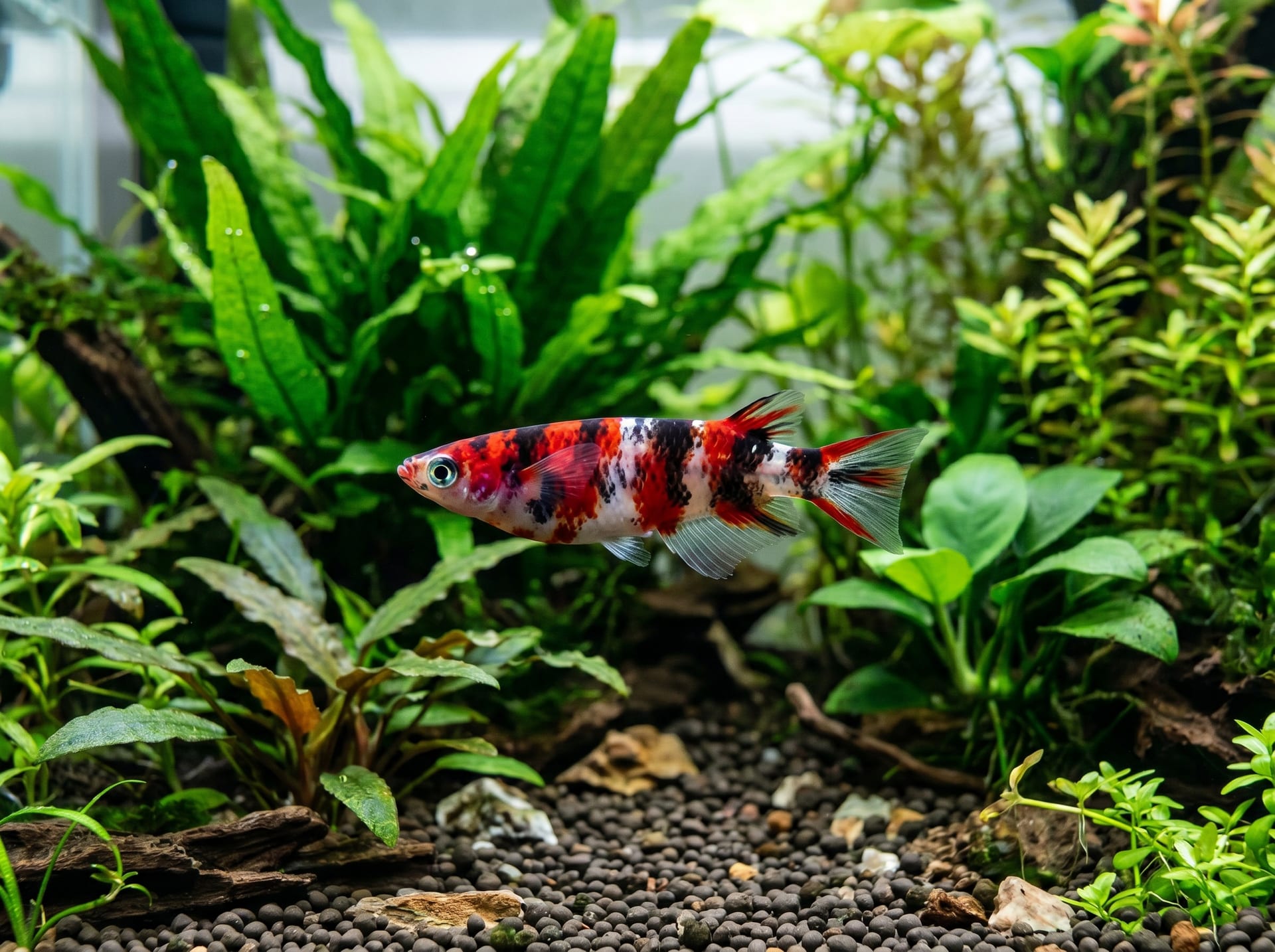
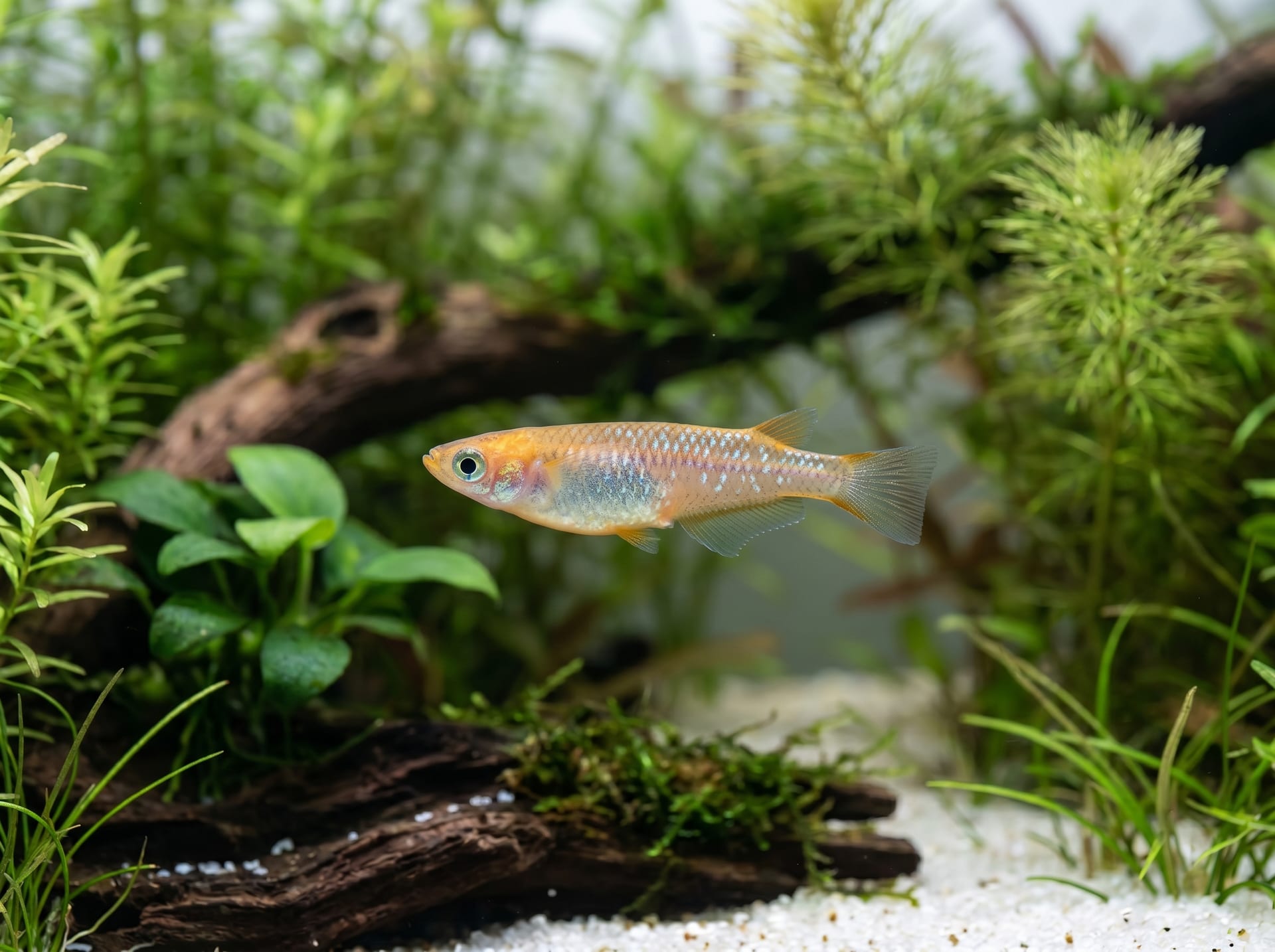
Tricolor medaka are fish that display three colors—white, red, and black (or combinations of light and dark)—on their bodies, and each individual has unique markings, giving them the appeal of 'one-of-a-kind' pieces. Night cherry blossom medaka are a variety that, in addition to tricolor, have shimmer scattered across their bodies, giving them a fantastical shine like cherry blossoms blooming in the night sky.
These varieties command high prices (good individuals cost several thousand to tens of thousands of yen), and obtaining them directly from breeders ensures quality assurance and pedigree reliability. Maintaining beautiful tricolor patterns requires proper management from both environmental husbandry and selective breeding perspectives.
The color of tricolor medaka is determined by a combination of 'melanophores (black pigment cells)', 'xanthophores (yellow pigment cells)', and 'iridophores (white pigment cells)'. The tricolor pattern is influenced by both genetic factors and husbandry environment (particularly light exposure and water temperature).
Importantly, 'colors change depending on the husbandry environment.' Even the same individual will develop deeper, more vibrant colors when raised in sunlight, while colors become paler in indoor low-light environments. In particular, black coloring (melanophores) tends to deepen in low water temperatures, with sunlight exposure, and in mineral-rich water.
Sunlight: Sunlight is the most effective factor for color enhancement in tricolor and night cherry blossom medaka. Raising them outdoors in sunny locations in wide, shallow containers or large aquariums improves color and shimmer vibrancy. However, attention must be paid to water temperature during summer when direct sunlight is very intense.
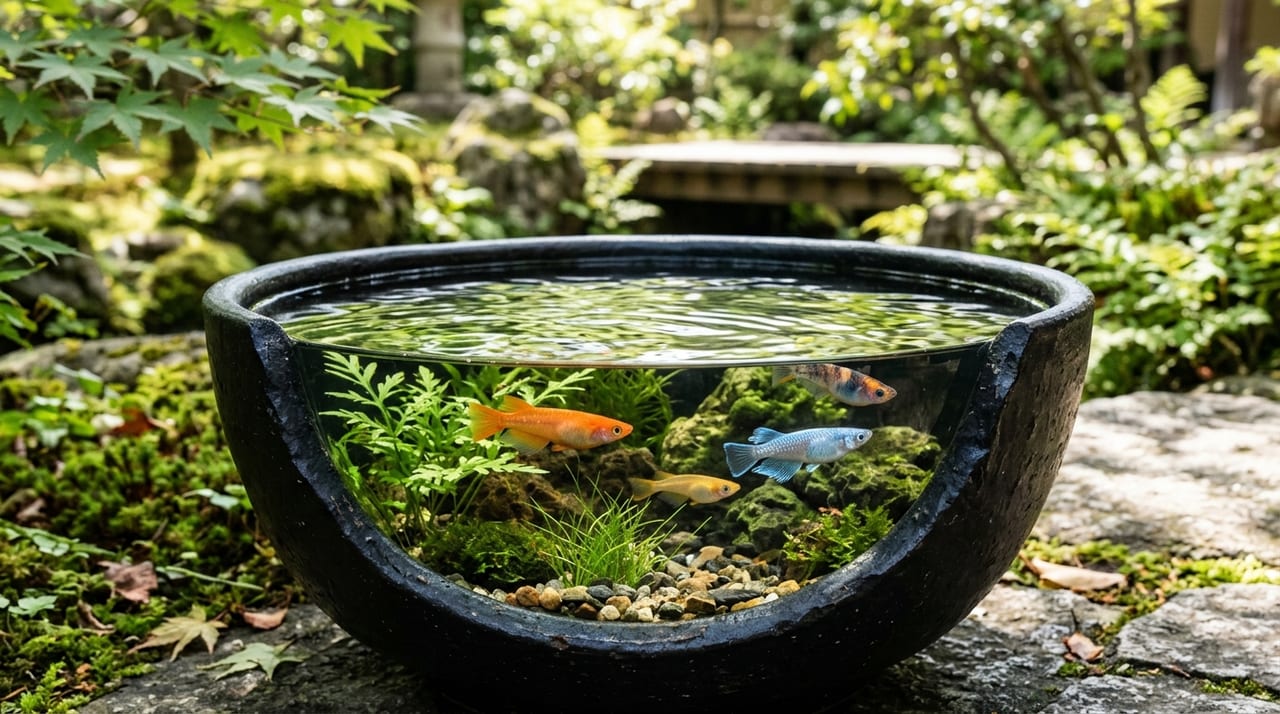
Container color: Using black or dark-colored containers makes it easier for medaka to develop darker body coloration as a protective color response. White containers tend to result in paler colors.
Water quality: Slightly alkaline water (pH 7–7.5) is believed to be most suitable for tricolor medaka coloration. Many breeders report that raising them in green water (water colonized by phytoplankton) has a color-enhancement effect.
在BreederDirect上尋找Medaka
直接從認證繁殖者購買
在BreederDirect上尋找與本文相關的Medaka商品。直接從認證繁殖者購買。
Feed: Using specialized medaka feed containing color-enhancement ingredients (carotenoids, spirulina, astaxanthin) intensifies red and orange coloring. For enhancing shimmer in night cherry blossom medaka, feed rich in vitamins and minerals is considered effective.
It is difficult to judge the quality of tricolor medaka patterns at the fry stage immediately after hatching. Patterns stabilize from around 1–1.5 months of age onward.
Key selection points: - Black coloring placement: Individuals with even black distribution across the back, belly, and fins with slight gradation are considered premium specimens - Red coloration: Those with vivid red present around the mouth area or parts of the body - White clarity: Specimens with clean, unblemished white areas - Balance: Those with well-proportioned placement of all three colors
'Culled individuals' (those with disrupted patterns) should be moved to separate containers early and managed separately from the main breeding stock.
Stabilizing tricolor patterns requires selective breeding over multiple generations. By breeding together 'parents with good patterns,' successive generations move progressively closer to the target pattern.
However, complete stabilization is difficult, and individuals with varying patterns always emerge. This is both the appeal of tricolor and night cherry blossom medaka and the creative enjoyment for breeders.
Continuing selective breeding while keeping records (pedigree tables) is the path to developing your own original line.