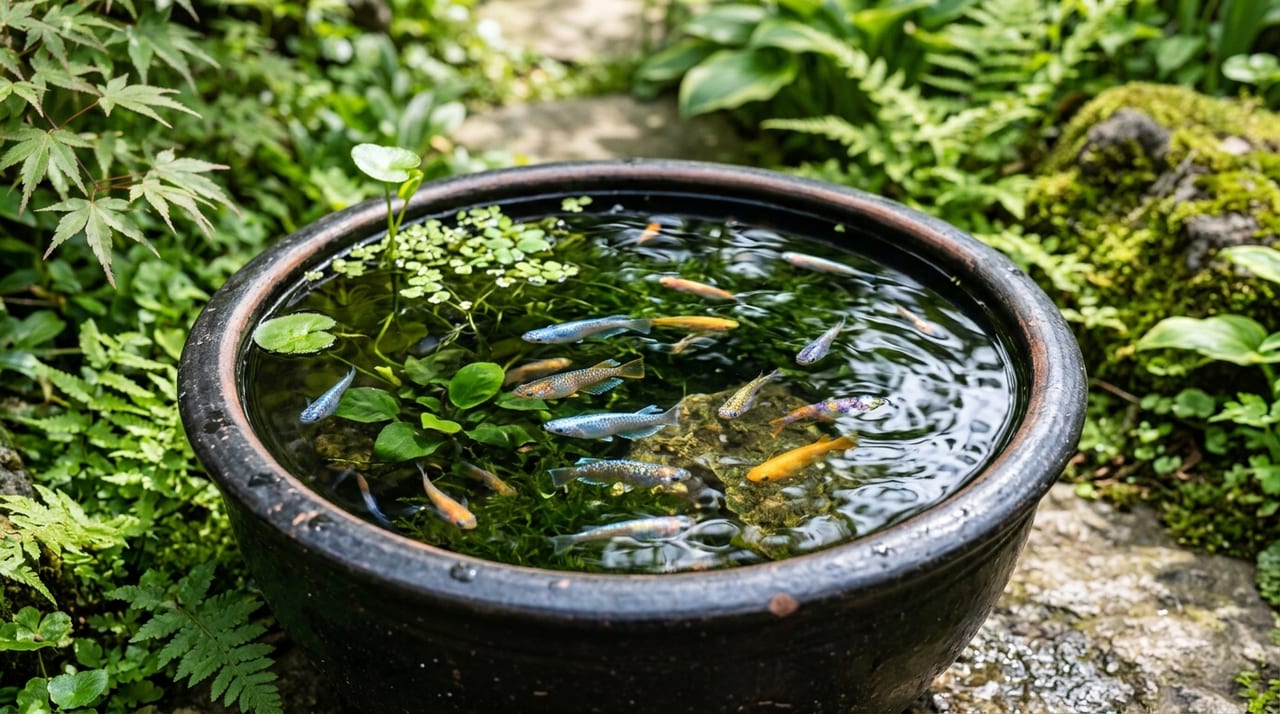
How to raise medaka fry from hatching: container setup, water quality, feeding, separating from parents, and avoiding common causes of fry death.
要點總結
How to raise medaka fry from hatching: container setup, water quality, feeding, separating from parents, and avoiding common causes of fry death.
While medaka breeding is relatively straightforward, raising the hatched fry (fry stage, called "hashigo") to adult size is actually the most challenging step. The mortality rate at the fry stage is high, and many breeders struggle with the problem of "eggs are being laid but the fry simply won't grow."
Most fry failures can be attributed to three factors: "insufficient feeding," "water quality degradation," and "being eaten by parent fish or other fish." Proper management of these three points will allow you to successfully raise nearly all fry to healthy adults.
Collect eggs daily from the water plants or spawning substrate where they were laid and transfer them to a dedicated hatching container. Leaving eggs in the parent fish's tank carries a high risk of them being eaten.
A small container of 100-500ml (plastic containers, plastic bottles, etc.) is sufficient for a hatching container. Using tap water (with chlorine) helps prevent fungal growth. At this stage, relying on the sterilizing effect of chlorine is the basic approach, rather than performing water changes.
At water temperatures of 25-28°C, the incubation period is approximately 10-14 days (higher temperatures result in earlier hatching). Adding a small amount of methylene blue (just enough to create a light blue tint) provides antifungal protection.
Immediately after hatching, fry are 2-3mm in length and extremely thin, like a needle (hence called "hashigo" or fry). At this stage, their mouths are very small and cannot consume standard medaka food.
Feeding: Provide PSB (photosynthetic bacteria), infusoria, or powdered fry food 3-5 times daily in small amounts. Rearing in green water (containing phytoplankton) provides a constant supply of microorganisms for the fry to eat, dramatically improving survival rates.
Water Changes: Care must be taken with water changes during the fry stage. Performing a complete water change in a small container risks shocking the fry with poor water quality. It is safer to simply remove debris from the bottom with a pipette and perform partial water changes of small amounts approximately once per week.
在BreederDirect上尋找Medaka
直接從認證繁殖者購買
在BreederDirect上尋找與本文相關的Medaka商品。直接從認證繁殖者購買。
Lighting: Sunlight is effective for maintaining green water and promoting fry growth. However, be cautious about rapid increases in water temperature (maintain below 30°C).
After one week, fry reach 4-5mm in length and can begin consuming finely crushed standard medaka food.
Container Upgrade: After 2-3 weeks, transfer fry to a container of 500ml-2 liters. Overcrowding causes water quality degradation and stunted growth. Aim for no more than 10 fry per liter.
Feeding Frequency: Continue feeding 3-4 times daily. Overfeeding poses the greatest risk of water quality deterioration. Feed an amount that will be consumed within 5 minutes.
Size Sorting: Even among fry from the same hatch, growth rates vary, and larger individuals may cannibalize smaller ones. Regularly sorting by size and separating them into different containers is key to improving survival rates.
"Water becomes cloudy white and fry die": The cause is water quality degradation from overcrowding and overfeeding. Enlarge the container, reduce feeding amounts, and perform frequent water changes.
"Fry starve to death despite feeding": The fry may not be receiving food appropriate for their mouth size. Using powdered food in combination with green water is effective.
"Fry numbers suddenly decline after one month": This indicates competition and cannibalism due to overcrowding. Separate them into different containers.
Once fry reach adult size (1.5cm or larger), they can be moved to standard rearing conditions. Careful management during the 1-2 month fry period provides the foundation for raising beautiful medaka.