Hercules beetle care and breeding from larval stage to adult eclosion: substrate, temperature management, and pupal cell care.
要點總結
Hercules beetle care and breeding from larval stage to adult eclosion: substrate, temperature management, and pupal cell care.
# Hercules Beetle Care and Breeding Guide
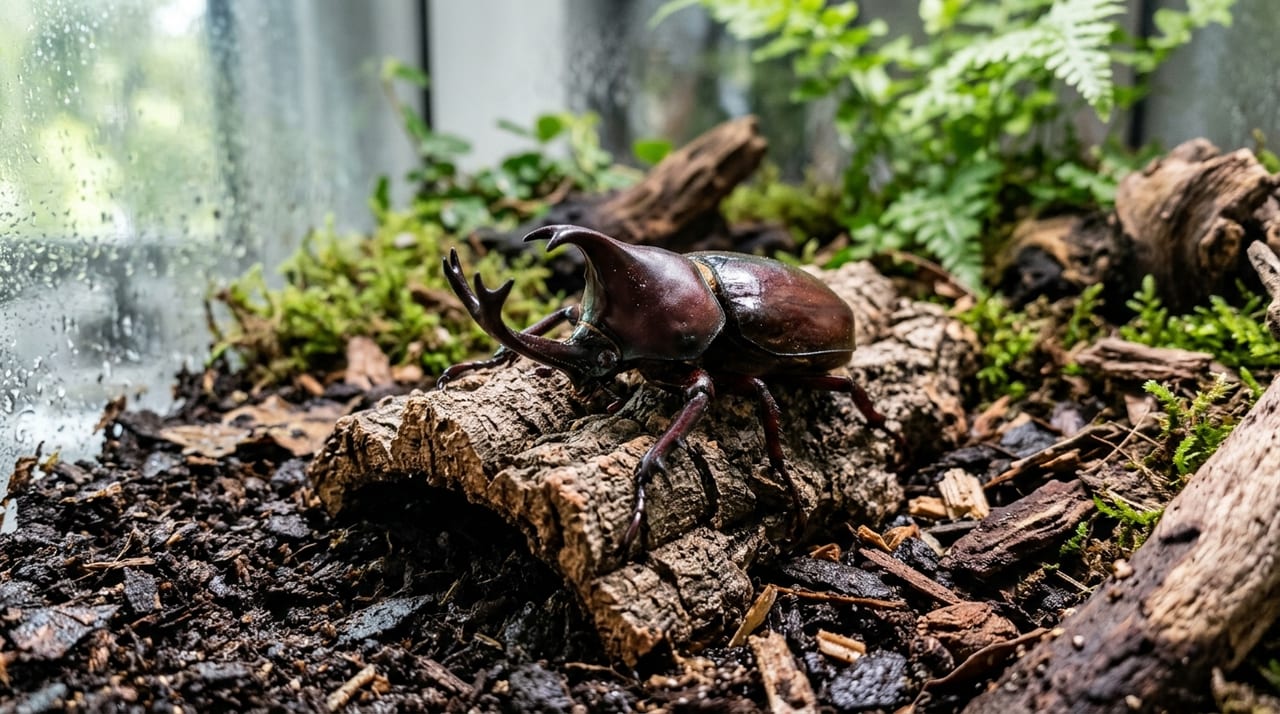
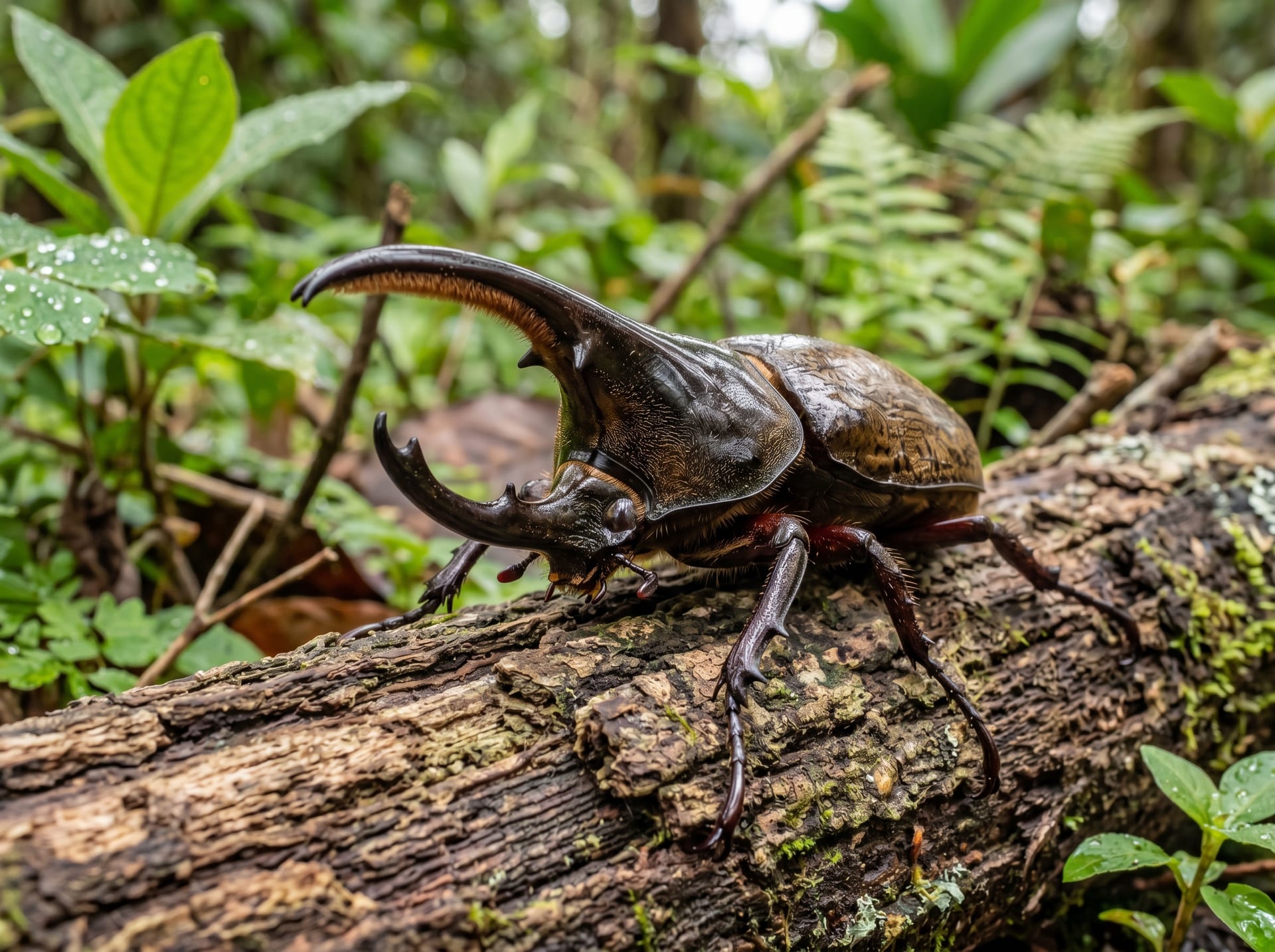
The Hercules beetle is an insect of the Cerambycidae family and one of the world's largest beetles, inhabiting tropical rainforests in South America. Males typically reach body lengths of 120–150mm, characterized by prominent horns extending from the head. With a lifespan of approximately 2–3 years, adults are nocturnal and hide in soil or leaf litter during the day. They are extremely powerful and frequently fight with other individuals in captivity, making solitary housing essential. There is a significant size difference between wild-caught and captive-bred individuals, with the quality of the rearing environment greatly affecting final size.
Hercules beetles require enclosures at least 60cm in size. Larger floor space reduces movement stress. The basic setup consists of fermenting substrate (crafted from Fagus or Castanopsis wood) spread 15–20cm deep, with bark or cork pieces arranged as hiding spots. Maintain humidity at 40–60% by misting 2–3 times weekly. Optimal temperature ranges from 20–28°C; avoid direct sunlight and use air conditioning. Activity peaks from spring through fall, with robust feeding during this period.
To encourage breeding, specialized breeding substrate is highly effective. Use well-aged fermented beetle substrate in containers at least 30cm deep. Compress the substrate firmly—it should not compress further when pressed with a finger. The female burrows into the substrate to lay eggs, requiring sufficient depth. Maintain breeding substrate humidity at 60–70%, adjusting regularly with mist spraying. After 2–4 weeks, white larvae appear, signaling successful egg-laying. Once laying concludes, remove the parent and maintain moisture to prevent drying.
Hatched larvae should be reared individually in high-nutrition substrate to prevent cannibalism and achieve high survival rates. Substrate nutrition is critical, with regular changes accelerating growth. Larvae develop from first instar to third instar over approximately 3–6 months, reaching 20g or more. Maintain temperatures at 22–26°C, avoiding fluctuations. If mortality occurs, immediately change substrate and reassess conditions.
Change substrate every 2–3 months depending on larval development stage. First instars require monthly changes; second instar and beyond need changes every 2–3 months or when frass accumulates noticeably. When changing, use fresh, nutrient-rich substrate and carefully remove larvae to avoid injury. Heavy frass in old substrate indicates nutrient depletion. After changing, observe until the larva settles into the new substrate, watching for abnormal behavior. Work efficiently at approximately 25°C.
Temperature management is critical to successful Hercules beetle rearing. Adults are active at 20–28°C, with breeding and mating accelerating around 25°C. Optimal larval growth occurs at 22–26°C, with faster growth within this range. Temperatures below this threshold slow growth; excessive heat increases fungal risk. Air conditioning is essential during Japan's hot summers. Winter temperature drops cause natural larval dormancy. Install multiple thermometers to track daily fluctuations, enabling optimal environmental control.
As third instars mature, they prepare for pupation. Larvae construct a pupal chamber within the substrate, where metamorphosis occurs. The pupation period varies by environment and individual but typically takes 3–6 months. Since larvae form their own chambers, minimal human intervention is important. Pupae remain in this state for 1–2 months before adult emergence begins. Newly emerged adults appear white and require 2–3 weeks to fully harden. During this period, avoid all disturbance and allow rest within the substrate. Stable humidity and temperature management are essential to prevent emergence failure.
Hercules beetle rearing can succeed with proper environmental setup and consistent management, even for beginners. Each stage—from adult care through breeding, larval rearing, and emergence—requires careful management of temperature, humidity, and nutrition. Stable temperatures at 22–26°C are the key to success, with summer air conditioning and winter heating critical. Firmly compressed substrate with appropriate humidity during breeding setup, combined with regular substrate changes during larval rearing, are essential for raising large individuals. Because rearing spans an extended period, planning and sustainable management are recommended. Learning from failures and refining techniques will establish better rearing practices over time.
Breeding Calendar
Visual monthly breeding season guide for each species
Care Cost Calculator
Estimate initial setup costs and monthly running costs by category
Environment Checker
Get pet & plant recommendations based on room temperature, space & time
Seasonal Care Calendar
Monthly care events and seasonal management tips at a glance