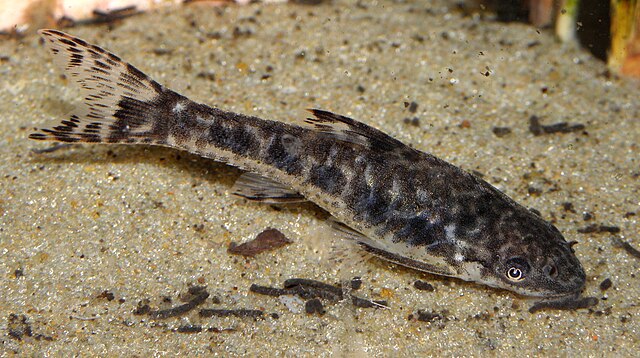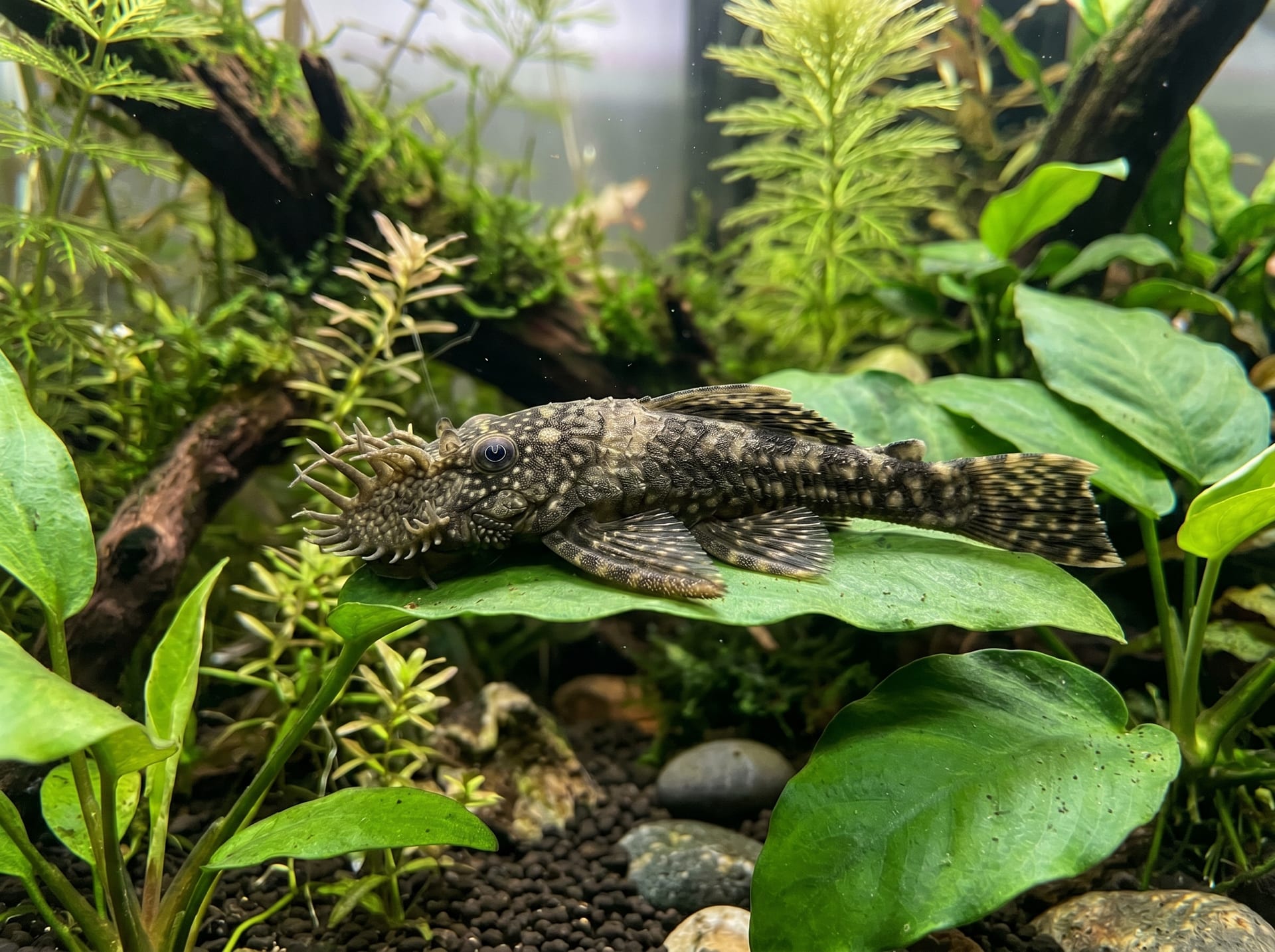
A small pleco with distinctive bristle-like growths around the mouth. Popular tank cleaner with strong algae-eating ability.
The bristlenose pleco (Ancistrus sp.), also called the bushy-nose pleco, is a small loricariid catfish widely distributed across the Amazon River basin of South America. At 10–15 cm, it is significantly smaller than the common pleco, making it far better suited to standard home aquariums. Its most distinctive feature is the branched, tentacle-like bristles that develop on the snout of mature males — the dense growth resembles a tiny bush, hence the alternative common name. An outstanding algae eater, bristlenose plecos graze effectively on glass, driftwood, and substrate. The inclusion of driftwood is particularly beneficial as they actively rasp and consume the wood, providing dietary fiber. They adapt well to 22–28°C at pH 6.5–7.5 and handle slightly cooler temperatures with reasonable resilience. Nocturnal by nature, they spend daylight hours concealed under driftwood or in corners. Breeding follows cave-spawning behavior: males guard eggs laid in hollow logs or PVC tubes until hatching. Lifespan exceeds 10–15 years in good conditions. Popular variants include the albino form and the long-fin variety.
产地
Amazon River basin, South America
寿命
10-15 years
体型
10-15cm
温度
22〜28℃
Algae, Vegetables, Artificial feed
コケ取り能力が非常に高い
流木を入れると齧って食べる
夜行性で日中は隠れていることが多い
野菜(きゅうり等)も好んで食べる
大型プレコと違い小型水槽でもOK
Beginner. 这是一个适合初学者的物种。不需要特殊设备或经验,基本的饲养设置即可成功饲养。
Bristlenose Pleco的理想温度为22〜28℃。避免温度骤变,保持稳定的环境。
Bristlenose Pleco的平均寿命为10-15 years。通过适当的护理和营养,它们可以长寿健康地生活。
Bristlenose Pleco成年后通常可达10-15cm。大小可能因饲养条件和个体遗传而异。
Bristlenose Pleco的食物为:Algae, Vegetables, Artificial feed。目标是适当的喂食频率和均衡的饮食。
Bristlenose Pleco的价格因品系、大小和血统而有很大差异。请查看我们的市场价格页面获取最新价格信息。
查找此物种的商品
浏览Tropical Fish商品Plecostomus Cave Setup Guide — Breeding Shelters for Success
How to set up breeding caves for plecos: cave dimensions by species, material choices, placement, and male nest behavior.
Complete Beginner's Guide to Tropical Fish Keeping
Everything beginners need to start keeping tropical fish: essential equipment, water preparation, and recommended starter species.
Tropical Fish Water Quality Management & Water Change Basics
Essential water quality management for tropical fish: understanding pH, ammonia, nitrite, nitrate, and how to perform water changes correctly.
Tropical Fish Community Tank Guide — Compatible Combinations & Precautions
How to successfully keep tropical fish together: compatibility rules, recommended combinations, and what species should never be mixed.