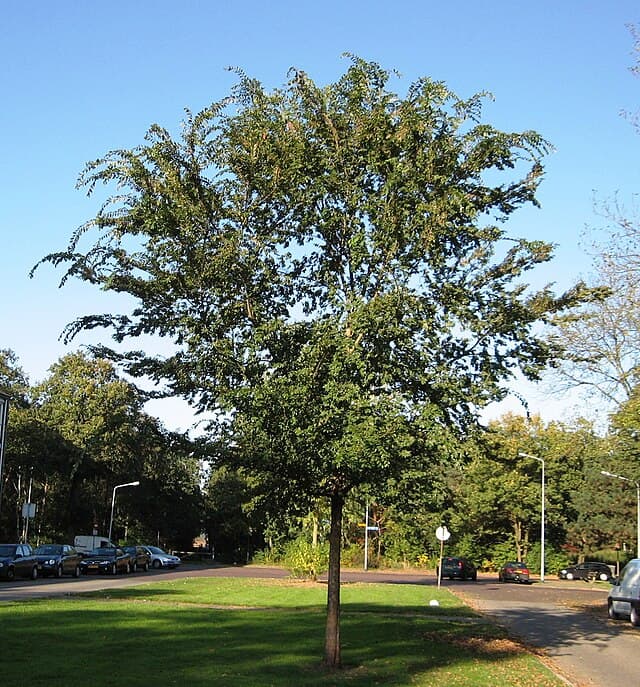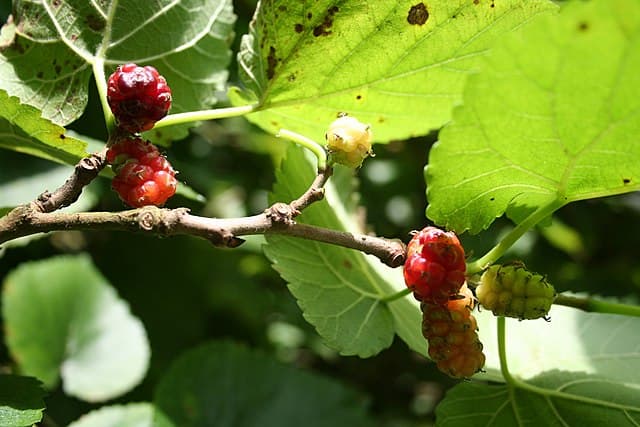
Source: Wikimedia Commons
Mulberry
BeginnerDeciduous tree known for silkworm farming. In bonsai, exposed roots and hollow trunks are highlights. Sweet berries are a bonus. Hardy and tolerant of pruning.
难度
Beginner
温度
-5〜35℃
寿命
100+ years
体型
15-60cm (bonsai size)
饮食
Fertilizer (regular)
关于我们
Morus, a genus of flowering plants in the family Moraceae, consists of 19 species of deciduous trees commonly known as mulberries, growing wild and under cultivation in many temperate world regions. Generally, the genus has 64 subordinate taxa, though the three most common are referred to as white, red, and black, originating from the color of their dormant buds and not necessarily the fruit color, with numerous cultivars and some taxa currently unchecked and awaiting taxonomic scrutiny. M. alba is native to South Asia, but is widely distributed across Europe, Southern Africa, South America, and North America. M. alba is also the species most preferred by the silkworm. It is regarded as an invasive species in Brazil, the United States and some states of Australia.
Source: Wikipedia (CC BY-SA 4.0)
基本信息
产地
South Asia (India and China), distributed worldwide
寿命
100+ years
体型
15-60cm (bonsai size)
温度
-5〜35℃
饮食
Fertilizer (regular)
饲养指南
Placement
Full sun outdoors. Extremely hardy
Watering
Loves water. Water generously in growing season
Styling
Utilize hollow trunk and exposed roots. Tolerates heavy pruning
Notes
Fast growing. Frequent pruning builds fine ramification
BeginnerFruit bearingExposed rootsHardy
Mulberry常见问题
Q饲养Mulberry的难度如何?
A
Beginner. 这是一个适合初学者的物种。不需要特殊设备或经验,基本的饲养设置即可成功饲养。
QMulberry的理想温度是多少?
A
Mulberry的理想温度为-5〜35℃。避免温度骤变,保持稳定的环境。
QMulberry的寿命是多长?
A
Mulberry的平均寿命为100+ years。通过适当的护理和营养,它们可以长寿健康地生活。
Mulberry的问答
查找此物种的商品