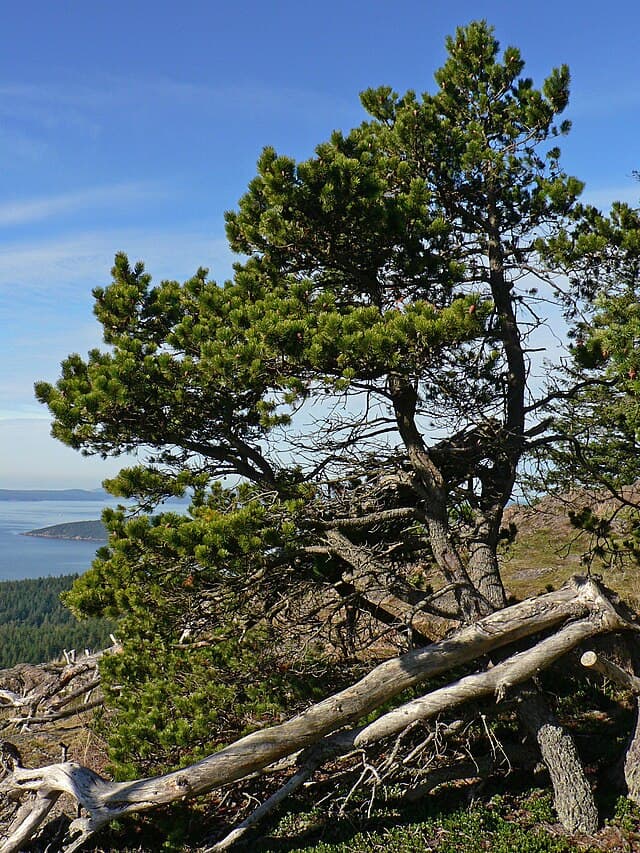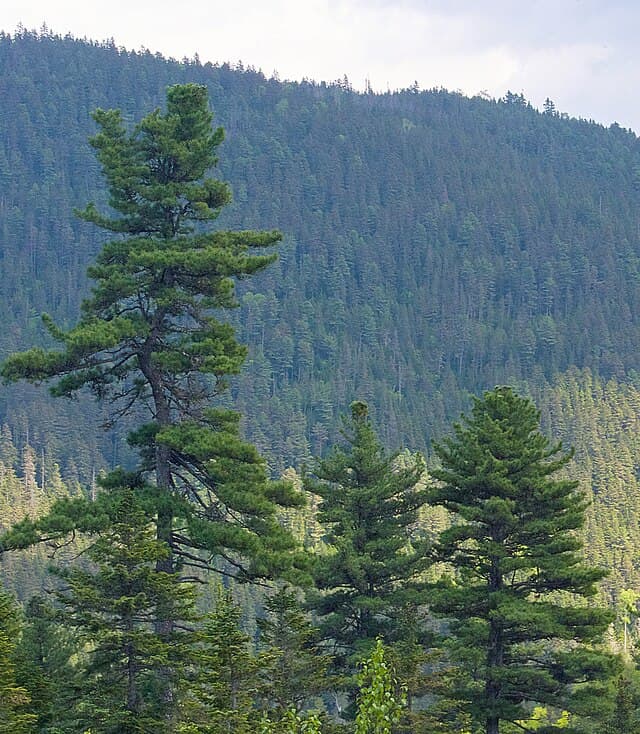
Source: Wikimedia Commons
Korean Pine
IntermediatePinus koraiensis
Close relative of Japanese white pine with larger cones and edible pine nuts. Native to Korea, China, and Russia. Very cold-hardy with powerful trunks and rich foliage.
Difficulté
Intermediate
Température
-5〜35℃
Durée de vie
Centuries
Taille
15-70cm (bonsai size)
Régime alimentaire
Fertilizer (regular)
À propos
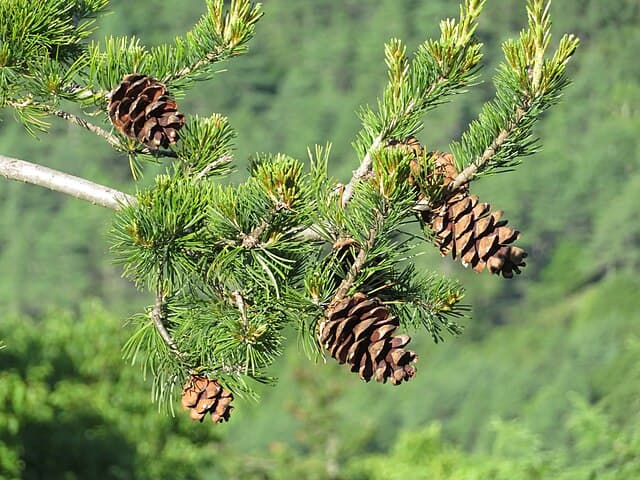
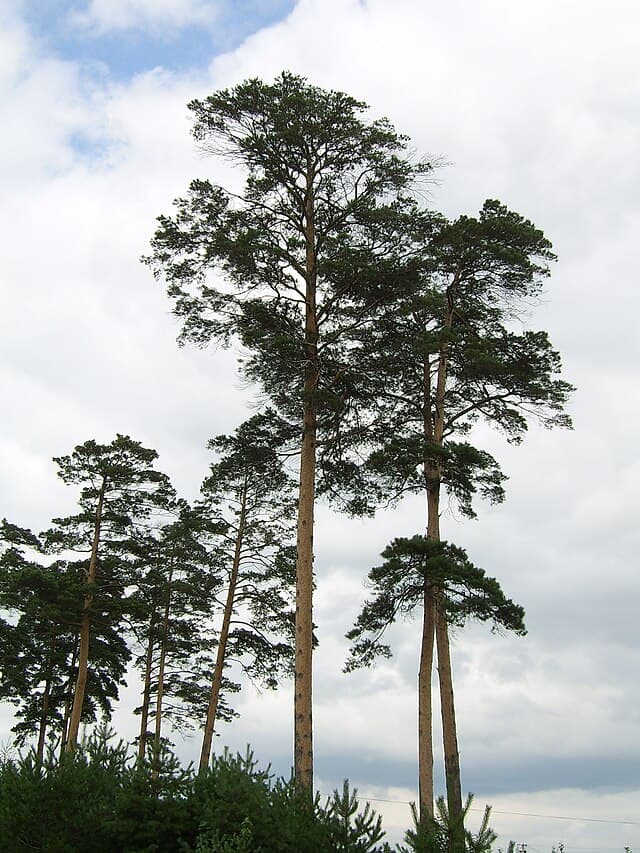
Pinus koraiensis is a species of pine known commonly as the Korean pine. It is a relic species of the Tertiary, identified as a rare tree species by United Nations. It is native to eastern Asia, in Korea, northeastern China, the temperate rainforests of the Russian Far East, and central Japan. In the north of its range, it grows at moderate elevations, typically 600 to 900 metres, whereas further south, it is a mountain tree, growing at 2,000 to 2,600 m elevation in Japan. Other common names include "Chinese pinenut". The ancient woodland of P. koraiensis on the earth is about 50 million hectares, and China has about 30 million hectares, accounting for 60%. It is a second-class national key protected plant in China. P. koraiensis is a tree species with high economic and ecological value. The official name in Chinese is "红松 hóng sōng/red pine", because almost every part of it is related to red.
Source: Wikipedia (CC BY-SA 4.0)
Informations de base
Origine
East Asia (Korea, northeastern China, Russian Far East) and Japan
Durée de vie
Centuries
Taille
15-70cm (bonsai size)
Température
-5〜35℃
Régime alimentaire
Fertilizer (regular)
Guide d'entretien
Placement
Full sun outdoors. Tolerates extreme cold
Watering
Same as white pine. Water when topsoil dries
Styling
Informal upright and twin trunk suit well. Pinch for ramification
Notes
Needs heat protection in warm regions. Move to semi-shade
IntermediateConiferCold-hardyPine nuts
FAQ Korean Pine
QQuelle est la difficulté de garder Korean Pine ?
A
Intermediate. C'est une espèce de niveau intermédiaire. Une certaine expérience préalable et des connaissances en gestion environnementale sont recommandées.
QQuelle est la température idéale pour Korean Pine ?
A
La température idéale pour Korean Pine est -5〜35℃. Évitez les changements brusques de température et maintenez un environnement stable.
QQuelle est la durée de vie de Korean Pine ?
A
Q&R sur Korean Pine
Trouver des annonces pour cette espèce