Source: Wikimedia Commons
Brassavola
BeginnerAn epiphytic orchid with intensely fragrant white flowers at night, known as Lady of the Night.
Difficulty
Beginner
Temperature
15〜30℃
Lifespan
10+ years
Size
15-30cm
Humidity
50〜70%
Diet
Orchid fertilizer
About
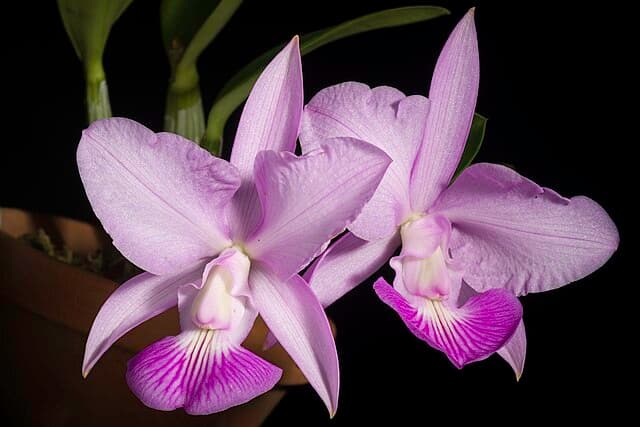
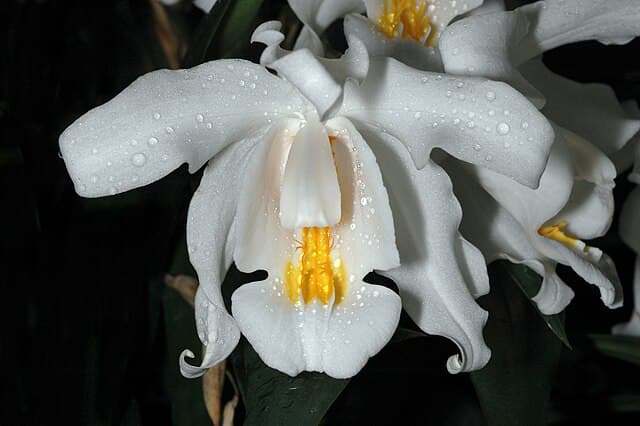
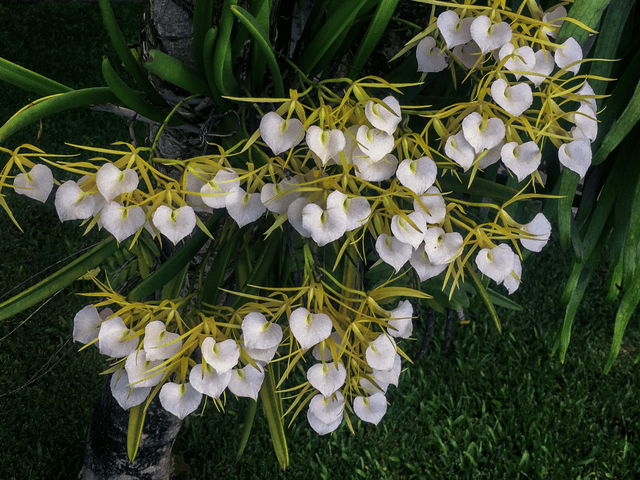
Brassavola is a genus of 21 orchid species native to tropical and subtropical regions from Mexico to South America. Closely related to Cattleya, it has long been used as a parent in Cattleya-alliance hybrids (BLC, BC, etc.), contributing white coloration and fragrance. The flowers are white to cream to pale green. The best-known species, Brassavola nodosa (Lady of the Night), emits a powerful sweet nocturnal fragrance. Plants grow 15–30 cm with slender, cylindrical leaves. Bloom season varies by species, mainly autumn to winter. Cultivation requires a bright position with some direct sun tolerance, temperatures of 15–30°C, and a free-draining bark, pumice, or cork medium with moderate watering during growth.
Source: Wikipedia (CC BY-SA 4.0)
Basic Info
Origin
Mexico to South America, tropical and subtropical regions
Lifespan
10+ years
Size
15-30cm
Temperature
15〜30℃
Humidity
50〜70%
Diet
Orchid fertilizer
Care Guide
Fragrance
Strong night fragrance
Light
Bright indirect light
Watering
Let dry between watering
Temperature
15-30°C
OrchidBrassavolaFragrantEpiphyte
Brassavola FAQ
QHow difficult is it to keep Brassavola?
A
Beginner. This is a beginner-friendly species. No special equipment or experience is required, and it can be kept successfully with basic care setup.
QWhat is the ideal temperature for Brassavola?
A
The ideal temperature for Brassavola is 15〜30℃. Recommended humidity is 50〜70%. Avoid sudden temperature changes and maintain a stable environment.
QWhat is the lifespan of Brassavola?
A
The average lifespan of Brassavola is 10+ years. With proper care and nutrition, they can live a long and healthy life.
Brassavola Q&A
Find listings for this species