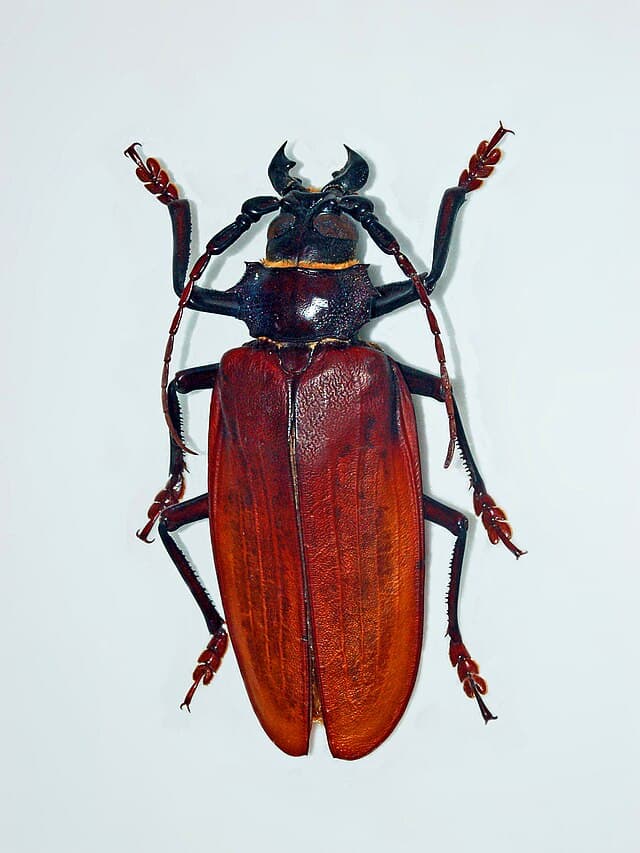
Source: Wikimedia Commons
Titan Beetle
AdvancedOne of the world's largest beetles. Lives in the South American Amazon, reaching 16cm in legendary proportions.
Schwierigkeit
Advanced
Temperatur
20〜28℃
Lebensdauer
Adult (short period)
Größe
100-167mm
Luftfeuchtigkeit
60〜80%
Ernährung
(Adults don't eat)
Über uns
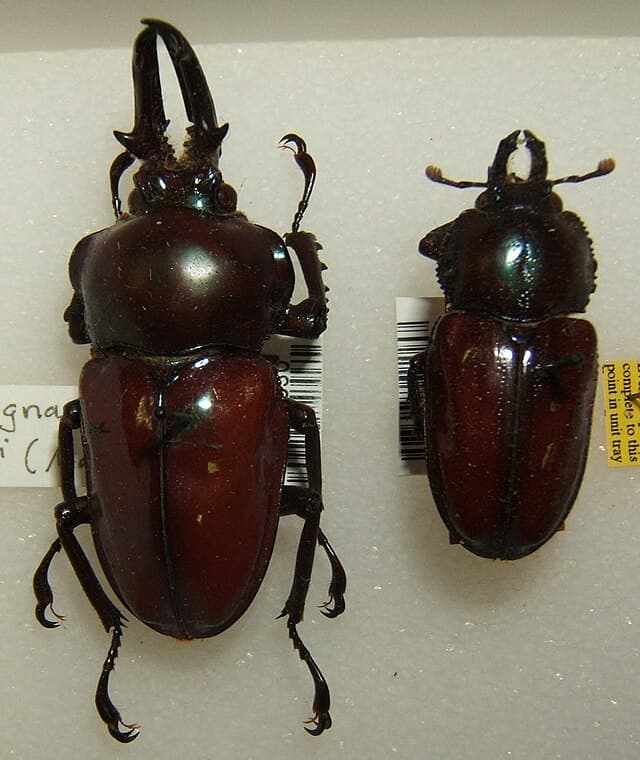
Titanus giganteus, the titan beetle, is the world's largest known beetle by body length, native to the rainforests of the Amazon basin in Brazil, Colombia, Ecuador, Peru, Bolivia, and Guyana. Adults reach 100–167 mm in total length, with powerful mandibles capable of snapping a pencil in half. Body coloration is dark brown to blackish-brown. Adult beetles do not feed; they live for only a few weeks, subsisting entirely on fat reserves accumulated during the larval stage. Larvae are believed to bore through large-diameter deadwood for several years before pupating, but successful captive larval rearing has virtually never been achieved. Adults are almost exclusively encountered as dried museum specimens or as live specimens attracted to lights during nighttime collecting expeditions. As an insect that remains almost entirely beyond the reach of captive husbandry, the titan beetle occupies a legendary status as the ultimate trophy in the insect world.
Grundinformationen
Herkunft
Amazon basin rainforests of South America, including Brazil, Colombia, Ecuador, Peru, Bolivia, and Guyana
Lebensdauer
Adult (short period)
Größe
100-167mm
Temperatur
20〜28℃
Luftfeuchtigkeit
60〜80%
Ernährung
(Adults don't eat)
Pflegeanleitung
Notes
飼育はほぼ不可能(展示・標本用)
Growth
幼虫の飼育例はほとんどない
Breeding
成虫は食事をせず繁殖のみ
Notes
南米の熱帯雨林に生息
Notes
コレクター垂涎の標本
TitanWorld largestAmazonLegendary
Titan Beetle-FAQ
QWie schwierig ist es, Titan Beetle zu halten?
A
Advanced. Dies ist eine Art für Fortgeschrittene. Sie erfordert spezialisierte Ausrüstung und fortgeschrittene Haltungskenntnisse mit präziser Umgebungskontrolle.
QWas ist die ideale Temperatur für Titan Beetle?
A
Die ideale Temperatur für Titan Beetle ist 20〜28℃. Die empfohlene Luftfeuchtigkeit beträgt 60〜80%. Vermeiden Sie plötzliche Temperaturänderungen und halten Sie eine stabile Umgebung aufrecht.
QWie ist die Lebenserwartung von Titan Beetle?
A
Die durchschnittliche Lebensdauer von Titan Beetle beträgt Adult (short period). Bei richtiger Pflege und Ernährung können sie ein langes und gesundes Leben führen.
QWie groß wird Titan Beetle?
A
Titan Beetle erreicht als Erwachsener typischerweise 100-167mm. Die Größe kann je nach Haltungsbedingungen und individueller Genetik variieren.
QWas sollte ich Titan Beetle füttern?
A
Titan Beetle ernährt sich von: (Adults don't eat). Streben Sie eine ausgewogene Ernährung mit angemessener Fütterungshäufigkeit an.
QWas ist der typische Preis für Titan Beetle?
A
Der Preis von Titan Beetle variiert erheblich je nach Morph, Größe und Abstammung. Überprüfen Sie unsere Marktpreisseite für aktuelle Preisinformationen.
Verwandte Arten
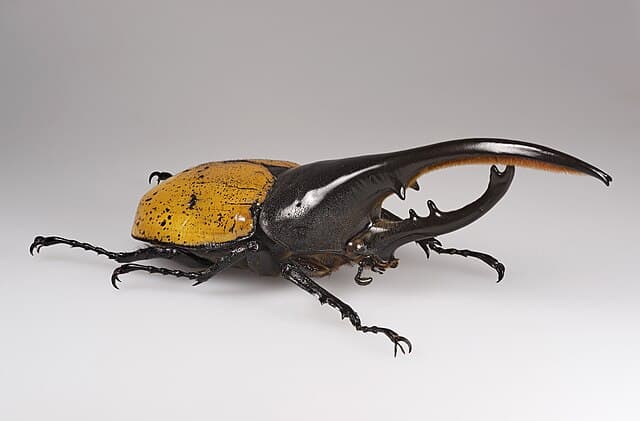
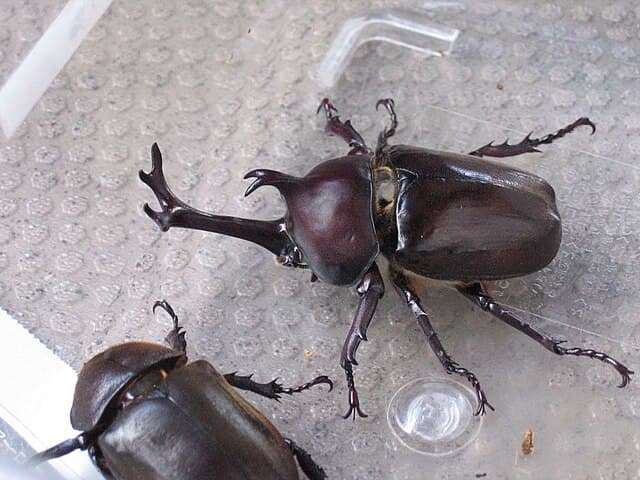
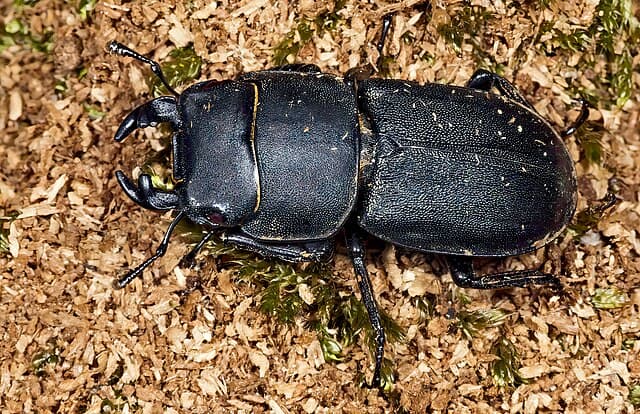
Angebote für diese Art finden
Insect-Angebote durchsuchenVerwandte Artikel
Stag Beetle Breeding Temperature Control — Species-Specific Optimal Ranges
Stag beetle temperature control: species-specific ranges for Dorcus, Prosopocoilus, and Lamprima — cooling methods and seasonal cycling.
Rhinoceros Beetle Larvae Care — Mat Management & Temperature for Large Specimens
Rhinoceros beetle larvae care: fermented mat selection, container sizing, replacement timing, temperature management, and pupation chamber preparation.
Hercules Beetle Care Guide — Raising the World's Largest Beetle
Guide to keeping Dynastes hercules: adult and larva care, enclosure size, temperature, diet, substrate changes, and breeding tips.
Growing Bigger Rhinoceros Beetles — Bloodline, Substrate & Temperature Techniques
Techniques for raising larger rhinoceros beetles: selecting quality bloodlines, high-nutrition substrates, and temperature-controlled growth strategies.