Source: Wikimedia Commons
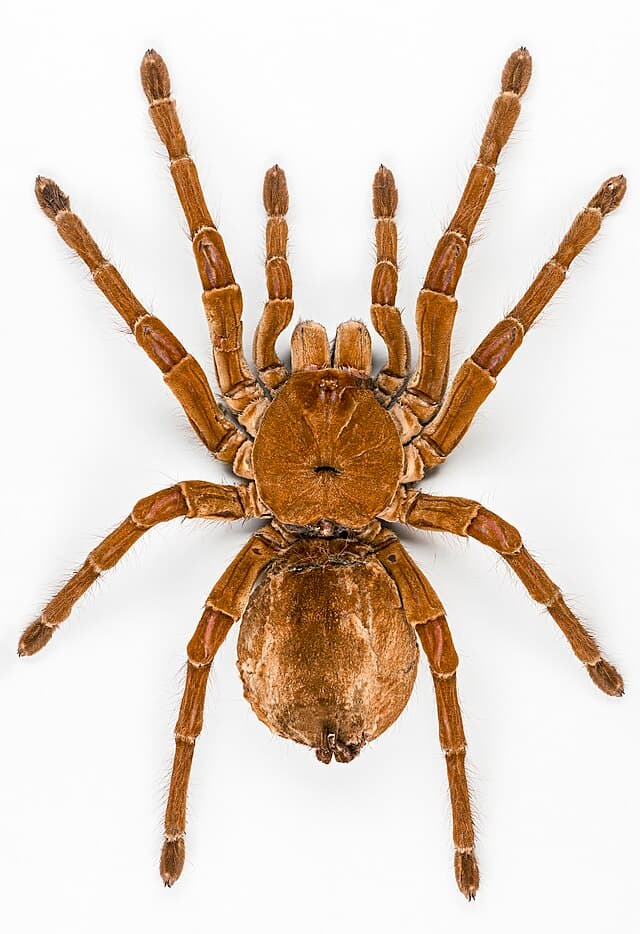
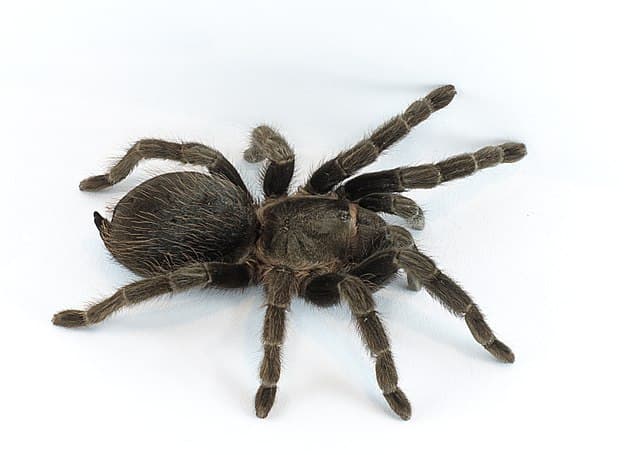
Goliath Birdeater
AdvancedGoliath birdeater
World's largest tarantula. Overwhelming size reaching 30cm leg span. Venomous spider.
Schwierigkeit
Advanced
Temperatur
20〜28℃
Lebensdauer
15-25 years
Größe
Leg span 25-30cm
Luftfeuchtigkeit
60〜80%
Ernährung
Insects, Mice
Über uns
The Goliath birdeater is a very large spider that belongs to the tarantula family Theraphosidae. Found in northern South America, it is the largest spider in the world by mass and body length, and second to the giant huntsman spider by leg span. It is also considerably longer than the largest known prehistoric spider, Mongolarachne, that had a body length of 2.46 centimeters (0.97 in). It is also called the Goliath tarantula or Goliath bird-eating spider; the practice of calling theraphosids "bird-eating" derives from an early 18th-century copper engraving by Maria Sibylla Merian that shows one eating a hummingbird. Despite the spider's name, it rarely preys on birds.
Source: Wikipedia (CC BY-SA 4.0)
Grundinformationen
Herkunft
northern South America
Lebensdauer
15-25 years
Größe
Leg span 25-30cm
Temperatur
20〜28℃
Luftfeuchtigkeit
60〜80%
Ernährung
Insects, Mice
Pflegeanleitung
Temperature
Maintain 24-28°C
Housing
Large case with moist substrate
Feeding
Feed large insects and pinky mice
Notes
Flicks urticating hairs, handle carefully. Venomous
GoliathLargest tarantula30cmVenomous spider
Goliath Birdeater-FAQ
QWie schwierig ist es, Goliath Birdeater zu halten?
A
Advanced. Dies ist eine Art für Fortgeschrittene. Sie erfordert spezialisierte Ausrüstung und fortgeschrittene Haltungskenntnisse mit präziser Umgebungskontrolle.
QWas ist die ideale Temperatur für Goliath Birdeater?
A
Die ideale Temperatur für Goliath Birdeater ist 20〜28℃. Die empfohlene Luftfeuchtigkeit beträgt 60〜80%. Vermeiden Sie plötzliche Temperaturänderungen und halten Sie eine stabile Umgebung aufrecht.
QWie ist die Lebenserwartung von Goliath Birdeater?
A
Die durchschnittliche Lebensdauer von Goliath Birdeater beträgt 15-25 years. Bei richtiger Pflege und Ernährung können sie ein langes und gesundes Leben führen.
QWie groß wird Goliath Birdeater?
A
Goliath Birdeater erreicht als Erwachsener typischerweise Leg span 25-30cm. Die Größe kann je nach Haltungsbedingungen und individueller Genetik variieren.
QWas sollte ich Goliath Birdeater füttern?
A
Goliath Birdeater ernährt sich von: Insects, Mice. Streben Sie eine ausgewogene Ernährung mit angemessener Fütterungshäufigkeit an.
QWas ist der typische Preis für Goliath Birdeater?
A
Der Preis von Goliath Birdeater variiert erheblich je nach Morph, Größe und Abstammung. Überprüfen Sie unsere Marktpreisseite für aktuelle Preisinformationen.
Verwandte Arten
Angebote für diese Art finden
Insect-Angebote durchsuchenVerwandte Artikel
How Much Does Insect Keeping Cost? Monthly Running Costs Explained
Monthly insect keeping costs for beetles and stag beetles: substrate, jelly, temperature control, and annual breeding cost estimates.
Insect Lifespan — Adult & Larval Stages of Beetles and Stag Beetles
Beetle and stag beetle lifespans by species for both adults and larvae, with tips on temperature and diet to extend adult longevity.
Summer Insect Care — Heat Management Guide
Summer beetle and stag beetle care: maintaining proper temperatures, substrate moisture, and jelly replacement frequency.
Winter Insect Care — Cold Weather Protection Guide
Winter beetle and stag beetle care: substrate maintenance, temperature management, overwintering adults, and heated vs. unheated setups.