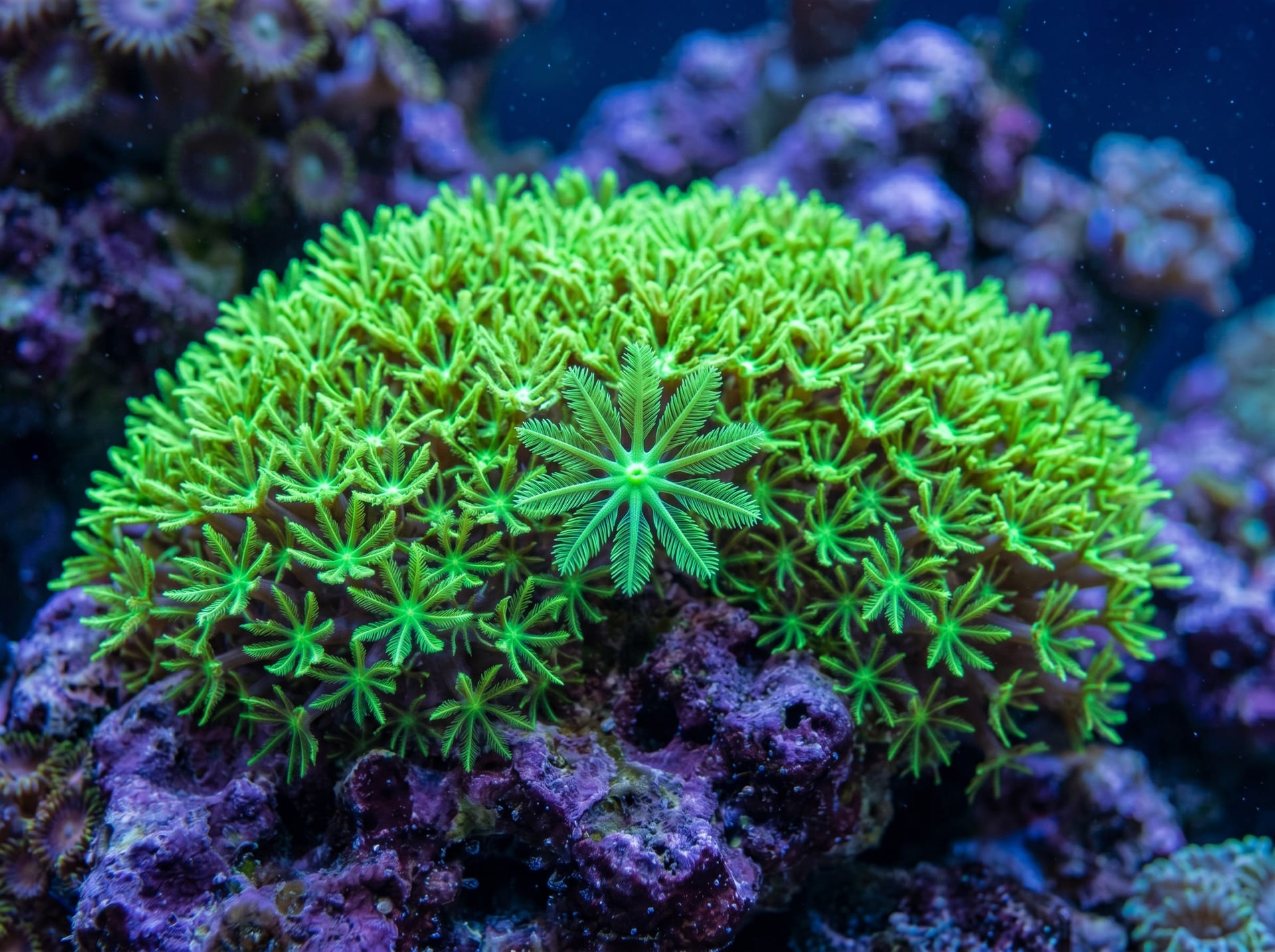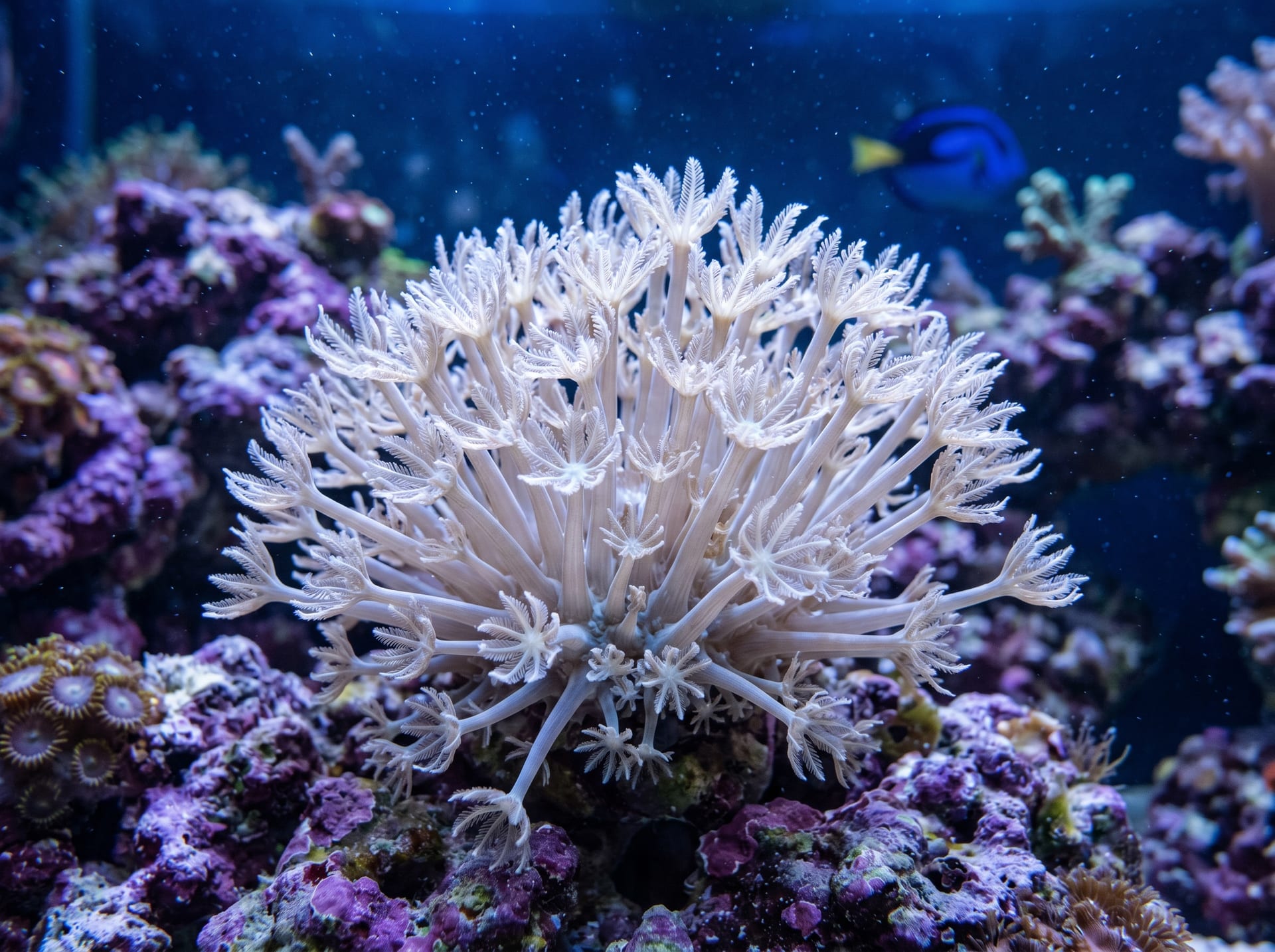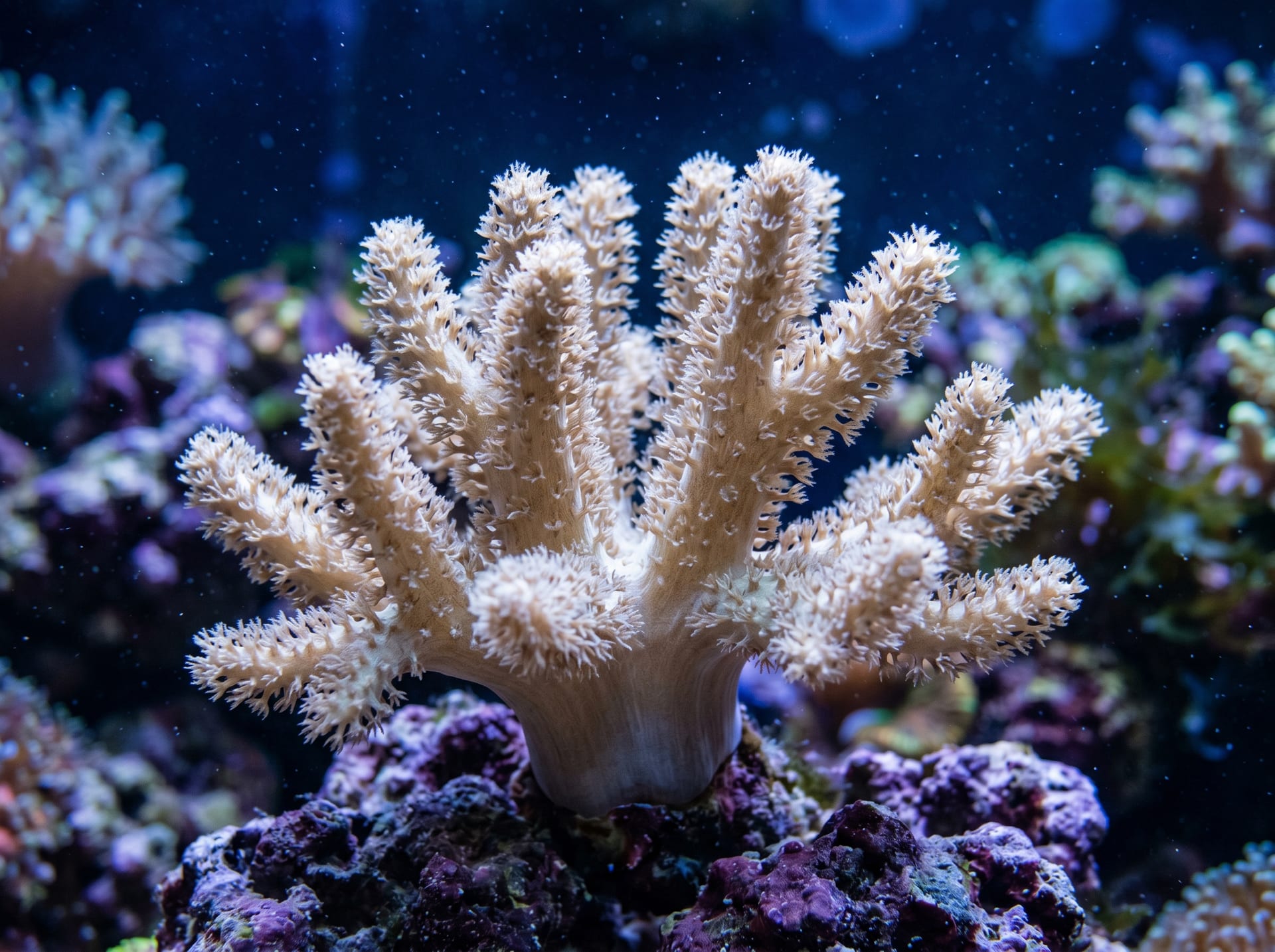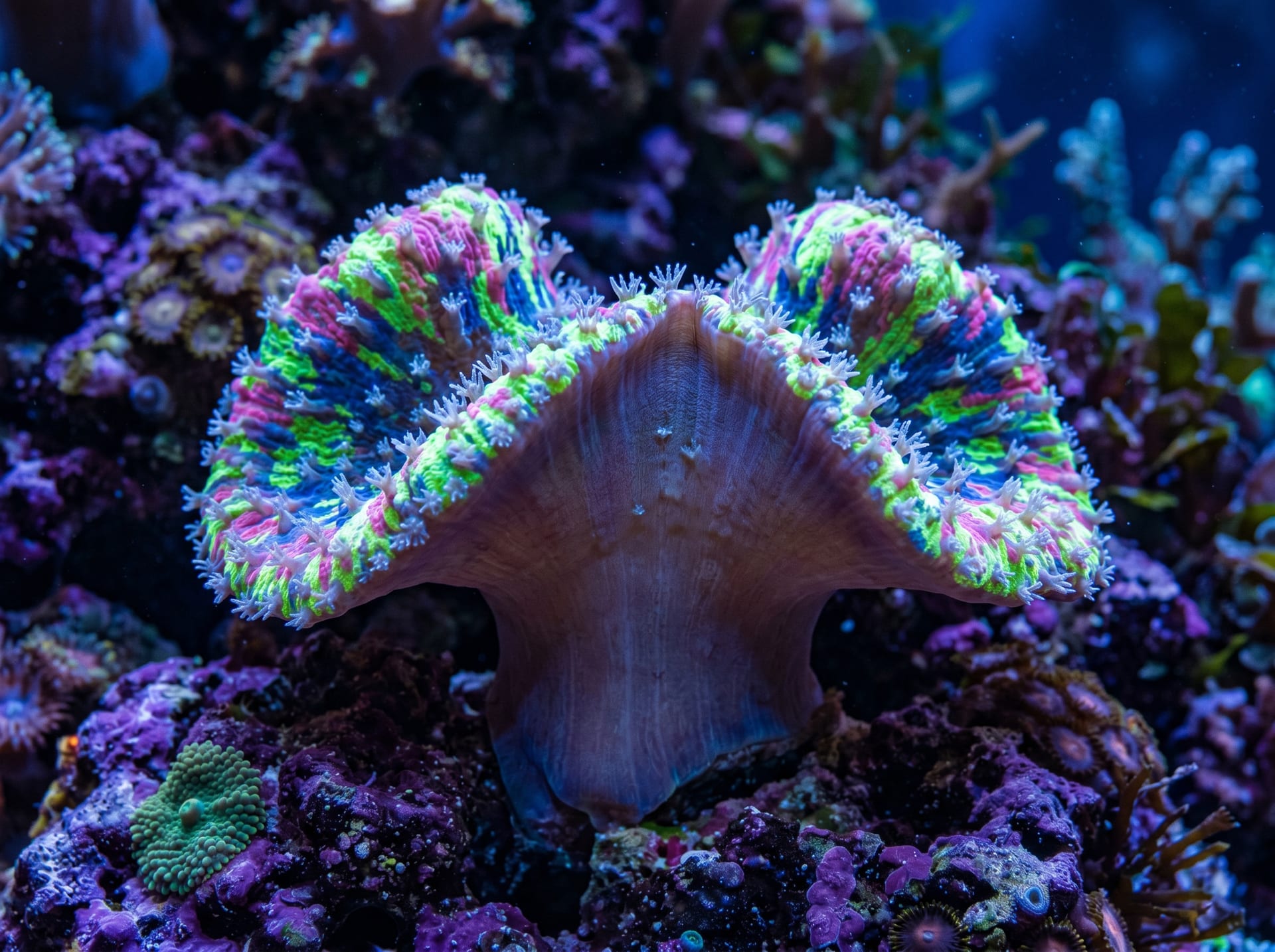
Capnella sp.
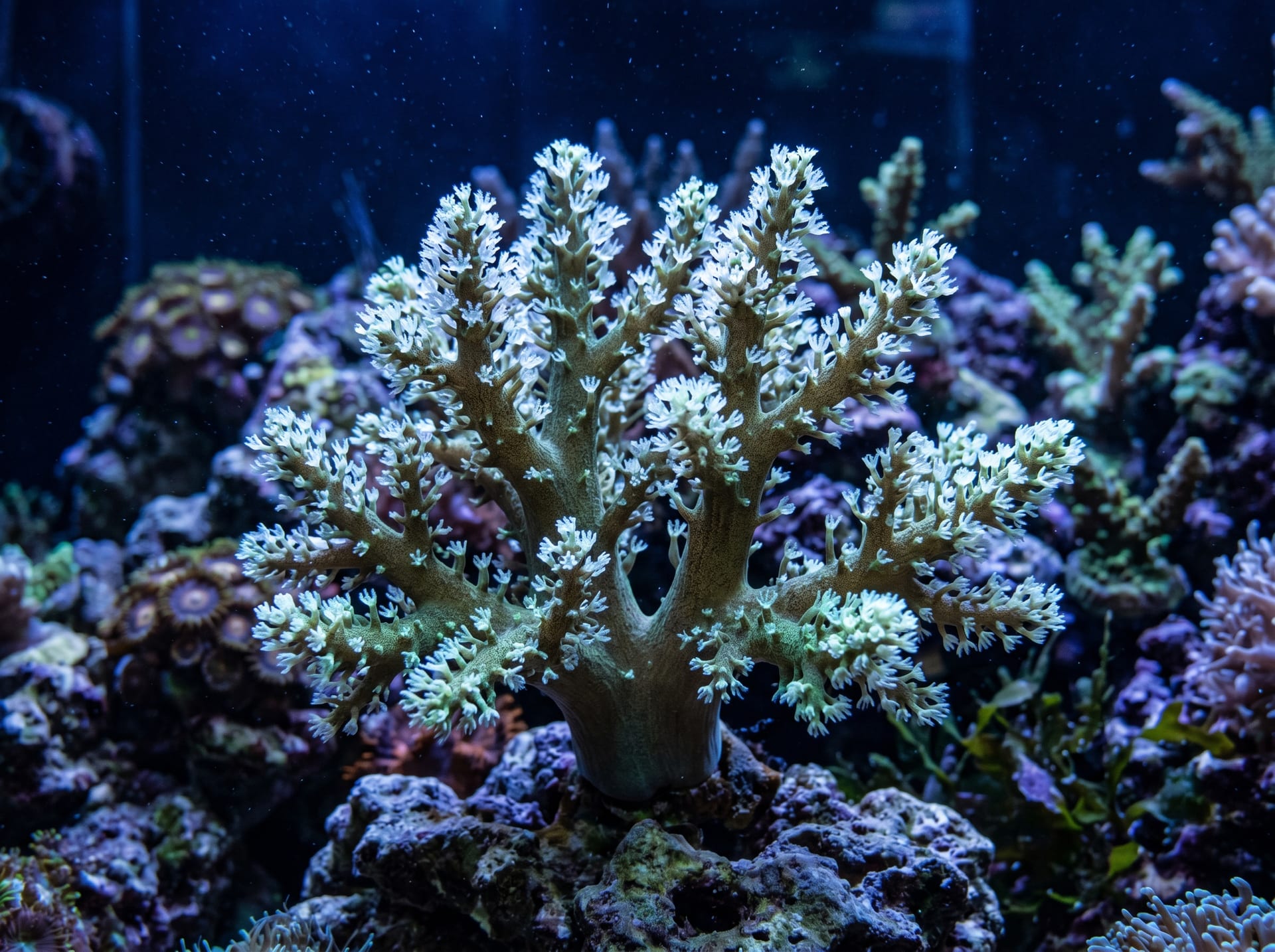
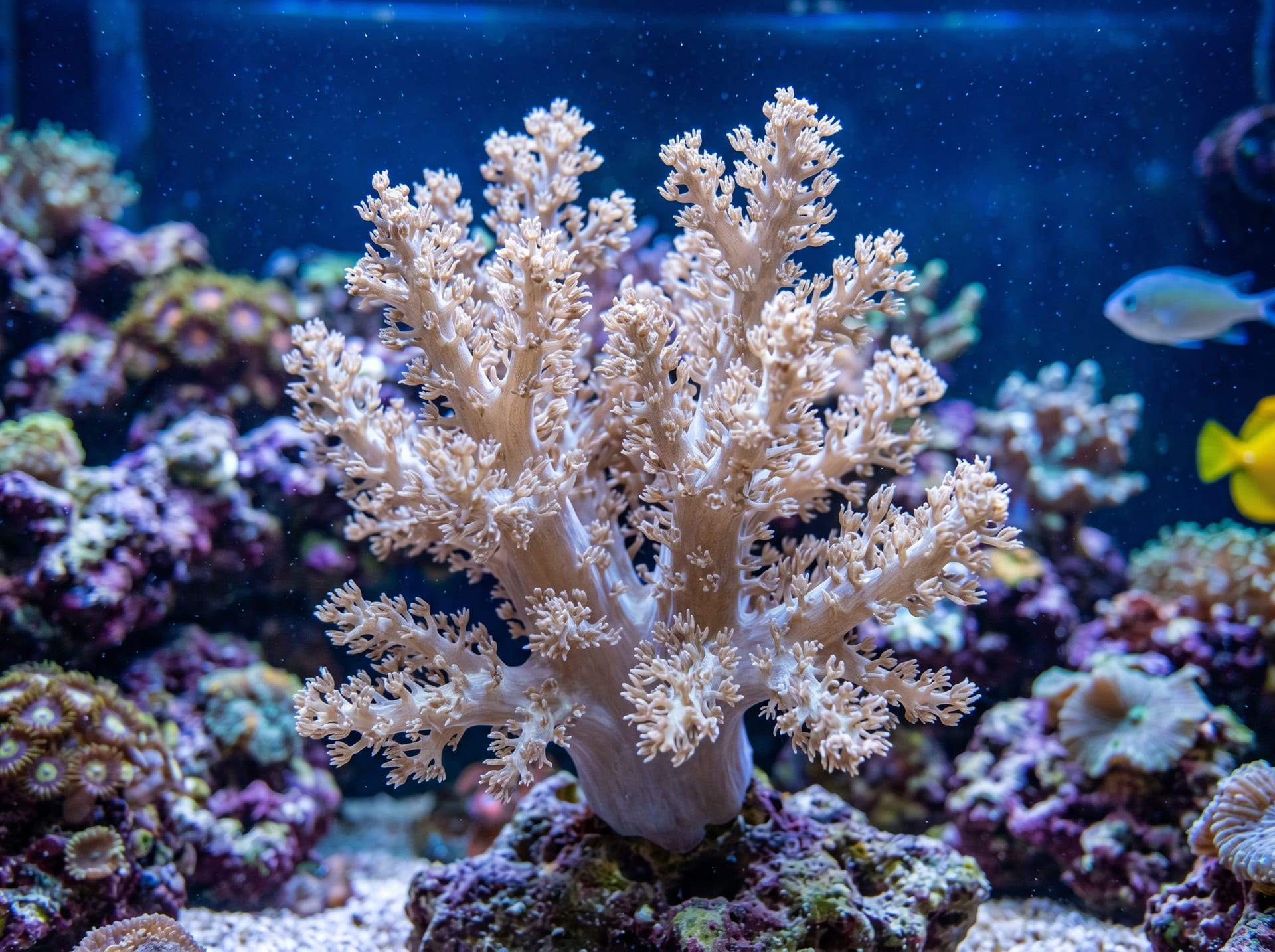
Tree-like branching soft coral. Extremely hardy and prolific. Branches drop naturally to form new colonies.
Kenya tree coral (genus Capnella, family Nephtheidae) is named for its abundance along the Kenyan coast of East Africa. Its tree-like branching silhouette is densely covered in small white to cream polyps. Found on reef slopes and walls from the Indian Ocean to the Pacific, it is one of the hardiest soft corals available to hobbyists, thriving under low to moderate lighting (50–150 PAR) and low to moderate flow. This species propagates prolifically—branches that detach naturally settle and form new colonies, and intentional fragging is equally effortless. Its tolerance for imperfect water quality makes it ideal for new reef tanks.
產地
East African coast (Kenya) through reef slopes of the Indo-Pacific
壽命
10+ years with proper care
溫度
24〜27℃
Primarily photosynthesis
Low to moderate sufficient
Low to moderate
Extremely prolific growth
Tolerant of water quality changes
Can become invasive and difficult to control
Beginner. 這是一個適合初學者的物種。不需要特殊設備或經驗,基本的飼養設置即可成功飼養。
Kenya Tree Coral的理想溫度為24〜27℃。避免溫度驟變,保持穩定的環境。
Kenya Tree Coral的平均壽命為10+ years with proper care。透過適當的護理和營養,牠們可以長壽健康地生活。
Kenya Tree Coral的食物為:Primarily photosynthesis。目標是適當的餵食頻率和均衡的飲食。
Kenya Tree Coral的價格因品系、大小和血統而有很大差異。請查看我們的市場價格頁面獲取最新價格資訊。
尋找此物種的商品
瀏覽Coral商品Standard (Tree) Rose Growing Guide — Elegant Single-stem Form
Growing standard (tree) roses: structure, pruning for shape, wind protection, winter care, and recommended varieties.
Fruiting Bonsai Guide — Enjoying Flowers & Fruits in Miniature
Growing fruiting bonsai: species selection, pollination techniques, fruit thinning, pruning for flower buds, and seasonal care.
Fruiting Bonsai Care Guide — Enjoying Crabapple, Persimmon and Pyracantha Berries
Growing fruiting bonsai: species selection, pruning and fertilizing for fruit set, pollination techniques, and seasonal appreciation of crabapple, persimmon, and pyracantha.
Complete Beginner's Guide to Coral Keeping
Everything you need to start keeping corals: essential equipment, water quality management, and recommended beginner species.