Ludwigia Super Red
IntermediateA beautiful ludwigia entirely dyed red. Maintains some redness even without CO2 injection.
難度
Intermediate
溫度
20〜28℃
壽命
Perennial
體型
15-40cm
飲食
None
關於我們
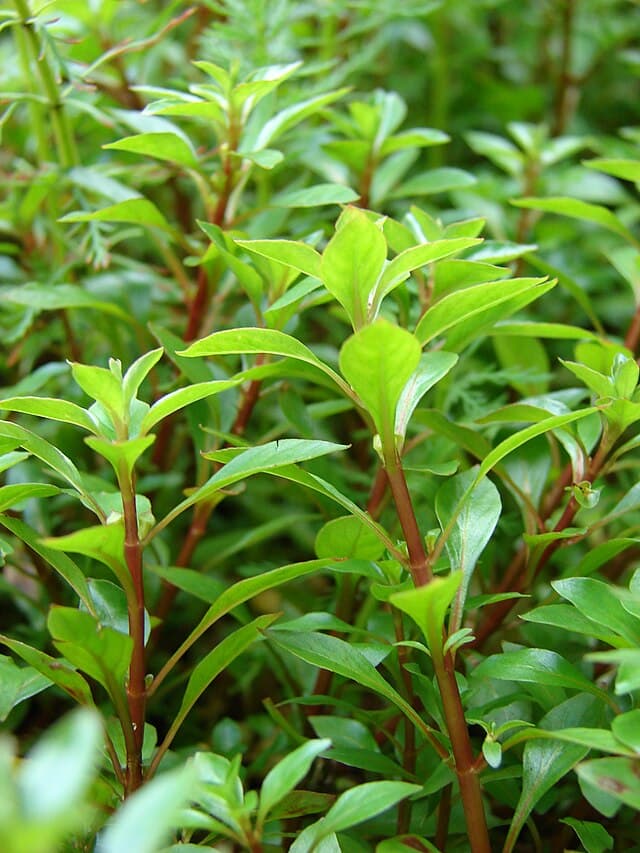
Ludwigia sp. 'Super Red' is a cultivated variety of the Ludwigia genus, distinguished from common ludwigia by its intense red coloration on both the upper and lower surfaces of the leaves. Under medium to strong lighting, the entire leaf turns vivid crimson, with color and growth further enhanced by CO2 addition. Its popularity as a relatively easy red aquatic plant stems from its ability to show some redness even without CO2 injection. Growth rate is moderate, and shape is easily maintained with weekly trimming. Regular application of iron- and potassium-containing liquid fertilizer sustains more vibrant red color. Widely used as a background-to-midground accent in aquascape compositions, it creates a striking contrast with green plants.
基本資訊
產地
Southeast Asia (cultivated variety)
壽命
Perennial
體型
15-40cm
溫度
20〜28℃
飲食
None
飼養指南
Lighting
Medium to strong light enhances redness
CO2
Recommended but grows somewhat without
Fertilizer
Use both substrate and liquid fertilizer
Notes
Trimming promotes side shoots for bushy growth
Super RedRedHardyTrimming
Ludwigia Super Red常見問題
Q飼養Ludwigia Super Red的難度如何?
A
Intermediate. 這是一個中級難度的物種。建議有一定的飼養經驗和環境管理知識。
QLudwigia Super Red的理想溫度是多少?
A
Ludwigia Super Red的理想溫度為20〜28℃。避免溫度驟變,保持穩定的環境。
QLudwigia Super Red的壽命是多長?
A
Ludwigia Super Red的平均壽命為Perennial。透過適當的護理和營養,牠們可以長壽健康地生活。
QLudwigia Super Red能長多大?
A
Ludwigia Super Red成年後通常可達15-40cm。大小可能因飼養條件和個體遺傳而異。
Q應該餵Ludwigia Super Red什麼?
A
Ludwigia Super Red的食物為:None。目標是適當的餵食頻率和均衡的飲食。
QLudwigia Super Red的一般價格是多少?
A
Ludwigia Super Red的價格因品系、大小和血統而有很大差異。請查看我們的市場價格頁面獲取最新價格資訊。
相關物種
尋找此物種的商品
瀏覽Aquatic Plant商品相關文章
Complete Beginner's Guide to Aquatic Plants
Everything beginners need to start growing aquatic plants: equipment, planting, trimming, and recommended easy-care species.
Aquatic Plant Encyclopedia — Popular Species & Care Guide
An encyclopedia of popular aquatic plants with growth difficulty, CO2 requirements, and layout examples for each.
How Much Does Aquatic Plant Growing Cost? Monthly Running Costs Explained
Monthly aquatic plant growing costs: electricity, CO2, fertilizers, and substrate, with high-light vs. low-light tank comparisons.
Aquatic Plant Growth Rate & Size — Species-by-Species Guide
Aquatic plant growth rates by type — stem, rosette, and epiphyte — with CO2, lighting, and fertilizer techniques to boost growth.