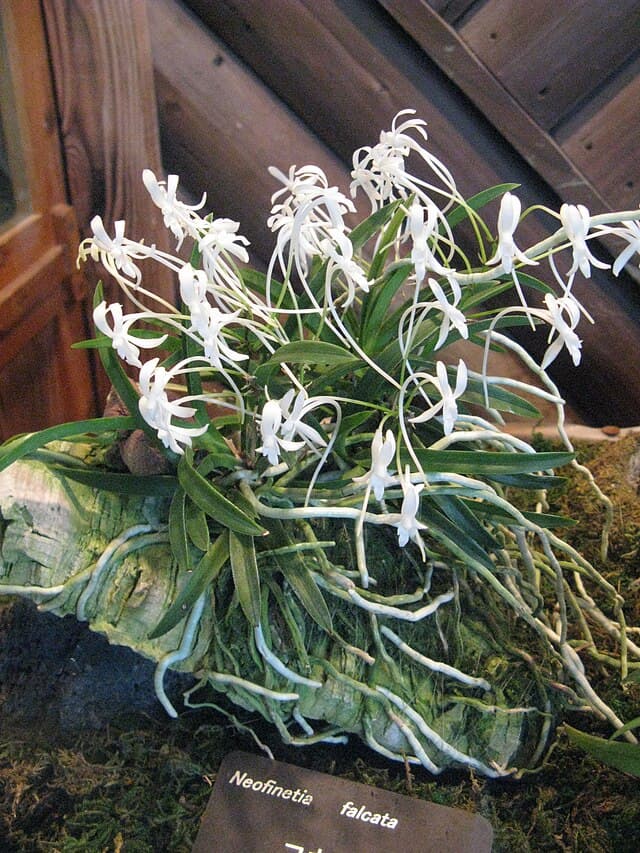
Source: Wikimedia Commons
Neofinetia Falcata
IntermediateA small Japanese native orchid cultivated since the Edo period, with white flowers and sweet night fragrance.
难度
Intermediate
温度
15〜30℃
寿命
10+ years
体型
5-15cm
湿度
50〜70%
饮食
−
关于我们
Neofinetia falcata (fuuran/fukiran), the windmill orchid, is a small epiphytic orchid native to rocky hillsides and old trees in Japan, the Korean Peninsula, and southern China. Plants grow 5–15 cm with neatly two-ranked narrow leathery leaves. The pure white flowers, 1–2 cm across with a long curved spur, are borne in summer (June–August) and emit a strong, sweet jasmine-like fragrance at night. Cultivated in Japan since the Edo period, selected variants with striped, margined, or tiger-spotted leaves command very high prices as prestige classical horticultural items. The species tolerates near-freezing winter temperatures; outdoor cultivation is feasible in temperate Japan. Sphagnum pots or mounted culture on cork or driftwood are standard methods.
基本信息
产地
Japan, Korean Peninsula, and southern China
寿命
10+ years
体型
5-15cm
温度
15〜30℃
湿度
50〜70%
饮食
−
饲养指南
History
Classical Edo-era horticulture
Fragrance
Sweet fragrance at night
Culture
Sphagnum pot culture
Cold
Relatively cold hardy
OrchidNeofinetiaJapanese NativeClassical
Neofinetia Falcata常见问题
Q饲养Neofinetia Falcata的难度如何?
A
Intermediate. 这是一个中级难度的物种。建议有一定的饲养经验和环境管理知识。
QNeofinetia Falcata的理想温度是多少?
A
Neofinetia Falcata的理想温度为15〜30℃。推荐湿度为50〜70%。避免温度骤变,保持稳定的环境。
QNeofinetia Falcata的寿命是多长?
A
Neofinetia Falcata的平均寿命为10+ years。通过适当的护理和营养,它们可以长寿健康地生活。
QNeofinetia Falcata能长多大?
A
Neofinetia Falcata成年后通常可达5-15cm。大小可能因饲养条件和个体遗传而异。
Q应该喂Neofinetia Falcata什么?
A
Neofinetia Falcata的食物为:−。目标是适当的喂食频率和均衡的饮食。
QNeofinetia Falcata的一般价格是多少?
A
Neofinetia Falcata的价格因品系、大小和血统而有很大差异。请查看我们的市场价格页面获取最新价格信息。
相关物种
查找此物种的商品
浏览Orchid商品相关文章
Complete Beginner's Guide to Orchid Growing
Everything beginners need to start growing orchids: placement, watering, fertilizing, repotting, blooming tips, and recommended starter species.
Orchid Encyclopedia — Popular Species & Care Guide
An encyclopedia of popular orchid species with blooming conditions, care difficulty, and fragrance for each.
How Much Does Orchid Growing Cost? Monthly Running Costs Explained
Monthly orchid care costs: sphagnum moss, bark, fertilizer, and chemicals, with cost breakdowns by orchid type.
Orchid Growth Cycles & Time to Bloom by Species
Orchid growth cycles and bloom timelines for phalaenopsis, cattleya, and dendrobium, with tips for reblooming.