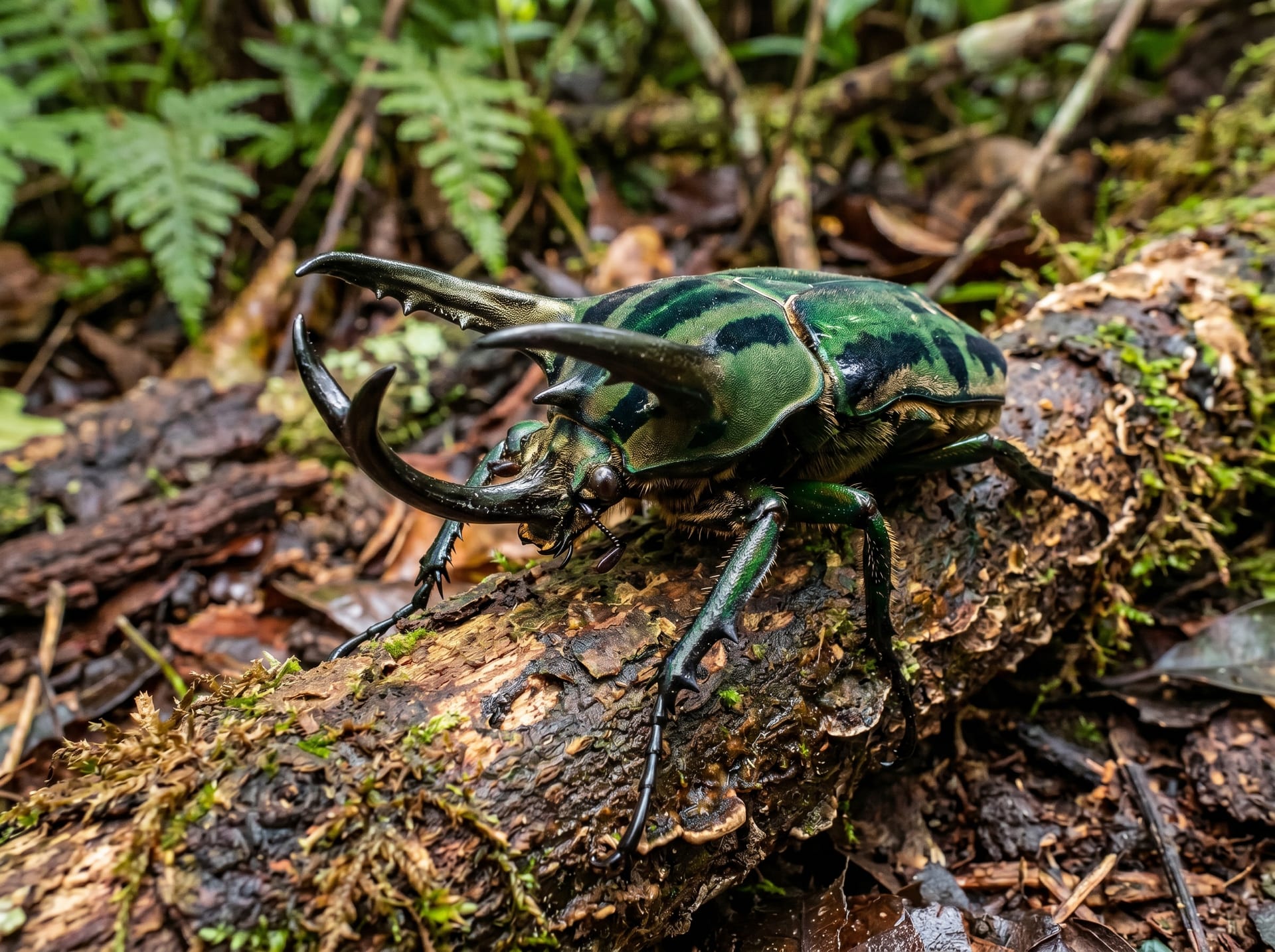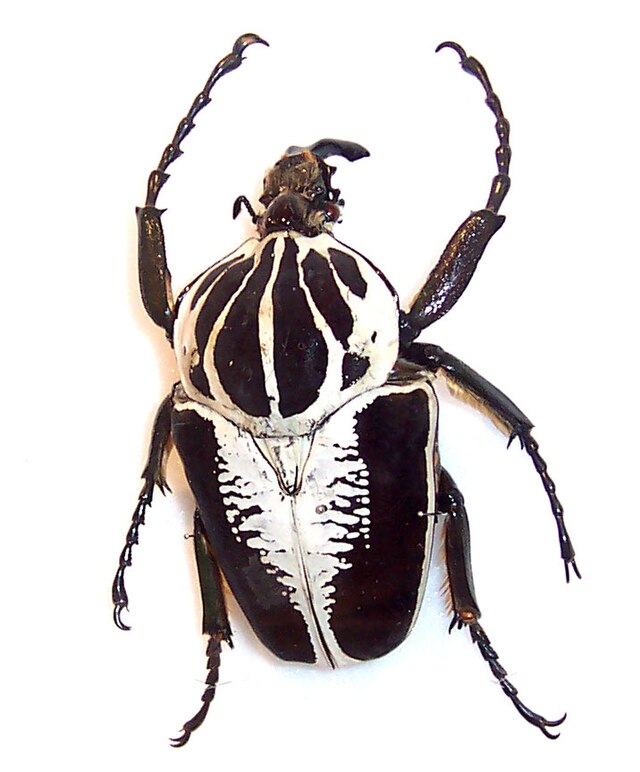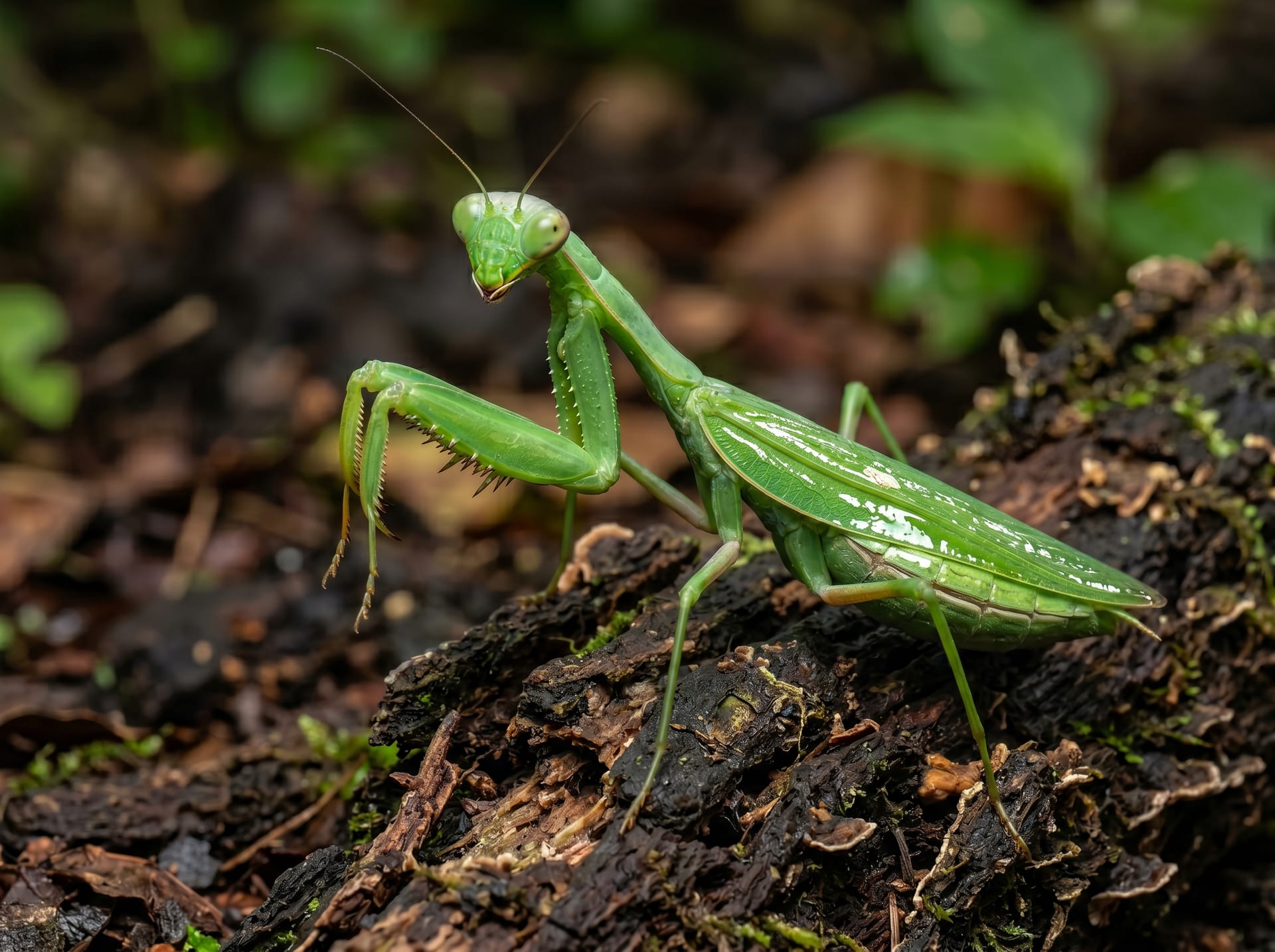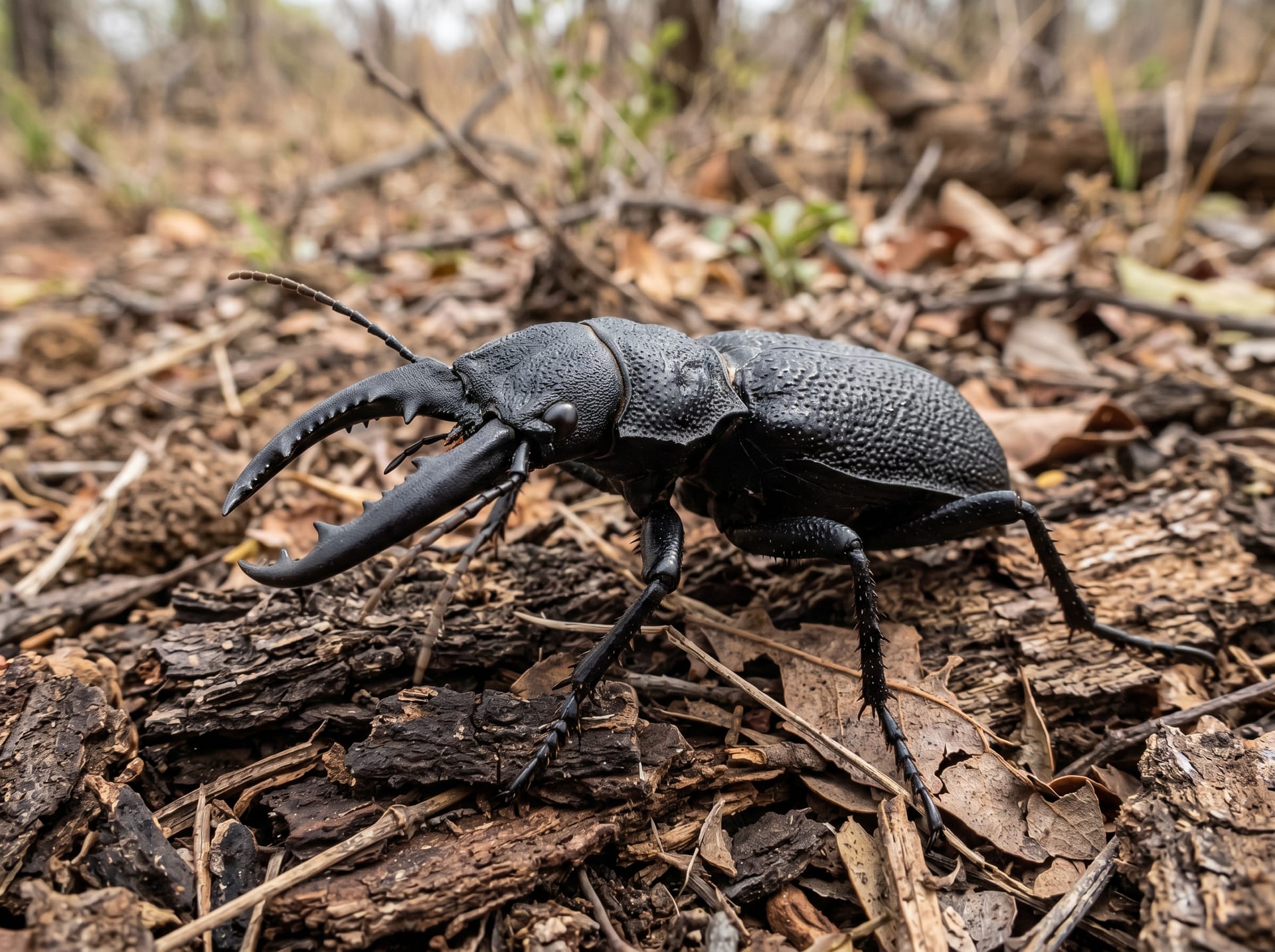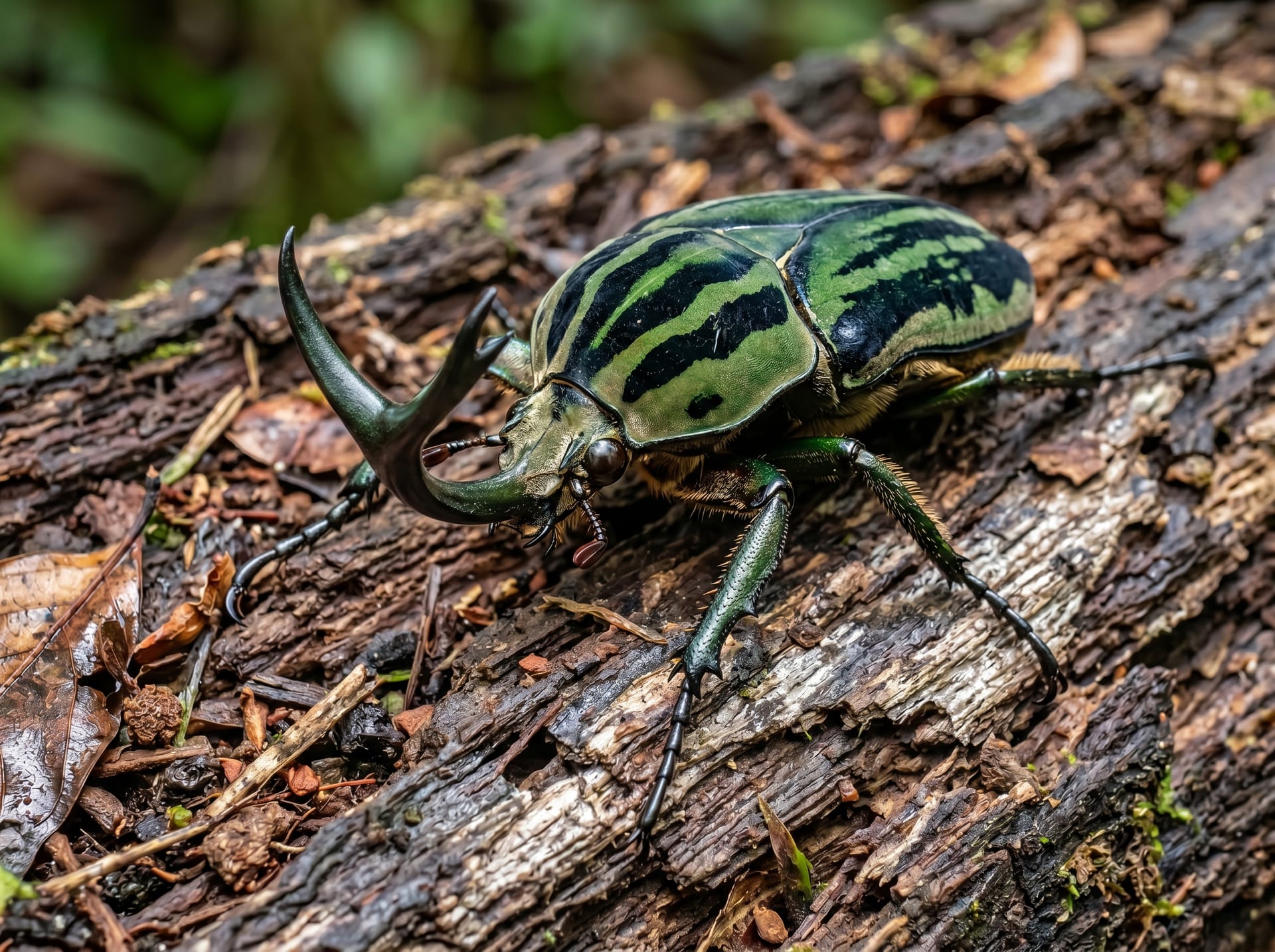
A large flower chafer from Africa. Attractive metallic green color and large horn.
Mecynorrhina torquata is a large flower chafer native to the tropical rainforests of central and western Africa. Adults reach 40–85 mm in length and display a spectacular metallic green coloration with white lateral bands—one of the most striking color patterns among African beetles. Males bear a prominent cephalic horn. The species is diurnal, feeding on flower nectar, tree sap, and ripe fruit in the wild. Captive temperature of 24–28°C is optimal. The enclosure should be generously furnished with climbing branches and bark to accommodate the beetle's active, climbing lifestyle. Egg-laying occurs in leaf litter or fermented substrate; larvae may also require protein-rich supplementation such as cat food. Adults eat beetle jelly, banana, and other fruit, living approximately 3–6 months. As one of the largest and most colorful African flower chafers, M. torquata is a popular and visually rewarding species for beetle enthusiasts.
产地
tropical rainforests of central and western Africa
寿命
Adult 3-6 months
体型
40-85mm
温度
20〜28℃
湿度
60〜80%
Insect jelly, Banana
24-28°C is optimal
Place many climbing branches
Larvae need protein-enriched substrate
Strong flier, secure lid firmly
Intermediate. 这是一个中级难度的物种。建议有一定的饲养经验和环境管理知识。
Mecynorrhina Flower Beetle的理想温度为20〜28℃。推荐湿度为60〜80%。避免温度骤变,保持稳定的环境。
Mecynorrhina Flower Beetle的平均寿命为Adult 3-6 months。通过适当的护理和营养,它们可以长寿健康地生活。
Mecynorrhina Flower Beetle成年后通常可达40-85mm。大小可能因饲养条件和个体遗传而异。
Mecynorrhina Flower Beetle的食物为:Insect jelly, Banana。目标是适当的喂食频率和均衡的饮食。
Mecynorrhina Flower Beetle的价格因品系、大小和血统而有很大差异。请查看我们的市场价格页面获取最新价格信息。
查找此物种的商品
浏览Insect商品Stag Beetle Breeding Temperature Control — Species-Specific Optimal Ranges
Stag beetle temperature control: species-specific ranges for Dorcus, Prosopocoilus, and Lamprima — cooling methods and seasonal cycling.
Rhinoceros Beetle Larvae Care — Mat Management & Temperature for Large Specimens
Rhinoceros beetle larvae care: fermented mat selection, container sizing, replacement timing, temperature management, and pupation chamber preparation.
Hercules Beetle Care Guide — Raising the World's Largest Beetle
Guide to keeping Dynastes hercules: adult and larva care, enclosure size, temperature, diet, substrate changes, and breeding tips.
Growing Bigger Rhinoceros Beetles — Bloodline, Substrate & Temperature Techniques
Techniques for raising larger rhinoceros beetles: selecting quality bloodlines, high-nutrition substrates, and temperature-controlled growth strategies.