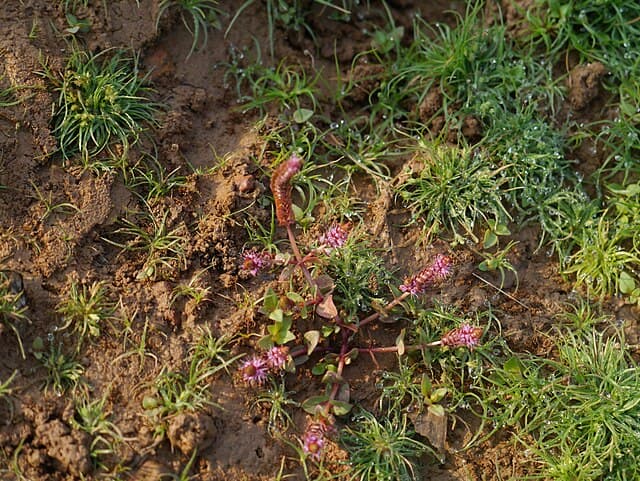
Source: Wikimedia Commons
Rotala Macrandra
AdvancedRotala macrandra
A very beautiful high-difficulty plant with deep crimson leaves. Queen of aquatic plants turning red with CO2 and strong light.
难度
Advanced
温度
22〜26℃
寿命
Perennial
体型
20-50cm
饮食
None
关于我们
Rotala macrandra is a stem plant in the family Lythraceae, native to India, celebrated as the 'Queen of Aquatic Plants' for its deep crimson leaves. Achieving its full beauty requires strong lighting, pressurized CO2 injection, soft water, and regular application of iron-containing liquid fertilizer simultaneously. Deficiency in any of these factors results in smaller leaves or greenish coloration that diminishes its beauty. Regular trimming and replanting cut stems increases density. Optimal water temperature is 24–26°C, and it prefers soft water (GH below 4). Several varieties are commercially available, including the wide-leafed form 'Green' and 'Wide Leaf.' The pinnacle of red background plants, highly prized among advanced aquarists.
基本信息
产地
India
寿命
Perennial
体型
20-50cm
温度
22〜26℃
饮食
None
饲养指南
Lighting
Strong light required
CO2
CO2 injection required
Fertilizer
Iron-containing liquid fertilizer important
Notes
Sensitive to water changes. Stable environment needed
MacrandraCrimsonHigh difficultyQueen
Rotala Macrandra常见问题
Q饲养Rotala Macrandra的难度如何?
A
Advanced. 这是一个高级难度的物种。需要专业设备和精确环境控制的高级饲养技能。
QRotala Macrandra的理想温度是多少?
A
Rotala Macrandra的理想温度为22〜26℃。避免温度骤变,保持稳定的环境。
QRotala Macrandra的寿命是多长?
A
Rotala Macrandra的平均寿命为Perennial。通过适当的护理和营养,它们可以长寿健康地生活。
QRotala Macrandra能长多大?
A
Rotala Macrandra成年后通常可达20-50cm。大小可能因饲养条件和个体遗传而异。
Q应该喂Rotala Macrandra什么?
A
Rotala Macrandra的食物为:None。目标是适当的喂食频率和均衡的饮食。
QRotala Macrandra的一般价格是多少?
A
Rotala Macrandra的价格因品系、大小和血统而有很大差异。请查看我们的市场价格页面获取最新价格信息。
Rotala Macrandra的问答
相关物种
查找此物种的商品
浏览Aquatic Plant商品相关文章
Complete Beginner's Guide to Aquatic Plants
Everything beginners need to start growing aquatic plants: equipment, planting, trimming, and recommended easy-care species.
Aquatic Plant Encyclopedia — Popular Species & Care Guide
An encyclopedia of popular aquatic plants with growth difficulty, CO2 requirements, and layout examples for each.
How Much Does Aquatic Plant Growing Cost? Monthly Running Costs Explained
Monthly aquatic plant growing costs: electricity, CO2, fertilizers, and substrate, with high-light vs. low-light tank comparisons.
Aquatic Plant Growth Rate & Size — Species-by-Species Guide
Aquatic plant growth rates by type — stem, rosette, and epiphyte — with CO2, lighting, and fertilizer techniques to boost growth.