How to protect outdoor medaka from summer heat above 35°C.
要点总结
How to protect outdoor medaka from summer heat above 35°C.
Medaka (*Oryzias latipes*) are remarkably resilient fish — they've survived in Japanese rice paddies and drainage ditches for thousands of years, enduring a wide range of seasonal conditions. That said, their heat tolerance has real limits. Water temperatures above 35°C begin to stress fish noticeably, and sustained exposure above 38–40°C can be lethal. Outdoor containers are especially vulnerable because shallow water volume heats up far faster than a natural pond or river. A black plastic tub sitting in direct afternoon sun on a concrete patio can easily reach 40°C on a day when air temperatures hit 36°C. Understanding why temperature spikes happen — and layering multiple countermeasures — is the key to keeping your medaka healthy through Japan's increasingly brutal summers.
The single highest-impact intervention is controlling how much solar radiation reaches your containers. Bamboo blinds (*sudare*) are the traditional choice and still one of the best: they diffuse sunlight rather than blocking it entirely, maintaining the photoperiod your medaka need while cutting radiant heat significantly. Aim for roughly 50–70% shade coverage. Shade cloth sold at garden centers offers a similar effect and is easier to cut to size for irregularly shaped setups.
The timing matters as much as the method. Install shade structures by late May or early June, before the first heat waves arrive. Medaka under chronic mild heat stress show reduced appetite and spawning activity even when temperatures aren't acutely lethal — prevention is far easier than recovery.
Position shade so it intercepts afternoon sunlight specifically. Morning sun (east-facing exposure) is relatively mild and supports algae growth that benefits water quality. It's the west-facing afternoon sun that drives the most dangerous temperature spikes.
Water volume is thermal mass. A 5-liter container can gain 8–10°C in a few hours of direct sun; a 60-liter container under the same conditions may gain only 3–4°C. For serious outdoor keeping during summer, use containers of at least 20–30 liters per group of fish. Wide, shallow trays heat faster than deeper containers with the same volume, so taller profiles are preferable when space allows.
Be cautious with dark-colored containers. Black or dark brown plastic absorbs significantly more radiant heat than white or light-colored alternatives. If your current containers are dark, wrapping the exterior with reflective insulation film (available at home centers) can reduce heat absorption meaningfully without replacing the container.
On hot, dry summer days, an open container can lose 5–10% of its water volume to evaporation. This matters for two reasons: first, the water that evaporates carries heat away (evaporative cooling), so as volume drops, this natural cooling effect diminishes. Second, lower volume means faster temperature swings in both directions.
Top off with fresh water every day during peak summer — ideally in the morning before temperatures climb. If you use tap water, let it sit in a bucket overnight to off-gas chlorine, or use a dechlorinator. Avoid adding large amounts of very cold water at once, as sudden temperature drops stress medaka just as much as heat does. Small, gradual additions are far safer than a single large top-off.
Dissolved oxygen levels in water drop sharply as temperature rises. At 20°C, water holds roughly 9 mg/L of dissolved oxygen; at 35°C, that falls to around 7 mg/L — and fish metabolic demand increases at the same time. The result is that medaka in hot water are simultaneously needing more oxygen and getting less of it.
An air pump with a fine-bubble airstone is the most reliable solution. For setups without convenient electrical access, solar-powered air pumps have become increasingly capable and affordable. Even small-scale surface agitation — from a small pump creating ripples — improves gas exchange meaningfully. Dense floating plant coverage, while beneficial for shading, can reduce surface exchange, so balance is important.
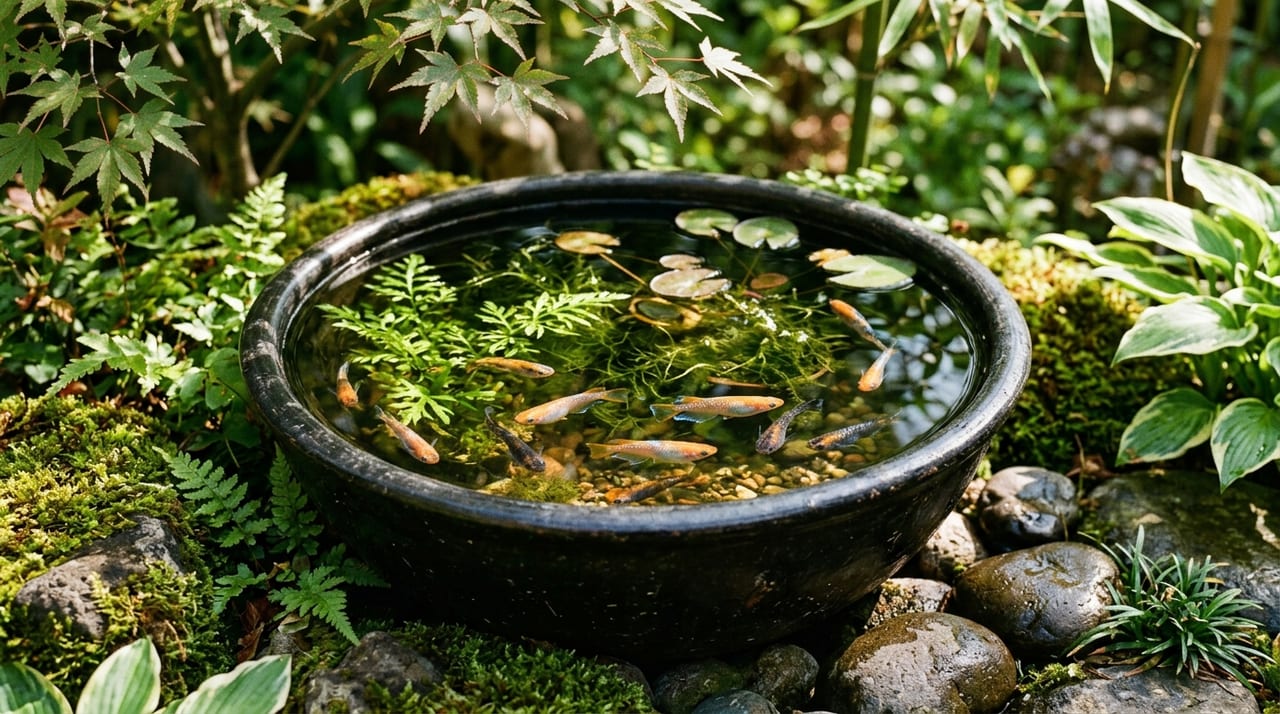
Aquatic plants with floating leaves — water hyacinth (*Eichhornia crassipes*), frogbit (*Hydrocharis dubia*), and water lettuce — create natural shade from above, suppress algae through nutrient competition, and contribute oxygen during daylight hours. In practice, a surface that's 30–50% covered with floating plants stays noticeably cooler than open water in the same conditions.
The critical caveat is density management. Water hyacinth in particular grows explosively in warm, nutrient-rich water. If it covers more than 60–70% of the surface, it can deplete oxygen at night (plants consume oxygen in the dark) and block the surface exchange your medaka depend on. Thin out floating plants weekly during peak growing season.
Permanent placement decisions made in spring often need revisiting by midsummer. East or northeast-facing positions receive gentle morning sun and are shaded during the hottest afternoon hours — ideal for summer. West-facing positions that seemed fine in spring can become untenable by July.
Heat radiating from concrete, asphalt, or painted walls compounds direct solar radiation significantly. Elevating containers slightly on wooden slats or a low table reduces conducted heat from below. If full relocation isn't possible, even a reflective barrier on the west-facing side of your container setup can reduce afternoon heat load noticeably.
Check water temperature with a thermometer at its peak time (usually 2–4 PM) at least once per week during July and August. If you're consistently seeing above 34°C, your current countermeasures aren't sufficient and intervention is needed before fish health declines.
Aquarium Volume Calculator
Calculate water volume, weight, and heater wattage from tank dimensions
Water Quality Checker
Find compatible fish, shrimp, plants & corals based on pH, temperature & hardness
Breeding Calendar
Visual monthly breeding season guide for each species
Compatibility Checker
Check compatibility between two species on a 5-level scale