How to breed saltwater fish, focusing on clownfish: pairing, spawning, fry rearing, breeding tank setup, and first-feeding tips.
要点总结
How to breed saltwater fish, focusing on clownfish: pairing, spawning, fry rearing, breeding tank setup, and first-feeding tips.
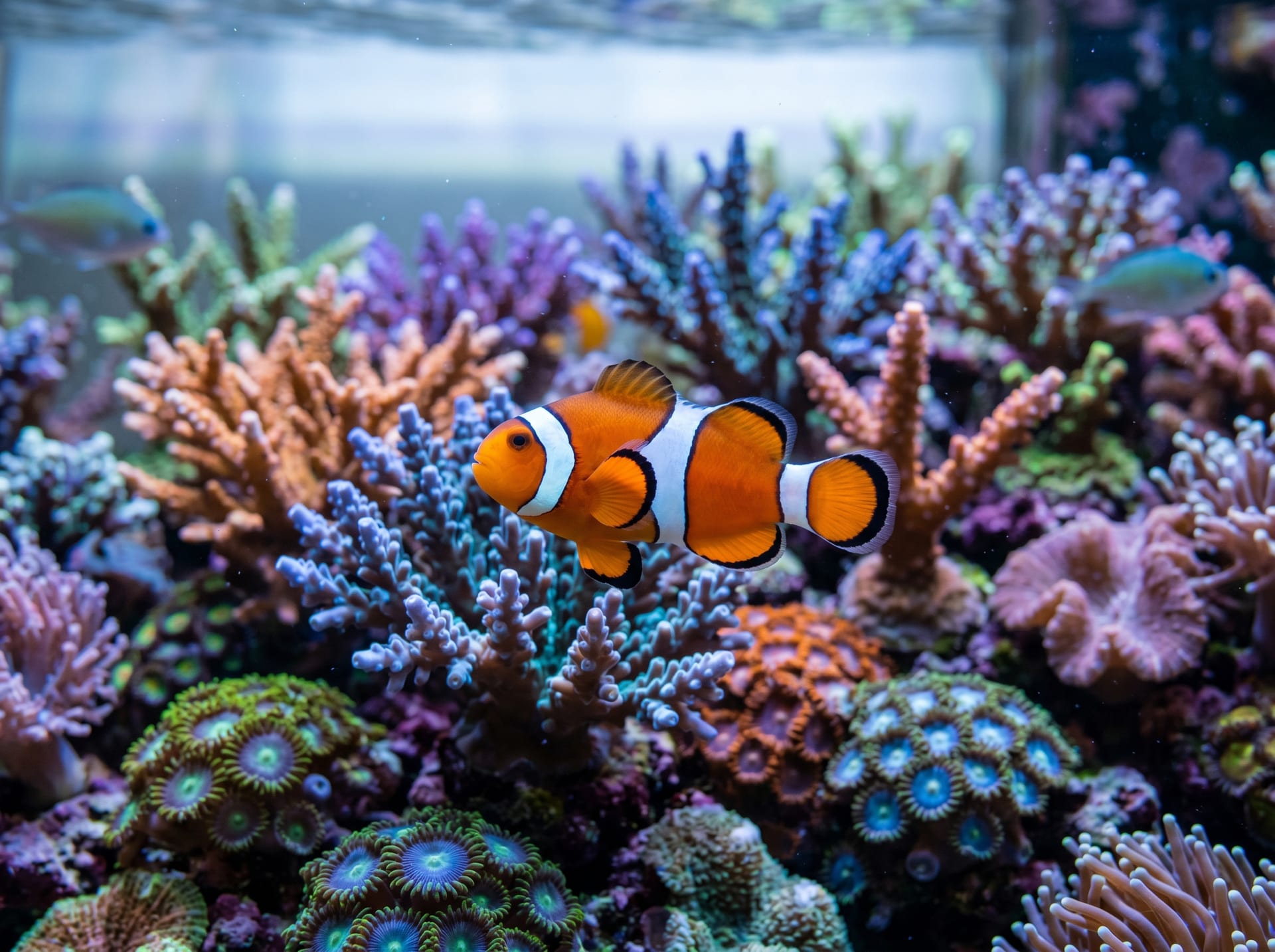
Marine fish breeding is considered more challenging than freshwater, but clownfish (Amphiprion ocellaris) are among the easier marine species to breed. This guide focuses on clownfish breeding methods.
Why Clownfish Breeding Is Popular
- They naturally form pairs in aquariums
- Breeding is possible without anemones
- High spawning frequency (every 2-3 weeks)
- Fry are relatively large at birth, making them easier to raise
Pairing Method
Clownfish are sequential hermaphrodites -- the largest individual in a group becomes female.
- Place two fish in the same tank -- Choose two with a size difference for better success
- Wait for pair formation -- Natural pairing occurs within weeks to months
- Signs of pairing -- Two fish swimming closely together and staying near a nest site
Spawning Preparation
- Spawning substrate: Place a flat rock or terracotta pot in the tank
- Water quality: Specific gravity 1.024-1.025, temperature 26-28C
- Lighting: Stabilize light/dark cycles at 12 hours each
- Diet: Provide high-protein frozen food (brine shrimp, mysis shrimp)
Spawning Signs and Egg Management
Spawning is imminent when the female's abdomen swells and the male begins cleaning the spawning substrate.
- Spawning: Female deposits eggs on the substrate; male fertilizes them
- Egg count: Approximately 100-500 eggs
- Egg color: Orange immediately after spawning, turning silver just before hatching
- Time to hatching: Approximately 6-10 days (temperature dependent)
- Male care: Male fans fresh water over eggs and removes fungused ones
Fry Rearing
Hatching occurs at night. Fry are attracted to light.
- Fry collection -- On hatching night, use a flashlight to gather fry and collect with a pipette
- Rearing tank -- 10-20L small tank with minimal aeration
- Initial feeding -- Feed rotifers immediately after hatching
- After 2 weeks -- Switch to newly hatched brine shrimp
- After 1 month -- Transition to finely crushed prepared food
Breeding Notes
- Stable rotifer supply is key: Start cultures in advance
- Water quality management: Fry are sensitive to water changes; perform small daily changes
- Prevent cannibalism: Sort by size as differences emerge
- Avoid inbreeding: Do not cross offspring from the same pair
Benefits of Buying on Buri-Choku
On Buri-Choku, you can purchase directly from breeders with extensive marine fish breeding experience. Bloodline information and care environments can be verified, and breeding pairs can be discussed.
在BreederDirect上查找Marine Fish
直接从认证繁殖者购买
查看Marine Fish分类