History and culture of Japanese goldfish shows, variety-specific judging standards for Ranchu, Edonishiki, and more, how to condition show-quality fish, and how beginners can appreciate the craft.
要点总结
History and culture of Japanese goldfish shows, variety-specific judging standards for Ranchu, Edonishiki, and more, how to condition show-quality fish, and how beginners can appreciate the craft.
Japan's goldfish culture has a unique competitive and appreciation culture called goldfish exhibitions (金評会). At exhibitions held throughout the country each year, breeders and enthusiasts showcase goldfish they have carefully raised, competing on their beauty.
This article explains everything from the fundamentals of goldfish exhibitions to evaluation points by breed and breeding methods aimed at exhibition-level goldfish.
Japan's goldfish exhibitions have their origins in the Edo period, when goldfish merchants and enthusiasts held appreciation events called "goldfish matches" and "goldfish viewings."
Modern exhibitions were formalized during the Meiji and Taisho periods, and today many organizations hold exhibitions, including the All Japan Ranchu Protection Association, local goldfish societies, and municipal governments.
Famous exhibitions: - "Ikeda Goldfish Festival Exhibition" in Ikeda City, Osaka - "Edogawa Goldfish Festival" in Tokyo - Ranchu exhibitions in Yatomi City, Aichi - Yamatokōriyama Goldfish Festival Exhibition
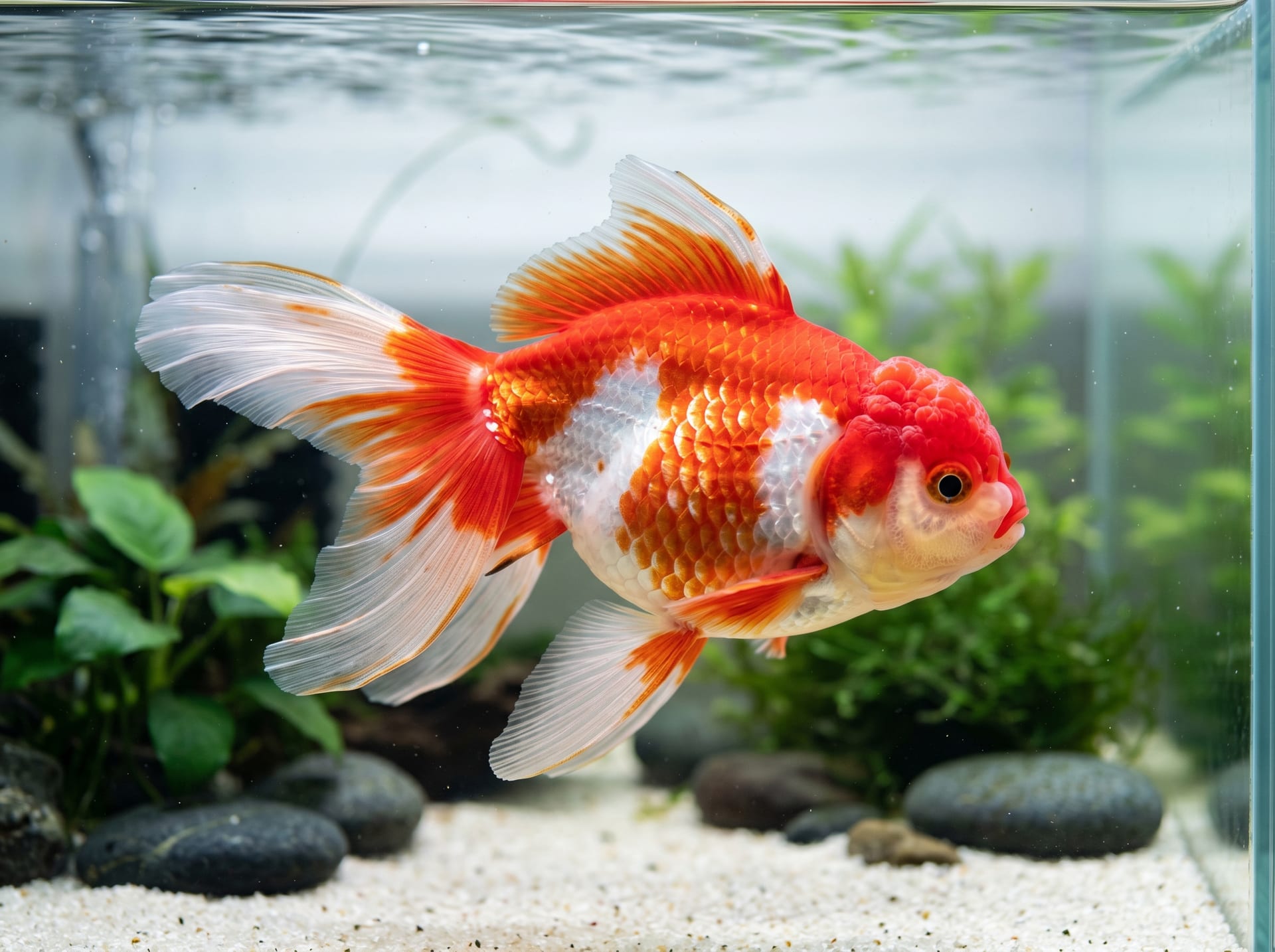
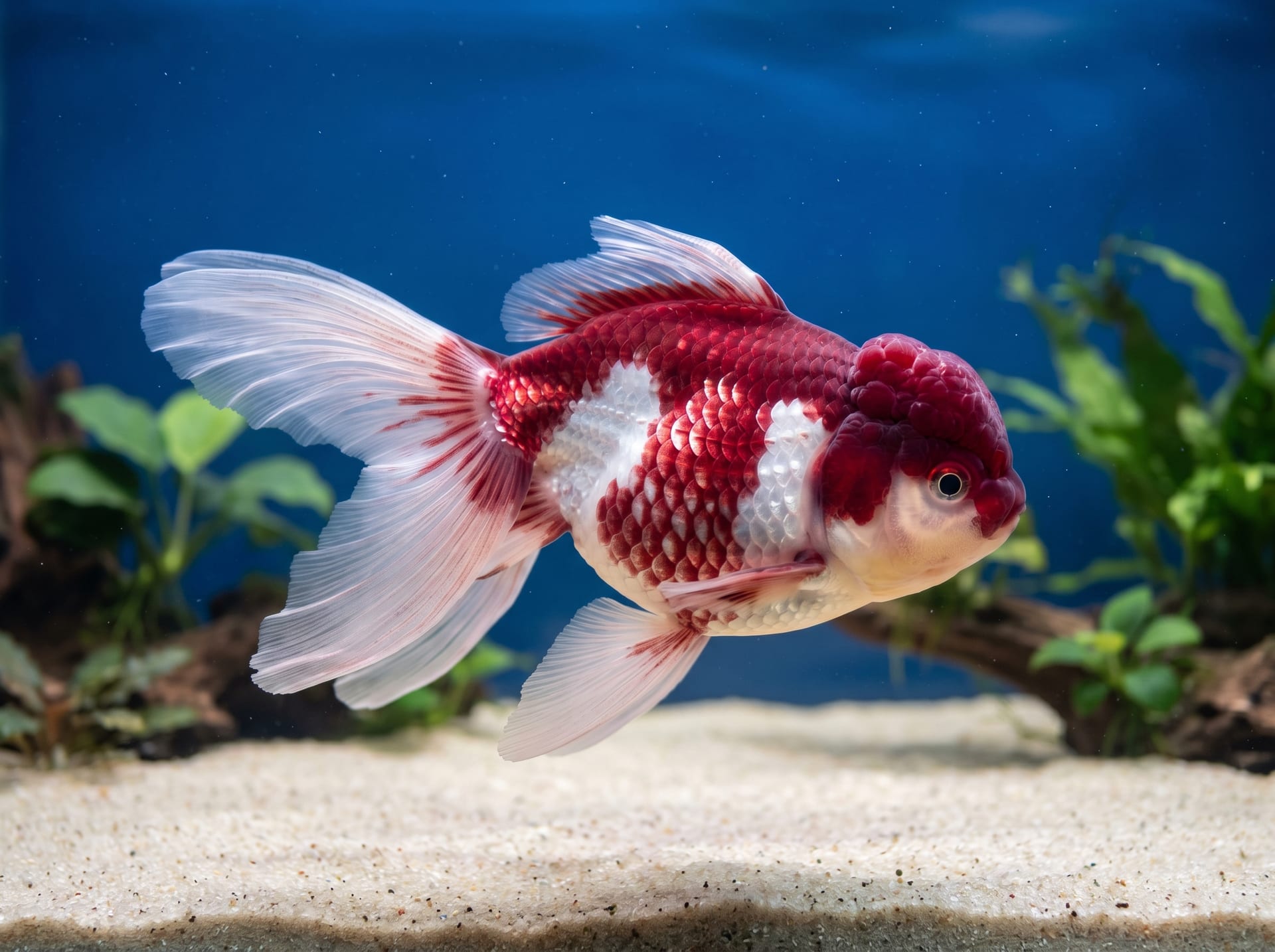
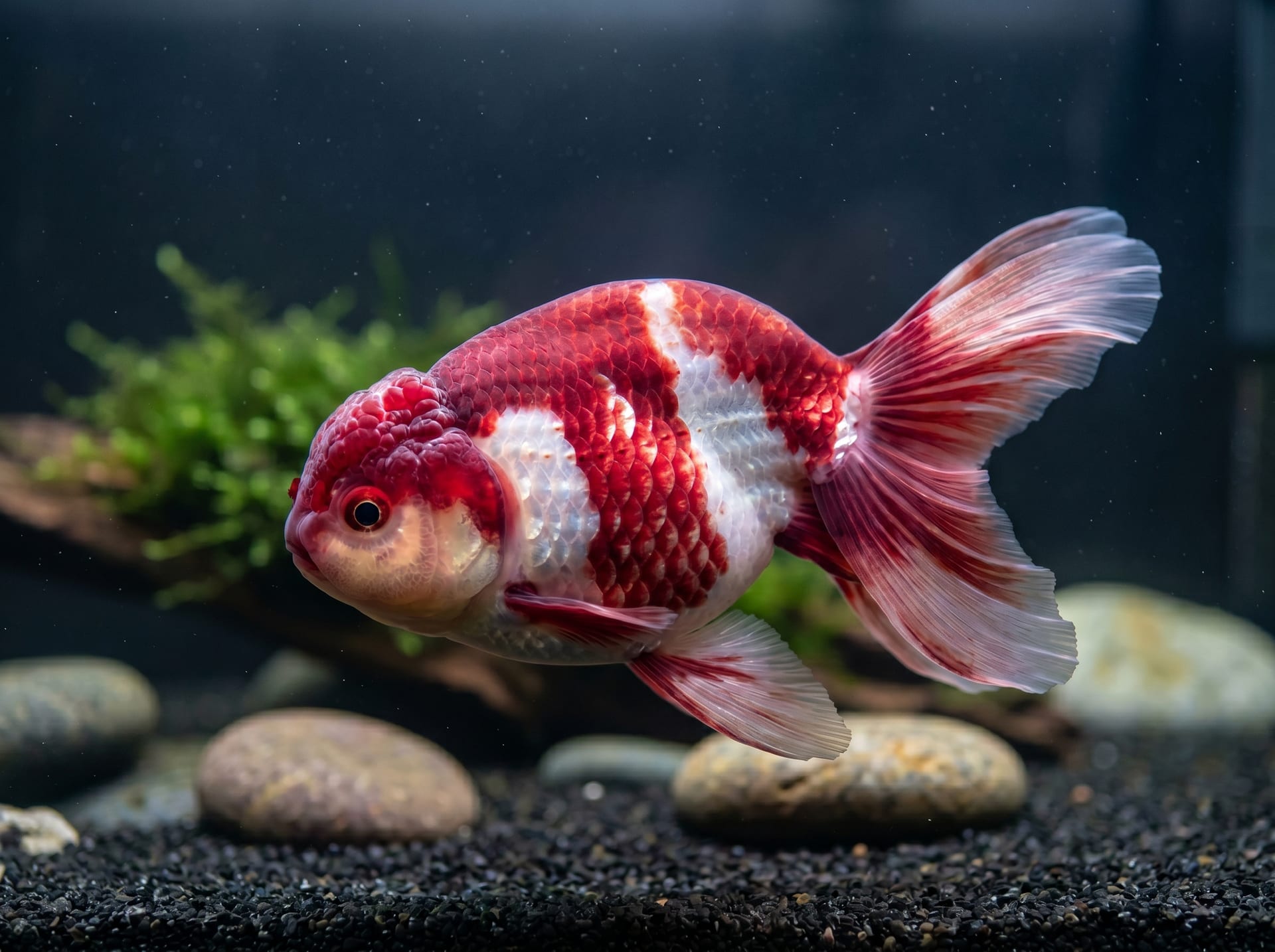
The most popular breed, often called the king of Japanese goldfish. It has no dorsal fin and is characterized by the development of a fleshy head bump (lipoma).
Main evaluation points:
| Body Part | Evaluation Criteria | |-----------|-------------------| | Head | Development, uniformity, and symmetry of the lipoma | | Body shape | Rounded, firm body shape without sagging, proper back line | | Tail fin | Harmony of four-lobed tail, spreading, absence of missing sections or creases | | Body color | Vibrancy, uniformity of color, points for specific patterns | | Swimming | Horizontal center of gravity with stable swimming |
Ranchu is uniquely evaluated in top view (above view), unlike most other goldfish varieties which are evaluated from the side.
A breed born from the crossbreeding of Azuma Nishiki and Ranchu. It has no dorsal fin and is characterized by calico (three-color) body coloration and a fleshy head bump.
Evaluation points: - Body shape and head lipoma follow Ranchu standards - Beauty and balance of calico pattern (red, white, black, blue) - Color vibrancy
A crossbreed of Oranda Lionhead and calico goldfish. Characterized by a fleshy head bump and beautiful calico pattern.
Evaluation points: - Development and uniformity of the lipoma - Color balance and vibrancy of three to four colors - Uniformity of body shape
A breed with a prominently developed fleshy head bump. It has a dorsal fin and is appreciated from the side view.
Evaluation points: - Size and uniformity of the head lipoma - Roundness and balance of the body - Condition of the dorsal and other fins
Basic breeding management toward exhibitions (using Ranchu as an example):
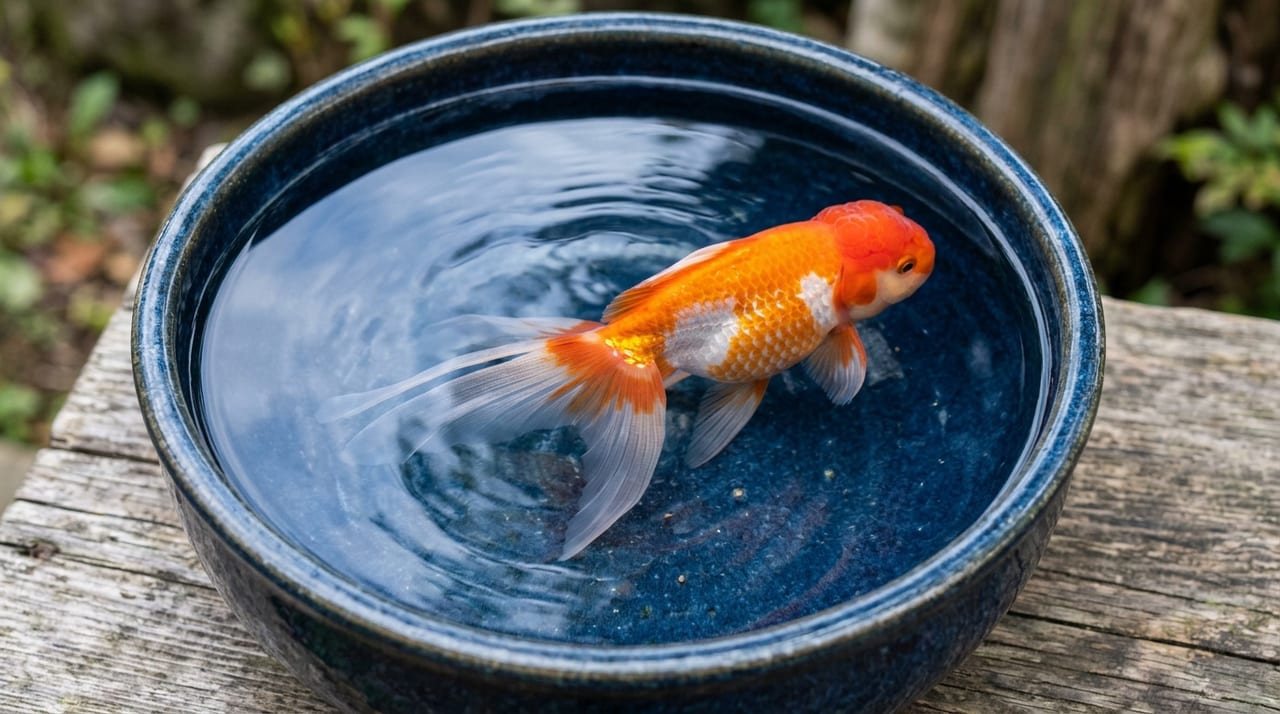
Raising in pools (trays and ranchu vessels): Ranchu are typically raised in shallow trays (60-90cm diameter plastic containers) rather than glass aquariums. The wide surface area and appropriate shallowness are believed to favor the development of body shape.
Water management: Ranchu are sensitive to changes in water quality. Water changes should be performed once to twice a week, maintaining consistently clean water. Daily water changes are sometimes recommended during summer.
Sunlight exposure: Natural sunlight outdoors improves body color vibrancy. The balance between direct sunlight and appropriate shade is important.
Quality and quantity of food: Provide premium specialized pellets with high-quality protein in abundance (choice between floating and sinking food is determined by the individual's swimming behavior). However, remove uneaten food immediately to prevent water contamination.
Uniformity of body shape is important in exhibitions. From the young fish stage, appropriate exercise and feeding help refine the body line.
A curved spine, missing fins, eye abnormalities, and other "defects" result in significant point deductions. Thorough health management is also important for examination preparation.
First, we recommend visiting your local exhibition. Seeing the actual evaluation process provides a visual understanding of what is valued.
Most exhibitions welcome enthusiasts and general visitors, with admission being free or low-cost. It's also an opportunity to speak with breeders and enthusiasts.
A first entry from the same-year fish division is the easiest entry point, as this class typically has participants with similarly limited experience.
Goldfish exhibitions are one aspect of Japan's traditional culture that transcends mere contests. By raising goldfish with an exhibition goal, the quality of your breeding improves and your understanding of goldfish beauty deepens.
Start with a visit to an exhibition and experience the depth of goldfish culture.
Aquarium Volume Calculator
Calculate water volume, weight, and heater wattage from tank dimensions
Water Quality Checker
Find compatible fish, shrimp, plants & corals based on pH, temperature & hardness
Feeding Guide
Check feeding frequency, portion sizes & supplements by species and growth stage
Compatibility Checker
Check compatibility between two species on a 5-level scale