雪貂饲养完全指南|笼子、食物、互动、健康管理
初学者雪貂饲养完全指南。详细介绍了适当的笼子尺寸、饲料类型和喂食频率、互动技巧、常见疾病(胰岛素瘤和肾上腺肿瘤)及健康检查方法。了解雪貂这种动物 雪貂(学名:Mustela putorius furo)是鼬科的小型肉食动物,由欧洲黑脚鼬人工驯化而来。全身细长,好奇心强,亲人的性格是其最大的魅力。

要点总结
初学者雪貂饲养完全指南。详细介绍了适当的笼子尺寸、饲料类型和喂食频率、互动技巧、常见疾病(胰岛素瘤和肾上腺肿瘤)及健康检查方法。了解雪貂这种动物 雪貂(学名:Mustela putorius furo)是鼬科的小型肉食动物,由欧洲黑脚鼬人工驯化而来。全身细长,好奇心强,亲人的性格是其最大的魅力。
相关品种
了解雪貂这种动物
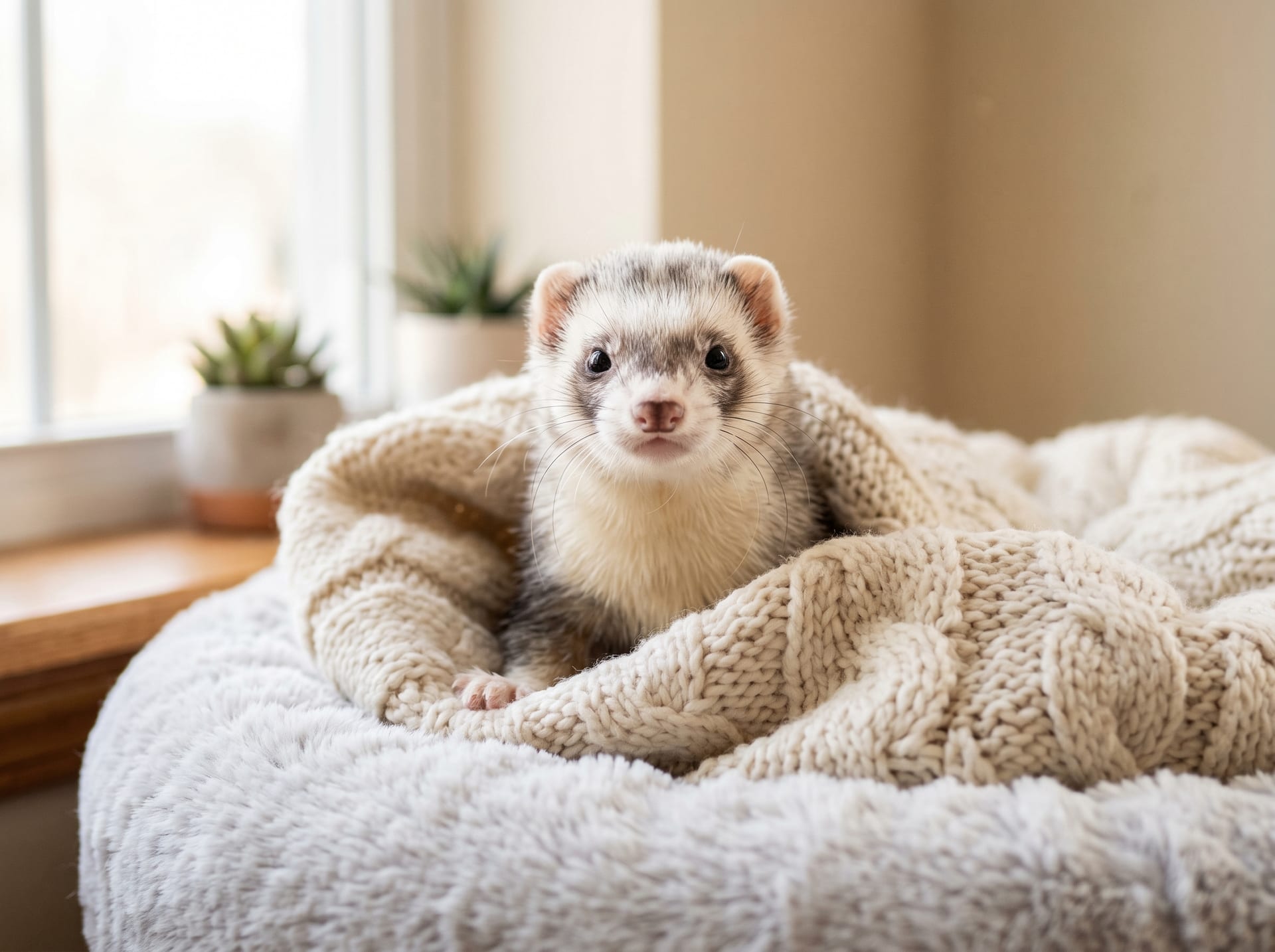
雪貂(学名:Mustela putorius furo)是鼬科的小型肉食动物,由欧洲黑脚鼬人工驯化而来。全身细长,好奇心强,亲人的性格是其最大的魅力。寿命为5~10年,只要照顾得当,就能长期陪伴你。
雪貂是非常社交的动物,比起单独饲养,饲养两只或以上的雪貂可以减少压力,让人能观察到它们活跃嬉戏的样子。不过,有些个体之间相性不好,所以引入时要逐步让它们对面很重要。此外,雪貂还有独特的行为表达方式,如"Dooking"(尾部梳毛)和"War Dance"(飞跳并逃窜的动作),熟悉后就能理解其含义。
雪貂每天需要4~6小时的笼外运动(散步时间)。"长期关在笼子里"会导致身心不健康。饲养前请认真确认是否能腾出充足的时间。
笼子的选择和设置
多层大型雪貂专用笼是最佳选择。最小要求为宽90cm×深60cm×高150cm左右。带有阶梯形搁板或斜坡的笼子能促进雪貂的立体运动,也有利于缓解压力。
设置位置和温度管理:放在避免阳光直射且空调风不会直吹的地方。雪貂非常怕热,温度超过32℃会导致中暑,危及生命。夏季必须将室内温度保持在25℃以下。相反,它们相对耐寒,但当温度低于5℃时,某些个体会进入接近冬眠的状态(假眠)。
笼内必备物品:吊床(用于睡眠和休息)、角型厕所(雪貂本能上会在角落排泄)、给水瓶、陶制食碗是基本配置。铺设不易打滑的绒布材料可以减轻关节负担。仅用金属网底的地面会导致脚被卡住或骨折,应避免使用。
清洁度也很重要。厕所要每日更换,垫料要每周洗1~2次,笼子整体最好每月全面清洗一次。雪貂是有体臭的动物,但通过定期清洁可以大幅减少异味。
喂食方法
雪貂是完全的肉食动物。需要高蛋白、高脂肪的动物性食物,植物性食品(谷物、蔬菜、水果)无法被消化,可能会加重胰腺负担或导致胰岛素瘤。
选择饲料的要点:选择雪貂专用饲料时,要确保成分表的第一位是鸡、鱼等肉类。避免选择玉米、小麦等谷物排名靠前的产品。如果用猫粮代替,要选择"无谷物、高蛋白"的产品,但不如雪貂专用饲料。
绝对不能喂的食物:洋葱、大蒜(溶血性贫血)、巧克力(中毒)、乳制品(腹泻)、高糖零食(诱发胰岛素瘤)严格禁止。虽然少量水果没问题,但由于糖分含量高,不应定期喂食。
喂食方式:由于雪貂习惯数小时进食一小次,"自由采食(持续放食)"很常见,但近年来越来越多的饲养者为了防止肥胖而采取每天2~3次的定时喂食。要定期确认个体的体重和体型,保持适当体重(公鼬1~2kg,母鼬约0.6~1kg)很重要。
互动和训练
雪貂熟悉人类后会变得非常亲密,会爬到肩膀上或钻进衣服里,为生活增添许多乐趣。
改正咬人习惯:小雪貂有时会在玩耍中用力咬人。被咬时发出"哎哟!"的声音,立即停止游戏。通过重复这个过程,它们会学到"咬=不好玩"。打它或大幅甩开是反效果,会增加攻击性。
确保散步时间的安全:在室内自由运动期间,要提前堵住电源线、排水口、有毒植物、小孔和高度差等危险区域。由于雪貂身体柔软,可以进入约5厘米宽的缝隙,所以要注意它钻进冰箱下面或家具后面。使用专用围栏也是防止逃脱的有效方法。
益智和游戏:加入隧道玩具、球类和可作为藏身处的帐篷等,可以让散步时间更充实。雪貂有隐藏物品的习性(囤积),所以要妥善保管贵重物品。
身体护理和定期护理
剪爪:每月1~2次用专用指甲剪进行修剪。爪子长了会挂在地毯或布料上,导致骨折。如果雪貂抗拒,可以在手指上涂上雪貂专用零食(如麦芽膏),转移它的注意力再进行。
清理耳朵:每两周到一个月一次,用棉棒或专用清洁液清除外耳的褐色耳垢。过多的耳垢或黑色颗粒状污垢可能表示有耳螨,应咨询动物医院。
洗澡:最理想的是每月洗1~2次,但过度洗澡会洗掉过多皮脂,反而会加强体臭。使用雪貂专用或无硅油的温和洗发水,洗后要彻底擦干再放回笼子。
雪貂常见病和健康管理
雪貂容易患特定疾病。4岁以后,患病风险急剧增加,因此定期健康检查是必不可少的。
胰岛素瘤:胰腺胰岛素分泌肿瘤,4岁以上的雪貂常见。主要症状是低血糖发作(虚弱、流涎、昏倒),发作时要立即就医。早期发现可以通过药物治疗。
肾上腺疾病(肾上腺肿瘤):常见于4岁以上的雪貂,特点是脱毛(通常从尾部和腰部开始)、外生殖器肿胀和攻击性变化。可通过激素治疗或手术来处理。
淋巴瘤:常见于中老年雪貂的肿瘤性疾病。表现为体重减轻、食欲不振和淋巴结肿大。在某些情况下化学疗法可能有效。
每年应进行1~2次健康检查(包括血液检查),3岁以后最好每半年检查一次。我们强烈建议提前列出能诊治雪貂的"异宠动物专科"动物医院。拥有一个信任的医生是确保雪貂长寿和健康的关键,这样在紧急情况下不会手足无措。
异味控制|通过适当护理使其不成问题
许多人对雪貂有"臭"的印象,但通过适当的护理,可以将异味控制在不影响生活的水平。雪貂特有的体臭是皮脂腺分泌的麝香,这本身是自然的。
减少异味的具体方法
- 绝育手术和肛门腺切除:日本国内流通的大多数雪貂在进口前已进行过手术。此手术可大幅减少激素引起的强烈异味
- 定期洗澡:每月1~2次为目标。过度洗澡会导致皮脂分泌增加,反而加强臭味,所以要注意不要过度
- 定期清洁笼子和寝具:每周1~2次为目标,洗涤睡袋和吊床,并擦拭笼内。寝具的脏污是异味的最大原因
- 使用空气净化器:定期通风房间,并配合使用宠物专用空气净化器会更有效