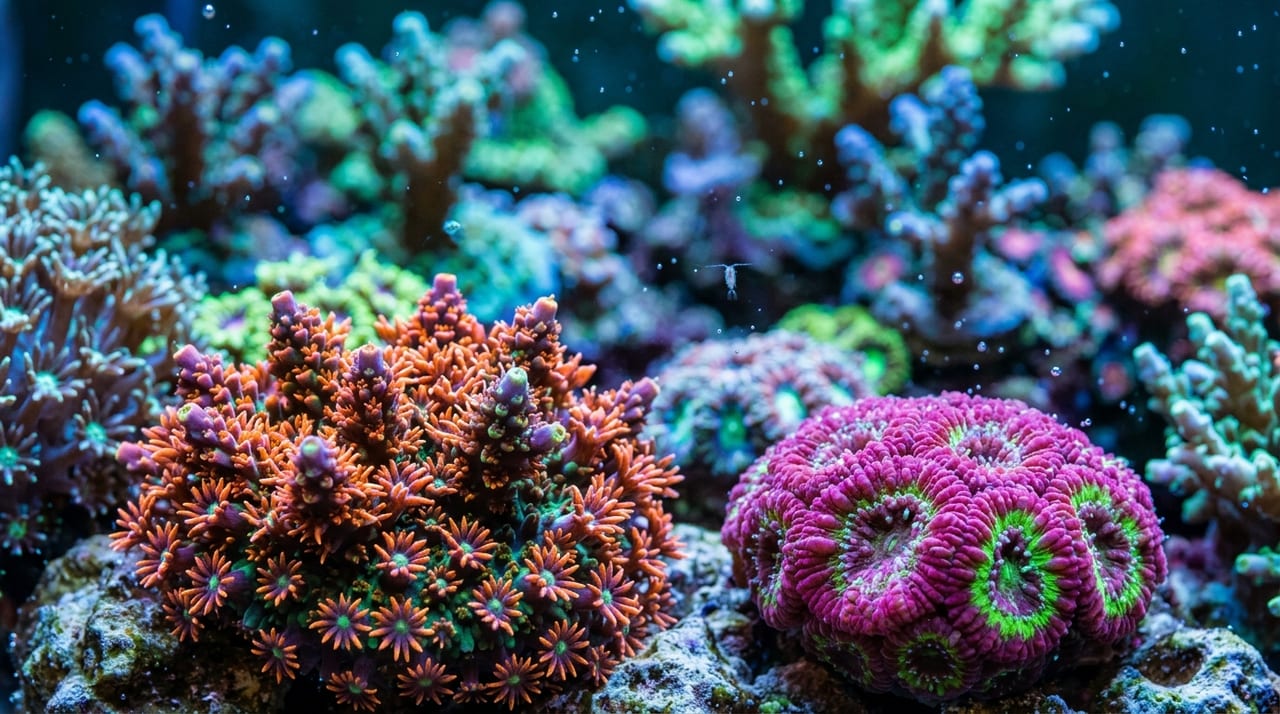
Top 5 wavemakers and powerheads for reef aquariums.
Proper water flow is one of the most critical — and most underestimated — factors in keeping a thriving reef tank. Corals evolved in dynamic ocean environments where currents shift constantly, and replicating that movement in a closed system is the difference between colonies that merely survive and colonies that visibly grow and color up. In 2026, wavemaker technology has matured significantly: DC motors are now the standard, app-based control is common even at mid-range price points, and magnetic mounting designs have eliminated the clunky in-tank hardware of a decade ago. Here are five wavemakers that stand out this year, followed by practical guidance on getting the most from whichever unit you choose.
Top 5 Wavemakers for 2026
1. AI Nero 3
The Nero 3 from Aqua Illumination is the go-to choice for tanks in the 60–90 cm range. Its DC motor sips power at a fraction of what comparable AC pumps consume, which matters when the pump runs 24 hours a day, seven days a week. The companion app gives you access to a genuinely wide range of flow patterns — steady, pulse, wave, night mode — and you can schedule transitions automatically. Build quality is solid, cleaning is straightforward (the impeller pops out without tools), and the magnetic mount holds firmly even on thicker rimless panes. For most hobbyists running a mixed reef, this is the benchmark.
2. EcoTech Marine VorTech MP10
The VorTech line remains the gold standard for aesthetics and performance. The motor sits outside the tank entirely; only a thin, flat propeller disc is inside the water, held in place by a powerful magnet. The result is a clean look with zero risk of heat transfer from the motor into the water column. The MP10 is sized for tanks up to roughly 500 liters and pairs with EcoTech's Mobius app and ReefLink hub for fine-grained pattern programming. The pricetag is steep, but the combination of build quality, low noise, and the genuinely random "Reef Crest" and "Lagoon" modes justifies it for serious reefers keeping SPS-dominated systems.
3. Jebao OW-25
If budget is the primary constraint, the Jebao OW-25 delivers remarkable performance per dollar. It's a DC pump with a physical controller that cycles through several preset patterns, and flow rate is adjustable across a wide range. Noise levels are acceptable rather than silent, and long-term reliability is not quite at the level of the premium brands — but for a second pump, a quarantine tank, or a hobbyist's first serious reef, it punches well above its price class. Works well in tanks from 100 to 400 liters.
4. Maxi-Jet 1000
The Maxi-Jet is an AC pump and makes no apologies for it. There are no modes, no app, no variable speed — just a fixed, reliable flow output that has been consistent for decades. What it lacks in sophistication it makes up for in longevity and simplicity; these pumps routinely run for years without issue and are trivially easy to clean. The best use case is as a supplemental pump: positioned to address a dead spot that your primary wavemaker can't reach, or to ensure flow continuity in the event your main DC unit goes offline. Keep one in your cabinet as a backup regardless of what else you run.
5. Neptune Systems WAV
Neptune's WAV is built for larger systems — 90 cm tanks and up — and integrates natively with the Apex controller ecosystem. If you're already running Apex for monitoring, adding WAV gives you a single interface for flow, lighting, dosing, and parameter alerts. The random pulse function is genuinely irregular rather than cyclical, which helps prevent coral colonies from developing flow shadows over time. Flow output is strong enough for high-energy SPS displays while remaining adjustable down to gentle settings appropriate for LPS and soft coral sections.
Choosing the Right Flow Rate
A useful starting point is 20–50× tank volume per hour in total flow. A 200-liter tank, for example, benefits from 4,000–10,000 liters per hour of combined wavemaker output. SPS-dominant systems lean toward the upper end of that range; softer coral mixed reefs work well in the middle. Avoid calculating flow from a single pump — two smaller units producing overlapping, colliding currents almost always outperform one large pump producing a single laminar jet.
Placement and Dead Spot Elimination
Mount wavemakers on opposite sides of the tank at different heights and angle them so their outputs intersect near the center of the water column. This creates the irregular, multidirectional turbulence that reef corals thrive in. Aim one pump toward the water surface to maintain gas exchange and surface agitation. Direct neither pump straight at coral colonies from close range — high-velocity point-source flow causes tissue recession even in flow-tolerant species. Instead, bounce flow off the rockwork so it diffuses before reaching corals. Review dead spots periodically by watching detritus accumulation on the substrate: persistent piles indicate areas needing additional coverage.
Maintenance
Even high-quality wavemakers accumulate calcium deposits and coralline algae on impellers and housings. A monthly rinse in a white vinegar solution dissolves mineral buildup without damaging seals. Inspect magnetic mounts every few months — a weakened magnet bond on a heavy pump can result in a falling unit and a startled tank. Keep spare impellers on hand for your primary pumps; they're inexpensive insurance against the inconvenience of a full pump failure during a critical growth period.