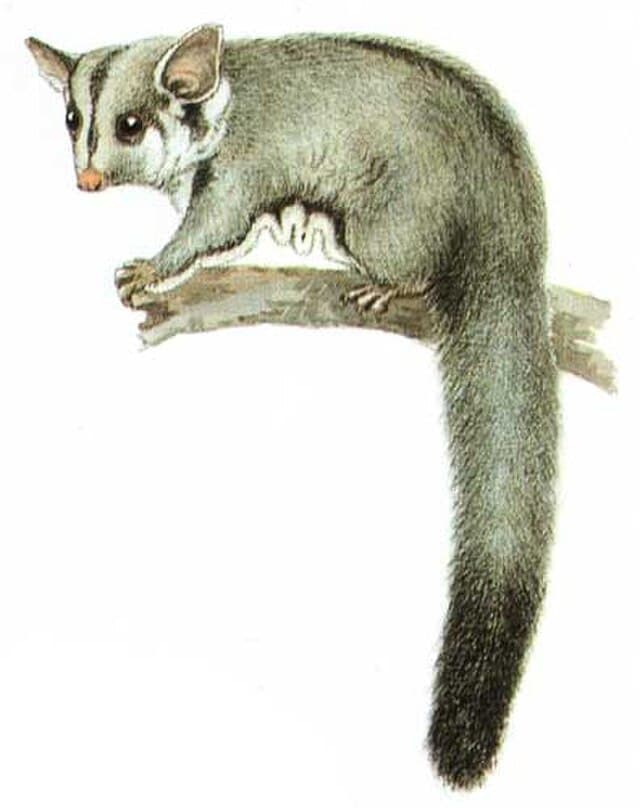
Source: Wikimedia Commons
Sugar Glider
IntermediateSugar glider
Small marsupial that glides using a membrane. Sweet-loving and bonds closely with owners. Nocturnal and highly social.
Dificuldade
Intermediate
Temperatura
18〜26℃
Expectativa de vida
12-15 years
Tamanho
16-21cm (30cm with tail) / 100-160g
Umidade
40〜60%
Dieta
Specialized diet, fruits, insects, nectar
Sobre
The sugar glider (Petaurus breviceps) is a small arboreal marsupial native to the forests of Australia, Indonesia, and Papua New Guinea. Adults measure 12–17 cm in body length with a tail of similar length, and weigh 80–160 g. A thin membrane called a patagium stretches from the fifth finger to the first toe, enabling the animal to glide distances of up to 50 meters between trees. Sugar gliders are highly social animals that naturally live in groups and suffer significantly from isolation; keeping at least a pair is strongly recommended. They are strictly nocturnal and require a tall, vertical cage with branches, a nest box, and enrichment items. Diet should mimic their natural intake of insects, nectar, and fruit. Optimal temperature is 24–30 °C; they are highly susceptible to cold. Common health concerns include metabolic bone disease from calcium deficiency, stress-related illness, and malnutrition. Captive lifespan is 12–15 years.
Source: Wikipedia (CC BY-SA 4.0)
Informações básicas
Origem
Australia, Indonesia, and Papua New Guinea
Expectativa de vida
12-15 years
Tamanho
16-21cm (30cm with tail) / 100-160g
Temperatura
18〜26℃
Umidade
40〜60%
Dieta
Specialized diet, fruits, insects, nectar
Guia de Cuidados
Diet
Balanced diet of specialized food, fruits, and insects is critical
Sociality
Highly social. Solo housing causes stress — pair housing recommended
Cage
Tall large cage. Provide enough space for gliding
Notes
Nocturnal and active at night. Can be vocal. Nail trimming needed
IntermediateMarsupialGlidingSocial
FAQ de Sugar Glider
QQual a dificuldade de manter Sugar Glider?
A
Intermediate. Esta é uma espécie de nível intermediário. Alguma experiência prévia e conhecimento de gestão ambiental são recomendados.
QQual é a temperatura ideal para Sugar Glider?
A
A temperatura ideal para Sugar Glider é 18〜26℃. A umidade recomendada é 40〜60%. Evite mudanças bruscas de temperatura e mantenha um ambiente estável.
QQual é a expectativa de vida de Sugar Glider?
A
A expectativa de vida média de Sugar Glider é 12-15 years. Com cuidados e nutrição adequados, podem viver uma vida longa e saudável.
QQual o tamanho que Sugar Glider atinge?
A
Sugar Glider normalmente atinge 16-21cm (30cm with tail) / 100-160g quando adulto. O tamanho pode variar dependendo das condições de cuidado e genética individual.
QO que devo alimentar Sugar Glider?
A
Sugar Glider se alimenta de: Specialized diet, fruits, insects, nectar. Busque uma dieta equilibrada com frequência de alimentação adequada.
QQual é o preço típico de Sugar Glider?
A
O preço de Sugar Glider varia significativamente dependendo do morfo, tamanho e linhagem. Consulte nossa página de preços de mercado para informações atualizadas.
Espécies relacionadas
Encontrar listagens desta espécie
Explorar listagens de Small AnimalArtigos relacionados
Ferret & Sugar Glider Guide — Care, Personality & Costs
Ferret vs sugar glider comparison: personality differences, housing needs, monthly costs, and important considerations before purchase.
Sugar Glider Complete Care Guide — Diet, Temperature & Bonding Tips
Complete sugar glider care guide covering diet, temperature, humidity, bonding steps, and common health issues.
Sugar Glider Care Complete Guide — Bonding Techniques & Nutritional Management
Complete guide to sugar glider care for beginners: step-by-step bonding techniques, balanced diet planning, and setting up the ideal cage environment for these nocturnal marsupials.
Complete Beginner's Guide to Small Pet Keeping
Everything beginners need to start keeping small pets: species comparison, cage and bedding selection, feeding, temperature management, and preparation checklist.