Source: Wikimedia Commons
Chinchilla
IntermediateChinchilla lanigera
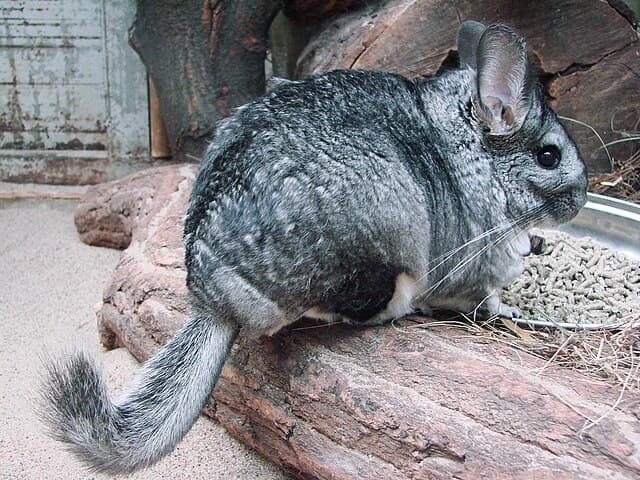
Famous for the softest fur in the animal kingdom. Exceptionally long-lived for a small animal at 15-20 years. Nocturnal and active. Daily dust baths keep them clean.
Dificuldade
Intermediate
Temperatura
15〜22℃
Expectativa de vida
15-20 years
Tamanho
25-35cm / 400-600g
Umidade
30〜50%
Dieta
Timothy hay (staple), chinchilla pellets
Sobre
The chinchilla is a crepuscular rodent native to the high Andes mountains of South America, living at elevations of 3,000–5,000 m. Two species exist—the long-tailed chinchilla (Chinchilla lanigera) and the short-tailed chinchilla (C. chinchilla)—with the former being the species kept as pets. Adults weigh 400–800 g and measure 25–35 cm. Their extraordinarily dense fur, with 60–80 hairs growing from each follicle, gives them their famously silky texture. Chinchillas are highly sensitive to heat and humidity; temperatures must be kept below 22 °C to prevent fatal heatstroke. Daily dust baths using fine volcanic sand are essential for coat maintenance; water bathing must be strictly avoided. They are long-lived for small mammals, with lifespans of 10–15 years. Common health issues include heat stroke, dental malocclusion, and fur-ring problems in males.
Source: Wikipedia (CC BY-SA 4.0)
Informações básicas
Origem
Andes Mountains of South America
Expectativa de vida
15-20 years
Tamanho
25-35cm / 400-600g
Temperatura
15〜22℃
Umidade
30〜50%
Dieta
Timothy hay (staple), chinchilla pellets
Guia de Cuidados
Temperature
Extremely heat-sensitive. Must stay below 22°C. AC essential in summer
Dust Bath
Daily 15-30 min dust bath required. Use dedicated chinchilla sand
Cage
Tall multi-level cage with platforms and chew toys
Notes
Never get wet. Long lifespan requires long-term commitment
IntermediateLong-livedSoftest furDust bath
FAQ de Chinchilla
QQual a dificuldade de manter Chinchilla?
A
Intermediate. Esta é uma espécie de nível intermediário. Alguma experiência prévia e conhecimento de gestão ambiental são recomendados.
QQual é a temperatura ideal para Chinchilla?
A
A temperatura ideal para Chinchilla é 15〜22℃. A umidade recomendada é 30〜50%. Evite mudanças bruscas de temperatura e mantenha um ambiente estável.
QQual é a expectativa de vida de Chinchilla?
A
A expectativa de vida média de Chinchilla é 15-20 years. Com cuidados e nutrição adequados, podem viver uma vida longa e saudável.
Perguntas sobre Chinchilla
Encontrar listagens desta espécie