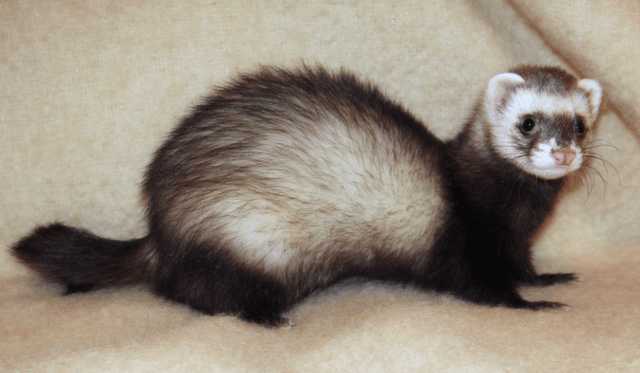
Source: Wikimedia Commons
Ferret
IntermediateCurious and playful pet with an elongated body. Can play and bond with owners like cats and dogs. Has a distinctive musky scent.
Dificuldade
Intermediate
Temperatura
18〜26℃
Expectativa de vida
6-10 years
Tamanho
35-50cm / 0.7-2.0kg
Umidade
40〜60%
Dieta
Ferret-specific food (high protein, high fat)
Sobre
The domestic ferret (Mustela putorius furo) is a carnivorous mammal of the family Mustelidae, descended from the European polecat and domesticated over 2,500 years ago for hunting rabbits and rodents. Adults measure 35–50 cm and weigh 600–2,000 g, with males significantly larger than females. Ferrets are highly intelligent, playful, and social animals with a dog-like enthusiasm for interaction. They require a minimum of 4–6 hours of supervised free-roaming time outside their cage daily, in a ferret-proofed space, as they are adept at squeezing into and chewing on virtually anything. Being obligate carnivores, they require a high-protein, low-carbohydrate diet; ferret-specific kibble or raw meat-based diets are appropriate, while grain-heavy foods should be avoided. Optimal temperature is 15–25 °C; ferrets are highly susceptible to heat stress. Common health concerns include adrenal gland disease, insulinoma, inflammatory bowel disease, and distemper. Lifespan is 6–10 years.
Source: Wikipedia (CC BY-SA 4.0)
Informações básicas
Origem
Europe (domesticated from the European polecat)
Expectativa de vida
6-10 years
Tamanho
35-50cm / 0.7-2.0kg
Temperatura
18〜26℃
Umidade
40〜60%
Dieta
Ferret-specific food (high protein, high fat)
Guia de Cuidados
Diet
Obligate carnivore needing high protein/fat. Use ferret-specific food
Exercise
1-2 hours daily free play required. Love tunnel toys
Odor
Distinctive musk scent. Spaying/neutering reduces odor
Notes
Prone to adrenal disease and insulinoma. Find an exotic vet
IntermediatePlayfulTrainableCarnivore
FAQ de Ferret
QQual a dificuldade de manter Ferret?
A
Intermediate. Esta é uma espécie de nível intermediário. Alguma experiência prévia e conhecimento de gestão ambiental são recomendados.
QQual é a temperatura ideal para Ferret?
A
A temperatura ideal para Ferret é 18〜26℃. A umidade recomendada é 40〜60%. Evite mudanças bruscas de temperatura e mantenha um ambiente estável.
QQual é a expectativa de vida de Ferret?
A
A expectativa de vida média de Ferret é 6-10 years. Com cuidados e nutrição adequados, podem viver uma vida longa e saudável.
QQual o tamanho que Ferret atinge?
A
Ferret normalmente atinge 35-50cm / 0.7-2.0kg quando adulto. O tamanho pode variar dependendo das condições de cuidado e genética individual.
QO que devo alimentar Ferret?
A
Ferret se alimenta de: Ferret-specific food (high protein, high fat). Busque uma dieta equilibrada com frequência de alimentação adequada.
QQual é o preço típico de Ferret?
A
O preço de Ferret varia significativamente dependendo do morfo, tamanho e linhagem. Consulte nossa página de preços de mercado para informações atualizadas.
Espécies relacionadas
Encontrar listagens desta espécie
Explorar listagens de Small AnimalArtigos relacionados
Ferret & Sugar Glider Guide — Care, Personality & Costs
Ferret vs sugar glider comparison: personality differences, housing needs, monthly costs, and important considerations before purchase.
Ferret Odor Management & Daily Care — Neutering & Diet Impact
Managing ferret odor: causes, neutering effects, diet-based odor reduction, and daily care routines.
Complete Ferret Care Guide
Complete beginner's guide to ferret care: cage setup, carnivore diet requirements, odor management, free-roaming needs, health concerns including adrenal disease and insulinoma.
Complete Ferret Care Guide: Personality, Diet & Odor Control
Everything you need to know about ferret care: personality, feeding, and odor management.