Source: Wikimedia Commons
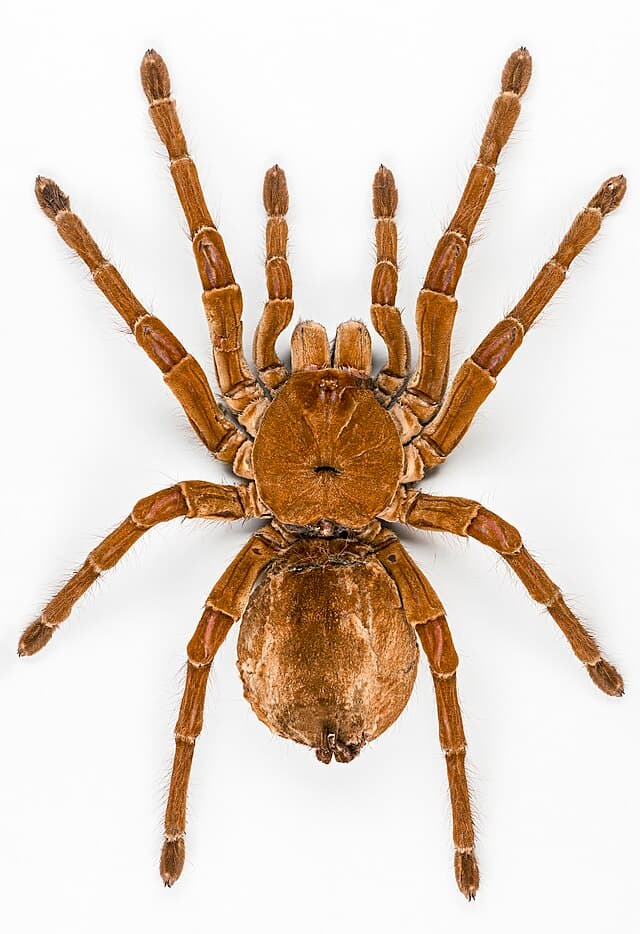
Goliath Birdeater
AdvancedGoliath birdeater
World's largest tarantula. Overwhelming size reaching 30cm leg span. Venomous spider.
Dificuldade
Advanced
Temperatura
20〜28℃
Expectativa de vida
15-25 years
Tamanho
Leg span 25-30cm
Umidade
60〜80%
Dieta
Insects, Mice
Sobre
The Goliath birdeater is a very large spider that belongs to the tarantula family Theraphosidae. Found in northern South America, it is the largest spider in the world by mass and body length, and second to the giant huntsman spider by leg span. It is also considerably longer than the largest known prehistoric spider, Mongolarachne, that had a body length of 2.46 centimeters (0.97 in). It is also called the Goliath tarantula or Goliath bird-eating spider; the practice of calling theraphosids "bird-eating" derives from an early 18th-century copper engraving by Maria Sibylla Merian that shows one eating a hummingbird. Despite the spider's name, it rarely preys on birds.
Source: Wikipedia (CC BY-SA 4.0)
Informações básicas
Origem
northern South America
Expectativa de vida
15-25 years
Tamanho
Leg span 25-30cm
Temperatura
20〜28℃
Umidade
60〜80%
Dieta
Insects, Mice
Guia de Cuidados
Temperature
Maintain 24-28°C
Housing
Large case with moist substrate
Feeding
Feed large insects and pinky mice
Notes
Flicks urticating hairs, handle carefully. Venomous
GoliathLargest tarantula30cmVenomous spider
FAQ de Goliath Birdeater
QQual a dificuldade de manter Goliath Birdeater?
A
Advanced. Esta é uma espécie de nível avançado. Requer equipamento especializado e habilidades avançadas de criação com controle ambiental preciso.
QQual é a temperatura ideal para Goliath Birdeater?
A
A temperatura ideal para Goliath Birdeater é 20〜28℃. A umidade recomendada é 60〜80%. Evite mudanças bruscas de temperatura e mantenha um ambiente estável.
QQual é a expectativa de vida de Goliath Birdeater?
A
A expectativa de vida média de Goliath Birdeater é 15-25 years. Com cuidados e nutrição adequados, podem viver uma vida longa e saudável.
QQual o tamanho que Goliath Birdeater atinge?
A
Goliath Birdeater normalmente atinge Leg span 25-30cm quando adulto. O tamanho pode variar dependendo das condições de cuidado e genética individual.
QO que devo alimentar Goliath Birdeater?
A
Goliath Birdeater se alimenta de: Insects, Mice. Busque uma dieta equilibrada com frequência de alimentação adequada.
QQual é o preço típico de Goliath Birdeater?
A
O preço de Goliath Birdeater varia significativamente dependendo do morfo, tamanho e linhagem. Consulte nossa página de preços de mercado para informações atualizadas.
Espécies relacionadas
Encontrar listagens desta espécie
Explorar listagens de InsectArtigos relacionados
How Much Does Insect Keeping Cost? Monthly Running Costs Explained
Monthly insect keeping costs for beetles and stag beetles: substrate, jelly, temperature control, and annual breeding cost estimates.
Insect Lifespan — Adult & Larval Stages of Beetles and Stag Beetles
Beetle and stag beetle lifespans by species for both adults and larvae, with tips on temperature and diet to extend adult longevity.
Summer Insect Care — Heat Management Guide
Summer beetle and stag beetle care: maintaining proper temperatures, substrate moisture, and jelly replacement frequency.
Winter Insect Care — Cold Weather Protection Guide
Winter beetle and stag beetle care: substrate maintenance, temperature management, overwintering adults, and heated vs. unheated setups.