Source: Wikimedia Commons
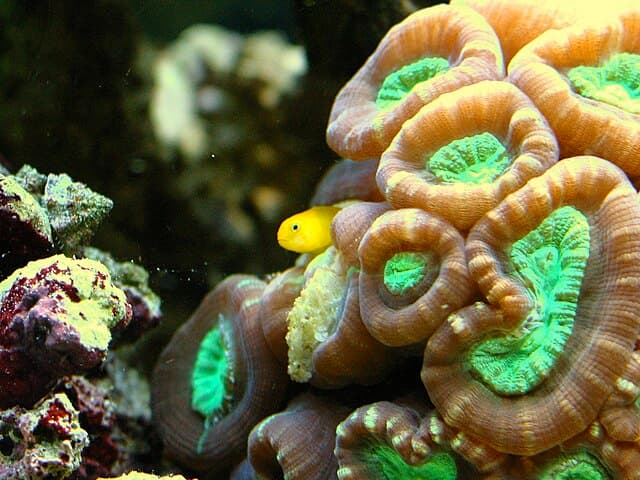
Candy Cane Coral
BeginnerCaulastrea furcata
LPS with round head-shaped polyps resembling candy canes. Hardy, easy to keep, and colorful. Ideal for LPS beginners.
Dificuldade
Beginner
Temperatura
24〜27℃
Expectativa de vida
10+ years with proper care
Dieta
Photosynthesis + optional feeding
Sobre
Candy cane coral (Caulastraea furcata, family Merulinidae) is named for the green and white striped pattern on its large circular corallites, which branch regularly to form sizable colonies. Found on reef slopes and lagoons of the Indo-Pacific, it is among the most beginner-friendly LPS corals, thriving under low to moderate lighting (100–200 PAR) with gentle flow. Polyps inflate during the day and retract at night. It responds well to target feeding of brine shrimp or copepods one to two times per week, accelerating colony growth. Its low aggression toward neighboring corals makes it easy to integrate into community reef tanks.
Source: Wikipedia (CC BY-SA 4.0)
Informações básicas
Origem
reef slopes and lagoons of the Indo-Pacific
Expectativa de vida
10+ years with proper care
Temperatura
24〜27℃
Dieta
Photosynthesis + optional feeding
Guia de Cuidados
Lighting
Low to moderate
Flow
Gentle flow
Feeding
Mysis shrimp accelerates growth
Propagation
New heads multiply by splitting
Notes
Avoid strong light and direct flow
LPS entryHardyColorfulBeginner-friendly
FAQ de Candy Cane Coral
QQual a dificuldade de manter Candy Cane Coral?
A
Beginner. Esta é uma espécie amigável para iniciantes. Não é necessário equipamento especial ou experiência, e pode ser mantida com sucesso com uma configuração básica de cuidados.
QQual é a temperatura ideal para Candy Cane Coral?
A
A temperatura ideal para Candy Cane Coral é 24〜27℃. Evite mudanças bruscas de temperatura e mantenha um ambiente estável.
QQual é a expectativa de vida de Candy Cane Coral?
A
A expectativa de vida média de Candy Cane Coral é 10+ years with proper care. Com cuidados e nutrição adequados, podem viver uma vida longa e saudável.
QO que devo alimentar Candy Cane Coral?
A
Candy Cane Coral se alimenta de: Photosynthesis + optional feeding. Busque uma dieta equilibrada com frequência de alimentação adequada.
QQual é o preço típico de Candy Cane Coral?
A
O preço de Candy Cane Coral varia significativamente dependendo do morfo, tamanho e linhagem. Consulte nossa página de preços de mercado para informações atualizadas.
Espécies relacionadas
Encontrar listagens desta espécie
Explorar listagens de CoralArtigos relacionados
Complete Beginner's Guide to Coral Keeping
Everything you need to start keeping corals: essential equipment, water quality management, and recommended beginner species.
Coral Types & Selection Guide
From soft corals vs. LPS vs. SPS to difficulty-rated recommendations and buying tips — the comprehensive coral selection guide.
Setting Up Your First Coral Tank — Step by Step
A step-by-step guide to setting up a coral tank from scratch: equipment selection, live rock placement, water cycling, and coral introduction.
Coral Frags 101 — Basics of Fragment Trading
What coral frags are, how they're cut, buying tips, and how to grow them out — a beginner's guide to the popular frag trade.