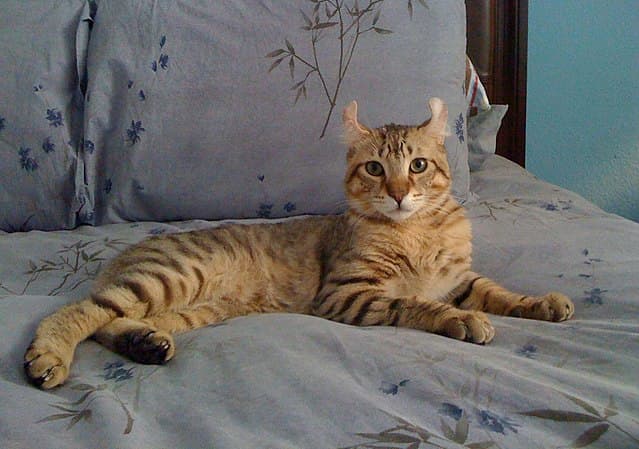
Source: Wikimedia Commons
Foldex
IntermediateCross between Scottish Fold and Exotic Shorthair. Folded ears and round face create an adorable look.
Difficulté
Intermediate
Température
18〜28℃
Durée de vie
12-15 years
Taille
3-5kg
Régime alimentaire
Dry food, balanced diet
À propos
The Foldex is a breed developed in Quebec, Canada in the 1990s by crossing Scottish Folds with Exotic Shorthairs or Persians. It combines the Scottish Fold's distinctive forward-folding ears with the Exotic Shorthair's round, flat-faced appearance. The result is a very compact, round-faced cat with a particularly appealing, teddy-bear-like look. The breed has some recognition in Canadian cat organizations but is not recognized by major international registries. Foldex cats are gentle, affectionate, and people-oriented. Health risks include osteochondrodysplasia inherited from the Scottish Fold lineage, brachycephalic issues from the Exotic ancestry, and polycystic kidney disease (PKD).
Source: Wikipedia (CC BY-SA 4.0)
Informations de base
Origine
Canada (Quebec)
Durée de vie
12-15 years
Taille
3-5kg
Température
18〜28℃
Régime alimentaire
Dry food, balanced diet
Guide d'entretien
Temperament
Gentle, affectionate, friendly
Exercise
Moderate indoor play
Coat Care
Brush 2-3 times weekly
Origin
Canada
Notes
Joint disease risk, keep ears clean
Medium catFolded earsRound faceCompanion cat
FAQ Foldex
QQuelle est la difficulté de garder Foldex ?
A
Intermediate. C'est une espèce de niveau intermédiaire. Une certaine expérience préalable et des connaissances en gestion environnementale sont recommandées.
QQuelle est la température idéale pour Foldex ?
A
La température idéale pour Foldex est 18〜28℃. Évitez les changements brusques de température et maintenez un environnement stable.
QQuelle est la durée de vie de Foldex ?
A
La durée de vie moyenne de Foldex est 12-15 years. Avec des soins et une alimentation appropriés, ils peuvent vivre longtemps en bonne santé.
QQuelle taille atteint Foldex ?
A
Foldex atteint généralement 3-5kg à l'âge adulte. La taille peut varier selon les conditions de soins et la génétique individuelle.
QQue dois-je donner à manger à Foldex ?
A
Foldex se nourrit de : Dry food, balanced diet. Visez un régime équilibré avec une fréquence d'alimentation appropriée.
QQuel est le prix typique de Foldex ?
A
Le prix de Foldex varie considérablement selon le morph, la taille et la lignée. Consultez notre page de prix du marché pour les dernières informations.
Espèces apparentées

Trouver des annonces pour cette espèce
Parcourir les annonces CatArticles connexes
Complete Beginner's Guide to Keeping a Cat
Everything beginners need to start keeping a cat: preparation, litter, feeding, indoor environment, and popular breed tips.
Top 10 Popular Cat Breeds Compared — Temperament, Size & Ease of Care
Detailed comparison of 10 popular cat breeds: temperament, size, shedding, affection level, and overall ease of keeping.
Complete Kitten Training Guide — Litter, Scratching & Socialization
Essential kitten training during the 2-4 month socialization window: litter box success, designated scratching spots, curbing biting, and early socialization.
Cat Health Checklist — Daily Observation Points & Warning Signs
How to perform daily health checks on your cat: eyes, ears, mouth, coat, urine output, and recognizing symptoms that require a vet visit.