Source: Wikimedia Commons
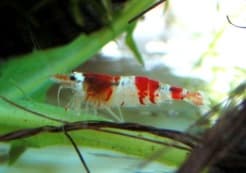
Bee Shrimp
AdvancedSmall shrimp with beautiful red-white or black-white banding. High-quality specimens command premium prices. Strict water quality needs.
Dificultad
Advanced
Temperatura
22〜28℃
Esperanza de vida
1-2 years
Tamaño
2-3cm
Dieta
Shrimp food, biofilm
Acerca de
Bee shrimp, commercially sold as Crystal Red Shrimp and Crystal Black Shrimp, are selectively bred ornamental shrimp originating from specimens found in southern China and Taiwan. The Crystal Red Shrimp was developed in Japan during the 1990s by breeder Hisayasu Suzuki, who selected for the now-iconic white and red banded pattern from wild Caridina cantonensis. Grading systems (SSS, SS, S, A, B, C) based on the intensity and distribution of white coloration command wildly different market prices, with top-grade specimens fetching premium prices. Adults reach 2–3 cm. Far more demanding than cherry shrimp, bee shrimp require very soft, acidic water (TDS 100–150, pH 5.5–6.5), typically achieved by using RO water remineralized with shrimp-specific mineral additives. Preferred temperature is a cooler 22–24°C. They are highly sensitive to nitrate accumulation and sudden parameter changes; small, regular water changes are essential. Breeding occurs naturally in stable environments; dense moss (Vesicularia sp.) provides critical biofilm for young shrimp. Diet centers on low-protein shrimp-specific foods and plant-based supplements.
Información básica
Origen
Southern China and Taiwan (original stock); selectively bred variety
Esperanza de vida
1-2 years
Tamaño
2-3cm
Temperatura
22〜28℃
Dieta
Shrimp food, biofilm
Guía de cuidado
Tank
30cm+ shrimp-only tank
Water Quality
TDS 100-150, pH 5.5-6.5 soft water
Temperature
22-25°C (heat-sensitive)
Substrate
Active buffering soil essential
Notes
Sudden water changes risk colony wipeout — change carefully
ShrimpBeautiful patternAdvancedPremium
Preguntas frecuentes de Bee Shrimp
Q¿Qué tan difícil es mantener Bee Shrimp?
A
Advanced. Esta es una especie de nivel avanzado. Requiere equipo especializado y habilidades avanzadas de cría con control ambiental preciso.
Q¿Cuál es la temperatura ideal para Bee Shrimp?
A
La temperatura ideal para Bee Shrimp es 22〜28℃. Evita cambios bruscos de temperatura y mantén un ambiente estable.
Q¿Cuál es la esperanza de vida de Bee Shrimp?
A
La esperanza de vida promedio de Bee Shrimp es 1-2 years. Con cuidados y nutrición adecuados, pueden vivir una vida larga y saludable.
Q¿Qué tamaño alcanza Bee Shrimp?
A
Bee Shrimp típicamente alcanza 2-3cm como adulto. El tamaño puede variar según las condiciones de cuidado y la genética individual.
Q¿Qué debo alimentar a Bee Shrimp?
A
Bee Shrimp se alimenta de: Shrimp food, biofilm. Apunta a una dieta equilibrada con una frecuencia de alimentación adecuada.
Q¿Cuál es el precio típico de Bee Shrimp?
A
El precio de Bee Shrimp varía significativamente según el morfo, tamaño y linaje. Consulta nuestra página de precios de mercado para información actualizada.
Especies relacionadas
Buscar listados de esta especie
Explorar listados de Tropical FishArtículos relacionados
Shrimp & Tropical Fish Community Tank Guide — Cohabiting with Cherry Shrimp
How to keep shrimp and tropical fish together: selecting shrimp-safe fish, creating hiding spots, setting up a breeding-friendly environment, and water quality management tips.
Freshwater Shrimp Compatibility Guide — Tank Mates & Breeding Setup
Guide to freshwater shrimp compatibility: safe vs dangerous tank mates, and optimal breeding environment setup.
Shrimp-Safe Aquatic Plants & Care Guide
Shrimp-safe plants: pesticide risks, detoxification methods, compatible species, and fertilizer precautions for shrimp tanks.
Complete Beginner's Guide to Tropical Fish Keeping
Everything beginners need to start keeping tropical fish: essential equipment, water preparation, and recommended starter species.