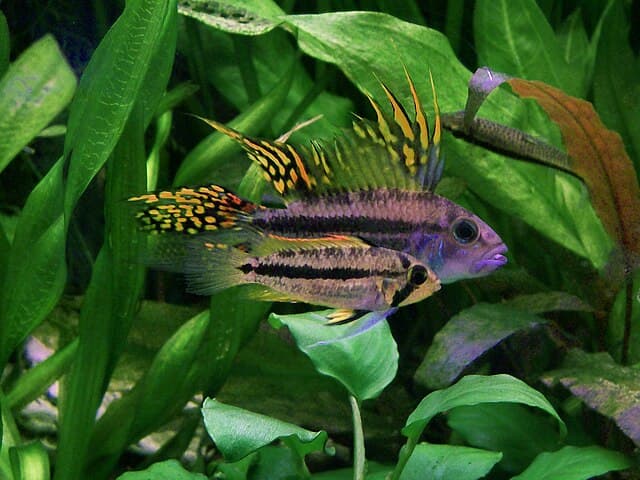
Source: Wikimedia Commons
Apistogramma Cacatuoides
IntermediateApistogramma cacatuoides
A dwarf cichlid spreading vivid orange fins. Male fin spreading display is spectacular.
Dificultad
Intermediate
Temperatura
22〜28℃
Esperanza de vida
3-5 years
Tamaño
5-8cm
Dieta
Frozen food, Pellets
Acerca de
Apistogramma cacatuoides, the cockatoo dwarf cichlid, is native to the upper Amazon River basin in Peru, Colombia, and Brazil. Males reach 5–8 cm and are renowned for the dramatically elongated anterior rays of the dorsal fin — flaring like the crest of a cockatoo parrot, the namesake feature. During courtship and territorial displays, males spread their vivid red, orange, and yellow fins in a spectacular fan — one of the most dramatic visual displays in dwarf cichlid keeping. Numerous selectively bred varieties are available, including double red, orange flash, and gold forms. Water conditions should be slightly acidic to neutral (pH 5.5–7.0) at 24–28°C in soft water. Cave-spawning behavior is typical: females deposit eggs in coconut shells or driftwood hollows and defend the territory ferociously — even chasing away the male. The species naturally practices polygyny; harem-style keeping with one male and multiple females in separate territories is a rewarding advanced approach. Among the most accessible Apistogramma species, cacatuoides is often recommended as an entry point into dwarf cichlid breeding.
Información básica
Origen
upper Amazon River basin (Peru, Colombia, Brazil)
Esperanza de vida
3-5 years
Tamaño
5-8cm
Temperatura
22〜28℃
Dieta
Frozen food, Pellets
Guía de cuidado
Water
Slightly acidic to neutral (pH 5.5-7.0)
Temperature
Maintain 24-28°C
Breeding
Females protect eggs with maternal behavior
Notes
Cave-like hides become spawning sites
ApistoDwarf cichlidOrange finsSpawning
Preguntas frecuentes de Apistogramma Cacatuoides
Q¿Qué tan difícil es mantener Apistogramma Cacatuoides?
A
Intermediate. Esta es una especie de nivel intermedio. Se recomienda algo de experiencia previa y conocimiento de gestión ambiental.
Q¿Cuál es la temperatura ideal para Apistogramma Cacatuoides?
A
La temperatura ideal para Apistogramma Cacatuoides es 22〜28℃. Evita cambios bruscos de temperatura y mantén un ambiente estable.
Q¿Cuál es la esperanza de vida de Apistogramma Cacatuoides?
A
La esperanza de vida promedio de Apistogramma Cacatuoides es 3-5 years. Con cuidados y nutrición adecuados, pueden vivir una vida larga y saludable.
Q¿Qué tamaño alcanza Apistogramma Cacatuoides?
A
Apistogramma Cacatuoides típicamente alcanza 5-8cm como adulto. El tamaño puede variar según las condiciones de cuidado y la genética individual.
Q¿Qué debo alimentar a Apistogramma Cacatuoides?
A
Apistogramma Cacatuoides se alimenta de: Frozen food, Pellets. Apunta a una dieta equilibrada con una frecuencia de alimentación adecuada.
Q¿Cuál es el precio típico de Apistogramma Cacatuoides?
A
El precio de Apistogramma Cacatuoides varía significativamente según el morfo, tamaño y linaje. Consulta nuestra página de precios de mercado para información actualizada.
Especies relacionadas
Buscar listados de esta especie
Explorar listados de Tropical FishArtículos relacionados
Complete Beginner's Guide to Tropical Fish Keeping
Everything beginners need to start keeping tropical fish: essential equipment, water preparation, and recommended starter species.
Tropical Fish Water Quality Management & Water Change Basics
Essential water quality management for tropical fish: understanding pH, ammonia, nitrite, nitrate, and how to perform water changes correctly.
Tropical Fish Community Tank Guide — Compatible Combinations & Precautions
How to successfully keep tropical fish together: compatibility rules, recommended combinations, and what species should never be mixed.
Most Popular Tropical Fish Species in 2025
Top 10 tropical fish of 2025, from easy-to-keep beginner species to stunning advanced varieties, with care tips for each.