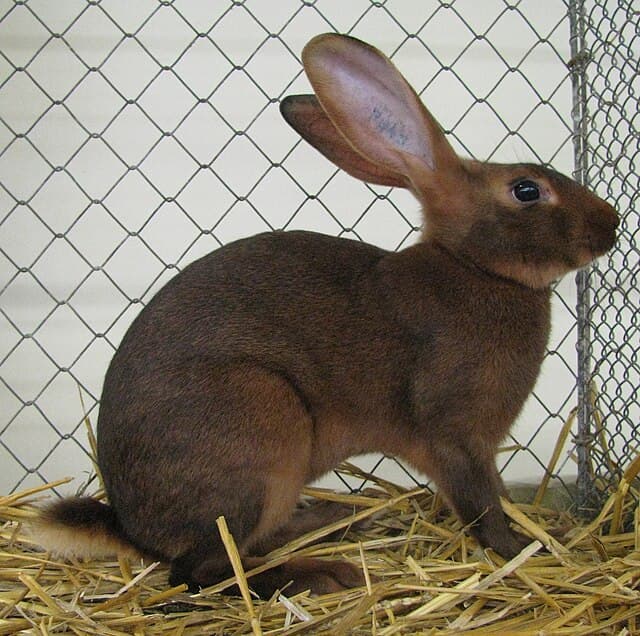
Source: Wikimedia Commons
Belgian Hare
AdvancedAthletic rabbit resembling a wild hare with a lean body and rich chestnut coat. Very active and best suited for experienced owners.
Dificultad
Advanced
Temperatura
18〜26℃
Esperanza de vida
5-8 years
Tamaño
45-55cm / 2.7-4kg
Humedad
40〜60%
Dieta
Timothy hay, rabbit pellets, forage greens, leafy vegetables
Acerca de
The Belgian Hare is a domestic rabbit breed developed in Belgium in the 19th century through selective breeding to maximize resemblance to the wild European hare. Adults measure 45–55 cm and weigh 2.7–4 kg. Their slender, muscular body; long, arched back; lean face; and rich chestnut-red coat with black ticking give them an appearance strikingly similar to a true hare, quite unlike most domestic rabbit breeds. Belgian Hares are exceptionally energetic and fast, requiring generous exercise space and at least 2 hours of free movement daily. They can be high-strung and nervous, requiring patient, consistent handling and a calm environment. They are highly regarded in the show fancy for their elegant, hare-like conformation. Diet consists of unlimited timothy hay, pellets, and fresh vegetables. Optimal temperature is 15–25 °C. Common health concerns include malocclusion, GI stasis, and fractures due to their active nature. Lifespan is 7–12 years.
Source: Wikipedia (CC BY-SA 4.0)
Información básica
Origen
Belgium
Esperanza de vida
5-8 years
Tamaño
45-55cm / 2.7-4kg
Temperatura
18〜26℃
Humedad
40〜60%
Dieta
Timothy hay, rabbit pellets, forage greens, leafy vegetables
Guía de cuidado
Exercise
Very active. Large exercise area essential. 2+ hours daily free roam
Housing
Large cage or dedicated room. Strong jumpers, mind the height
Temperament
Nervous and easily startled. Needs a calm, quiet environment
Bone Structure
Delicate bone structure, fracture risk. Prevent falls from height
AdvancedActiveHigh exercise needsHistoric breed
Preguntas frecuentes de Belgian Hare
Q¿Qué tan difícil es mantener Belgian Hare?
A
Advanced. Esta es una especie de nivel avanzado. Requiere equipo especializado y habilidades avanzadas de cría con control ambiental preciso.
Q¿Cuál es la temperatura ideal para Belgian Hare?
A
La temperatura ideal para Belgian Hare es 18〜26℃. La humedad recomendada es 40〜60%. Evita cambios bruscos de temperatura y mantén un ambiente estable.
Q¿Cuál es la esperanza de vida de Belgian Hare?
A
La esperanza de vida promedio de Belgian Hare es 5-8 years. Con cuidados y nutrición adecuados, pueden vivir una vida larga y saludable.
Q¿Qué tamaño alcanza Belgian Hare?
A
Belgian Hare típicamente alcanza 45-55cm / 2.7-4kg como adulto. El tamaño puede variar según las condiciones de cuidado y la genética individual.
Q¿Qué debo alimentar a Belgian Hare?
A
Belgian Hare se alimenta de: Timothy hay, rabbit pellets, forage greens, leafy vegetables. Apunta a una dieta equilibrada con una frecuencia de alimentación adecuada.
Q¿Cuál es el precio típico de Belgian Hare?
A
El precio de Belgian Hare varía significativamente según el morfo, tamaño y linaje. Consulta nuestra página de precios de mercado para información actualizada.
Especies relacionadas
Buscar listados de esta especie
Explorar listados de Small AnimalArtículos relacionados
Complete Beginner's Guide to Small Pet Keeping
Everything beginners need to start keeping small pets: species comparison, cage and bedding selection, feeding, temperature management, and preparation checklist.
Small Pet Cage Setup Guide — Optimal Layouts by Species
Species-specific cage setup guide for hamsters, rabbits, chinchillas, hedgehogs, and guinea pigs: sizing, bedding, accessories, and cleaning tips.
Small Pet Health Checklist — Daily Observation & Warning Signs
Daily health checklist for small pets: appetite, droppings, fur condition, behavior changes, choosing an exotic vet, and emergency first aid.
Summer & Winter Care for Small Pets — Keeping Safe Without AC
Seasonal care for small pets: preventing hamster torpor, rabbit heatstroke prevention, chinchilla summer management, and heater/cooling product recommendations.