Source: Wikimedia Commons
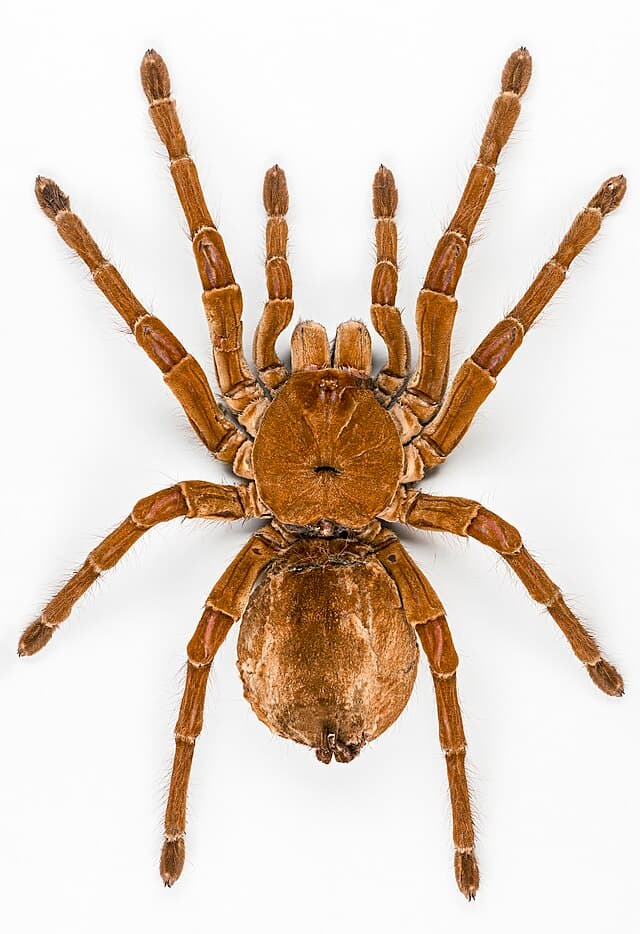
Goliath Birdeater
AdvancedGoliath birdeater
World's largest tarantula. Overwhelming size reaching 30cm leg span. Venomous spider.
Dificultad
Advanced
Temperatura
20〜28℃
Esperanza de vida
15-25 years
Tamaño
Leg span 25-30cm
Humedad
60〜80%
Dieta
Insects, Mice
Acerca de
The Goliath birdeater is a very large spider that belongs to the tarantula family Theraphosidae. Found in northern South America, it is the largest spider in the world by mass and body length, and second to the giant huntsman spider by leg span. It is also considerably longer than the largest known prehistoric spider, Mongolarachne, that had a body length of 2.46 centimeters (0.97 in). It is also called the Goliath tarantula or Goliath bird-eating spider; the practice of calling theraphosids "bird-eating" derives from an early 18th-century copper engraving by Maria Sibylla Merian that shows one eating a hummingbird. Despite the spider's name, it rarely preys on birds.
Source: Wikipedia (CC BY-SA 4.0)
Información básica
Origen
northern South America
Esperanza de vida
15-25 years
Tamaño
Leg span 25-30cm
Temperatura
20〜28℃
Humedad
60〜80%
Dieta
Insects, Mice
Guía de cuidado
Temperature
Maintain 24-28°C
Housing
Large case with moist substrate
Feeding
Feed large insects and pinky mice
Notes
Flicks urticating hairs, handle carefully. Venomous
GoliathLargest tarantula30cmVenomous spider
Preguntas frecuentes de Goliath Birdeater
Q¿Qué tan difícil es mantener Goliath Birdeater?
A
Advanced. Esta es una especie de nivel avanzado. Requiere equipo especializado y habilidades avanzadas de cría con control ambiental preciso.
Q¿Cuál es la temperatura ideal para Goliath Birdeater?
A
La temperatura ideal para Goliath Birdeater es 20〜28℃. La humedad recomendada es 60〜80%. Evita cambios bruscos de temperatura y mantén un ambiente estable.
Q¿Cuál es la esperanza de vida de Goliath Birdeater?
A
La esperanza de vida promedio de Goliath Birdeater es 15-25 years. Con cuidados y nutrición adecuados, pueden vivir una vida larga y saludable.
Q¿Qué tamaño alcanza Goliath Birdeater?
A
Goliath Birdeater típicamente alcanza Leg span 25-30cm como adulto. El tamaño puede variar según las condiciones de cuidado y la genética individual.
Q¿Qué debo alimentar a Goliath Birdeater?
A
Goliath Birdeater se alimenta de: Insects, Mice. Apunta a una dieta equilibrada con una frecuencia de alimentación adecuada.
Q¿Cuál es el precio típico de Goliath Birdeater?
A
El precio de Goliath Birdeater varía significativamente según el morfo, tamaño y linaje. Consulta nuestra página de precios de mercado para información actualizada.
Especies relacionadas
Buscar listados de esta especie
Explorar listados de InsectArtículos relacionados
How Much Does Insect Keeping Cost? Monthly Running Costs Explained
Monthly insect keeping costs for beetles and stag beetles: substrate, jelly, temperature control, and annual breeding cost estimates.
Insect Lifespan — Adult & Larval Stages of Beetles and Stag Beetles
Beetle and stag beetle lifespans by species for both adults and larvae, with tips on temperature and diet to extend adult longevity.
Summer Insect Care — Heat Management Guide
Summer beetle and stag beetle care: maintaining proper temperatures, substrate moisture, and jelly replacement frequency.
Winter Insect Care — Cold Weather Protection Guide
Winter beetle and stag beetle care: substrate maintenance, temperature management, overwintering adults, and heated vs. unheated setups.