Source: Wikimedia Commons
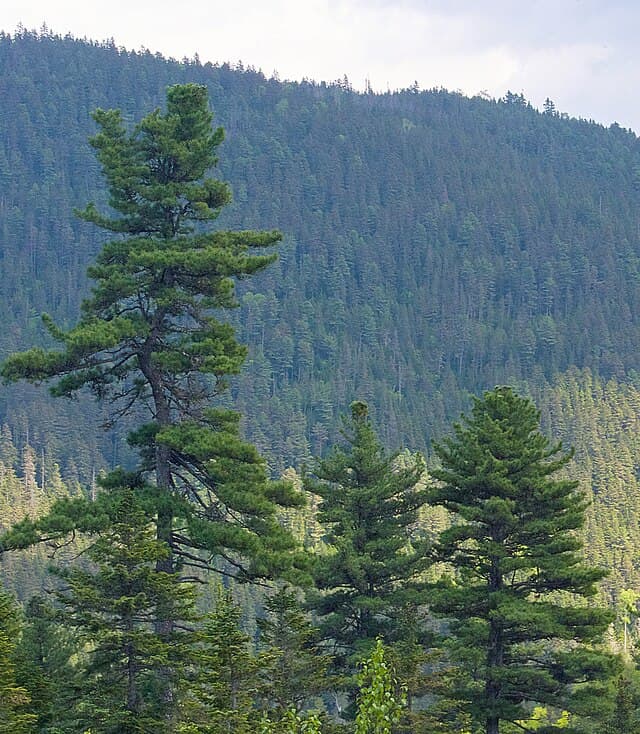
Korean Pine
IntermediatePinus koraiensis
Close relative of Japanese white pine with larger cones and edible pine nuts. Native to Korea, China, and Russia. Very cold-hardy with powerful trunks and rich foliage.
Dificultad
Intermediate
Temperatura
-5〜35℃
Esperanza de vida
Centuries
Tamaño
15-70cm (bonsai size)
Dieta
Fertilizer (regular)
Acerca de
Pinus koraiensis is a species of pine known commonly as the Korean pine. It is a relic species of the Tertiary, identified as a rare tree species by United Nations. It is native to eastern Asia, in Korea, northeastern China, the temperate rainforests of the Russian Far East, and central Japan. In the north of its range, it grows at moderate elevations, typically 600 to 900 metres, whereas further south, it is a mountain tree, growing at 2,000 to 2,600 m elevation in Japan. Other common names include "Chinese pinenut". The ancient woodland of P. koraiensis on the earth is about 50 million hectares, and China has about 30 million hectares, accounting for 60%. It is a second-class national key protected plant in China. P. koraiensis is a tree species with high economic and ecological value. The official name in Chinese is "红松 hóng sōng/red pine", because almost every part of it is related to red.
Source: Wikipedia (CC BY-SA 4.0)
Información básica
Origen
East Asia (Korea, northeastern China, Russian Far East) and Japan
Esperanza de vida
Centuries
Tamaño
15-70cm (bonsai size)
Temperatura
-5〜35℃
Dieta
Fertilizer (regular)
Guía de cuidado
Placement
Full sun outdoors. Tolerates extreme cold
Watering
Same as white pine. Water when topsoil dries
Styling
Informal upright and twin trunk suit well. Pinch for ramification
Notes
Needs heat protection in warm regions. Move to semi-shade
IntermediateConiferCold-hardyPine nuts
Preguntas frecuentes de Korean Pine
Q¿Qué tan difícil es mantener Korean Pine?
A
Intermediate. Esta es una especie de nivel intermedio. Se recomienda algo de experiencia previa y conocimiento de gestión ambiental.
Q¿Cuál es la temperatura ideal para Korean Pine?
A
La temperatura ideal para Korean Pine es -5〜35℃. Evita cambios bruscos de temperatura y mantén un ambiente estable.
Q¿Cuál es la esperanza de vida de Korean Pine?
A
La esperanza de vida promedio de Korean Pine es Centuries. Con cuidados y nutrición adecuados, pueden vivir una vida larga y saludable.
Q¿Qué tamaño alcanza Korean Pine?
A
Korean Pine típicamente alcanza 15-70cm (bonsai size) como adulto. El tamaño puede variar según las condiciones de cuidado y la genética individual.
Q¿Qué debo alimentar a Korean Pine?
A
Korean Pine se alimenta de: Fertilizer (regular). Apunta a una dieta equilibrada con una frecuencia de alimentación adecuada.
Q¿Cuál es el precio típico de Korean Pine?
A
El precio de Korean Pine varía significativamente según el morfo, tamaño y linaje. Consulta nuestra página de precios de mercado para información actualizada.
Preguntas sobre Korean Pine
Especies relacionadas
Buscar listados de esta especie
Explorar listados de BonsaiArtículos relacionados
Pine Bonsai Candle Pruning Manual: Black Pine & Five-Needle Pine
Pine bonsai candle pruning manual: timing for black pine vs five-needle pine, secondary bud management, old needle removal, and short-needle techniques.
Pine & Juniper Bonsai Care Calendar — Monthly Task Guide
Monthly care calendar for pine and juniper bonsai: bud pinching, needle thinning, wiring, and fertilizing schedules throughout the year.
Agave Spine Terminology — Teeth, Terminal Spines & Pencil Explained
Agave spine terminology: marginal teeth, terminal spines, pencil spines, cat's claw, watermarks, and color factors.
Complete Beginner's Guide to Bonsai
Everything beginners need to start bonsai: choosing trees, soil and pots, watering, fertilizing, pruning, wiring, and recommended starter species.