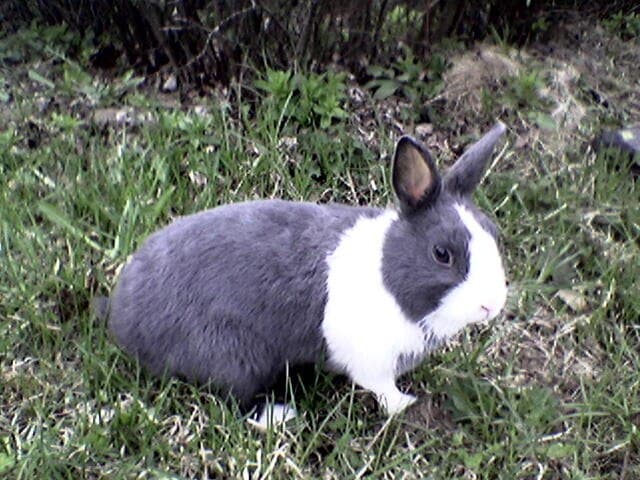
Source: Wikimedia Commons
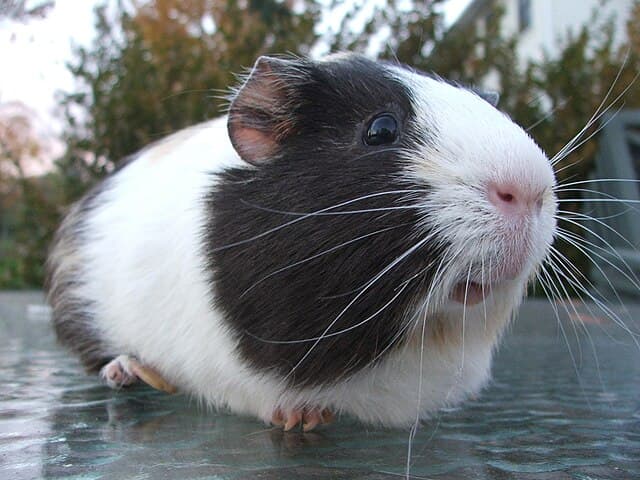
Dutch Rabbit
BeginnerClassic two-tone color pattern rabbit breed. Gentle and social temperament, great for families with children.
Schwierigkeit
Beginner
Temperatur
18〜26℃
Lebensdauer
5-8 years
Größe
30-35cm / 1.8-2.5kg
Luftfeuchtigkeit
40〜60%
Ernährung
Timothy hay (staple), pellets, vegetables
Über uns
The Dutch rabbit is one of the oldest and most recognizable domestic rabbit breeds, developed in the Netherlands in the 19th century. Adults measure 30–35 cm and weigh 1.8–2.5 kg. Their hallmark characteristic is the distinctive 'Dutch marking': a white blaze on the face, white front feet and forebody contrasting with a colored rear, creating a sharp bicolor pattern. Recognized color varieties include black, blue, chocolate, gray, steel, and tortoiseshell paired with white. Dutch rabbits are known for their calm, gentle temperament, making them well-suited for families with children and first-time rabbit owners. They require a cage of at least 60 cm width, daily exercise outside the cage, unlimited hay, and limited pellets supplemented with vegetables. Common health concerns include dental malocclusion, GI stasis, and uterine diseases in females. Lifespan is 8–12 years.
Grundinformationen
Herkunft
Netherlands
Lebensdauer
5-8 years
Größe
30-35cm / 1.8-2.5kg
Temperatur
18〜26℃
Luftfeuchtigkeit
40〜60%
Ernährung
Timothy hay (staple), pellets, vegetables
Pflegeanleitung
Pattern
Distinctive two-tone pattern. Each rabbit has unique markings
Temperament
Gentle and social. Good with children
Exercise
Active breed — daily free-roaming and ample space needed
Notes
Hearty appetite — portion control pellets carefully
Beginner-friendlyTwo-toneGentleFamily-friendly
Dutch Rabbit-FAQ
QWie schwierig ist es, Dutch Rabbit zu halten?
A
Beginner. Dies ist eine anfängerfreundliche Art. Es sind keine spezielle Ausrüstung oder Erfahrung erforderlich, und sie kann mit einer einfachen Pflegeeinrichtung erfolgreich gehalten werden.
QWas ist die ideale Temperatur für Dutch Rabbit?
A
Die ideale Temperatur für Dutch Rabbit ist 18〜26℃. Die empfohlene Luftfeuchtigkeit beträgt 40〜60%. Vermeiden Sie plötzliche Temperaturänderungen und halten Sie eine stabile Umgebung aufrecht.
QWie ist die Lebenserwartung von Dutch Rabbit?
A
Die durchschnittliche Lebensdauer von Dutch Rabbit beträgt 5-8 years. Bei richtiger Pflege und Ernährung können sie ein langes und gesundes Leben führen.
QWie groß wird Dutch Rabbit?
A
Dutch Rabbit erreicht als Erwachsener typischerweise 30-35cm / 1.8-2.5kg. Die Größe kann je nach Haltungsbedingungen und individueller Genetik variieren.
QWas sollte ich Dutch Rabbit füttern?
A
Dutch Rabbit ernährt sich von: Timothy hay (staple), pellets, vegetables. Streben Sie eine ausgewogene Ernährung mit angemessener Fütterungshäufigkeit an.
QWas ist der typische Preis für Dutch Rabbit?
A
Der Preis von Dutch Rabbit variiert erheblich je nach Morph, Größe und Abstammung. Überprüfen Sie unsere Marktpreisseite für aktuelle Preisinformationen.
Verwandte Arten
Angebote für diese Art finden
Small Animal-Angebote durchsuchenVerwandte Artikel
Rabbit Spay & Neuter Guide — Ideal Age, Cost & Post-Op Care
Comprehensive rabbit spay/neuter guide: ideal timing, cost estimates, surgical process, and post-operative care from a veterinary perspective.
Rabbit Spay & Neuter Guide — Benefits, Risks, Timing & Post-Op Care
Comprehensive guide to rabbit spaying and neutering: benefits, risks, optimal timing, pre-surgery preparation, and post-operative care.
Rabbit Brushing Complete Guide — Preventing Wool Block Through Proper Grooming
How to brush your rabbit: wool block prevention, breed-specific grooming frequency, essential tools, and handling reluctant rabbits.
Rabbit Litter Training Complete Guide — Steps to Success & Troubleshooting Mistakes
Step-by-step rabbit litter training guide covering litter box selection, placement, scent anchoring, and solving common accidents.