Source: Wikimedia Commons
Drosera Burmannii
BeginnerDrosera burmannii
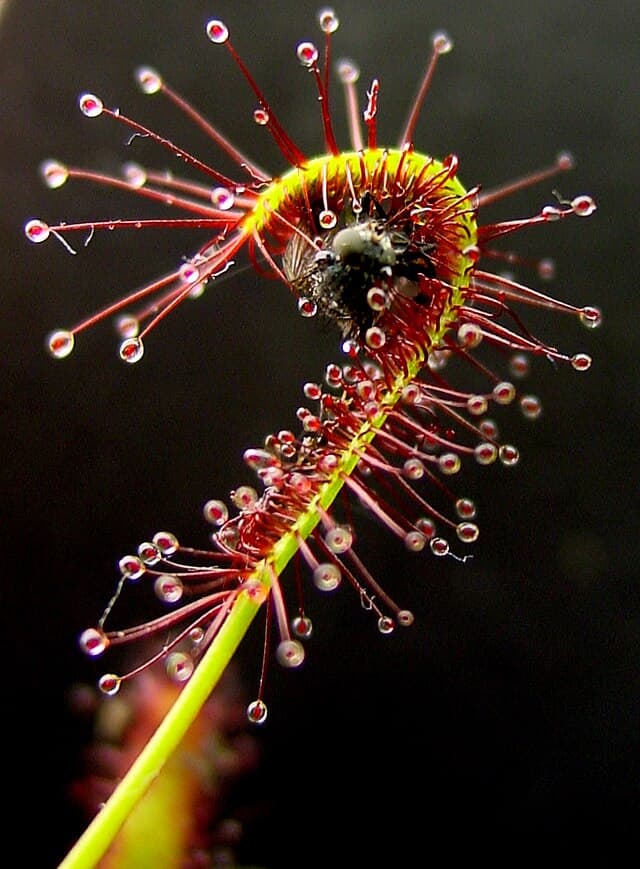
A sundew that captures insects very quickly, curling leaves in seconds. Sometimes annual.
Schwierigkeit
Beginner
Temperatur
10〜30℃
Lebensdauer
1-3 years
Größe
2-5cm
Luftfeuchtigkeit
60〜90%
Ernährung
Insects (auto-capture)
Über uns
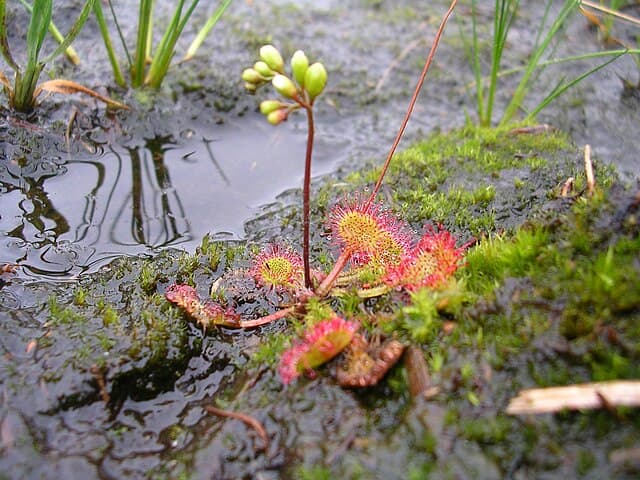
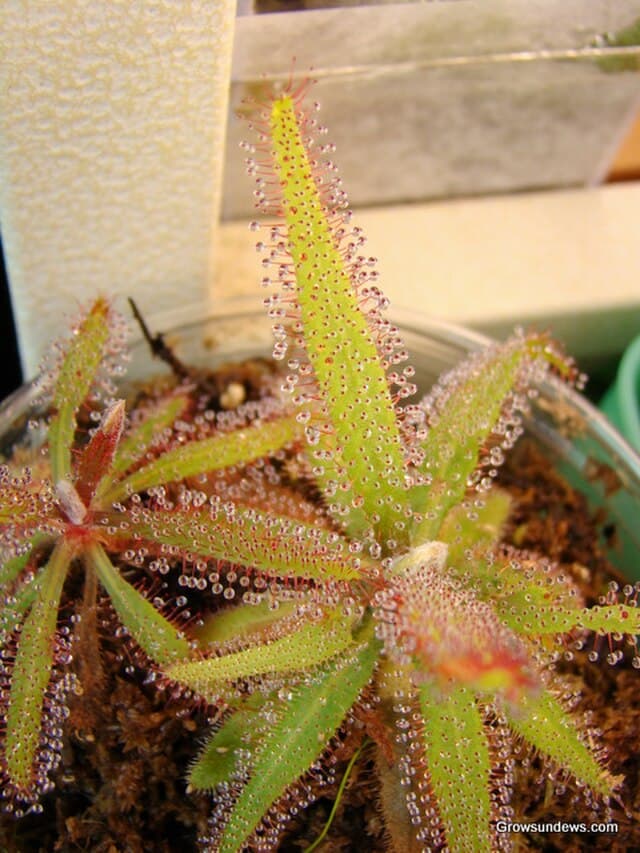
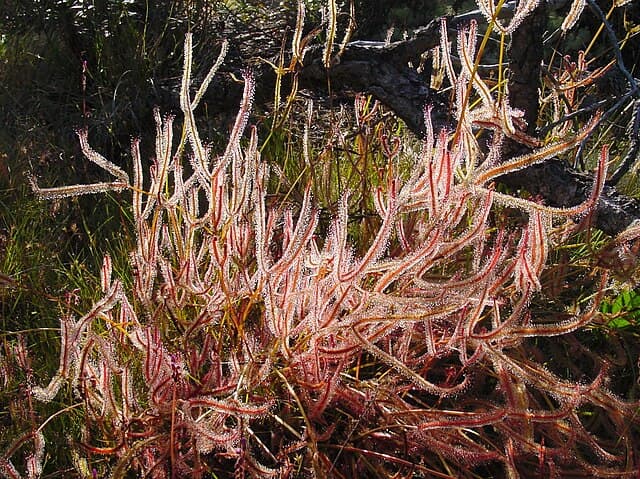
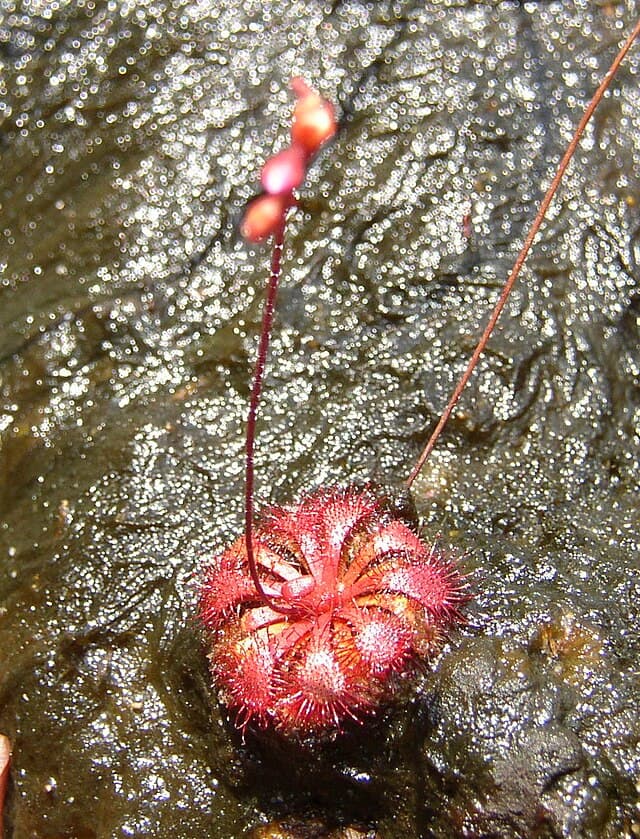
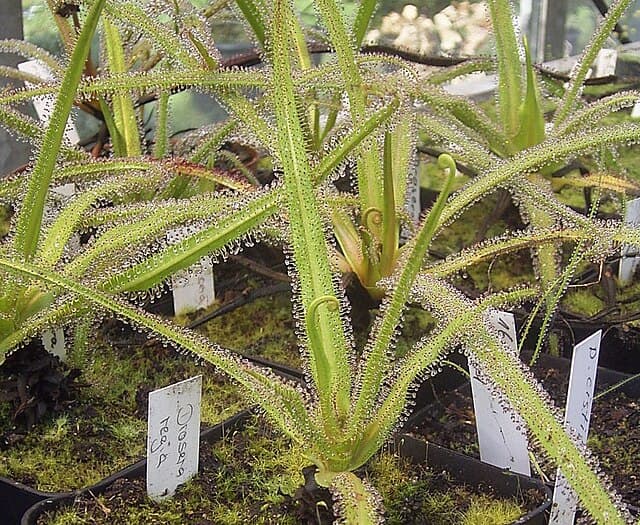
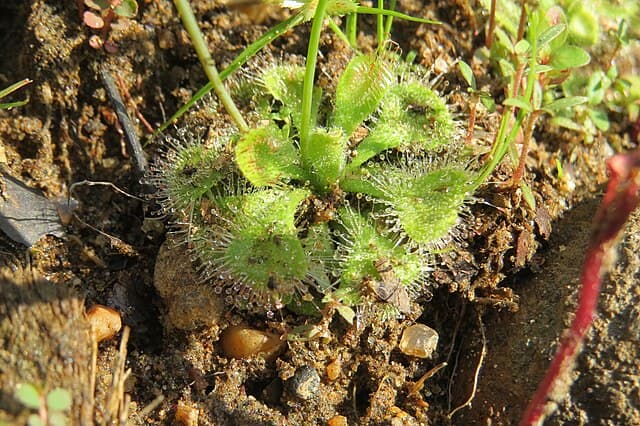
Drosera burmanni is a small, widespread sundew distributed from India across Southeast Asia to northern Australia, with records also from the Ryukyu Islands of Japan. It is notable for the remarkable speed of its tentacle response: unlike most sundews, which take hours to curl their tentacles around prey, D. burmanni can fold its leaf margin inward within seconds of insect contact—one of the fastest trap responses among sticky-trap carnivorous plants. The plant is commonly treated as an annual, completing its life cycle in a single season and relying on abundant seed production for persistence. It forms small rosettes with orange to red tentacles and thrives in nutrient-poor sphagnum or peat-perlite media with tray watering, full sun, and warm temperatures (20–35°C). Cold tolerance is minimal.
Grundinformationen
Herkunft
India, Southeast Asia, and northern Australia, moist grasslands and wetlands (also recorded in the Ryukyu Islands, Japan)
Lebensdauer
1-3 years
Größe
2-5cm
Temperatur
10〜30℃
Luftfeuchtigkeit
60〜90%
Ernährung
Insects (auto-capture)
Pflegeanleitung
Speed
Captures in seconds
Lifespan
May be annual
Seeds
Continue from seed
Watering
Tray watering
CarnivorousSundewFastAnnual
Drosera Burmannii-FAQ
QWie schwierig ist es, Drosera Burmannii zu halten?
A
Beginner. Dies ist eine anfängerfreundliche Art. Es sind keine spezielle Ausrüstung oder Erfahrung erforderlich, und sie kann mit einer einfachen Pflegeeinrichtung erfolgreich gehalten werden.
QWas ist die ideale Temperatur für Drosera Burmannii?
A
Die ideale Temperatur für Drosera Burmannii ist 10〜30℃. Die empfohlene Luftfeuchtigkeit beträgt 60〜90%. Vermeiden Sie plötzliche Temperaturänderungen und halten Sie eine stabile Umgebung aufrecht.
QWie ist die Lebenserwartung von Drosera Burmannii?
A
Drosera Burmannii Q&A
Angebote für diese Art finden