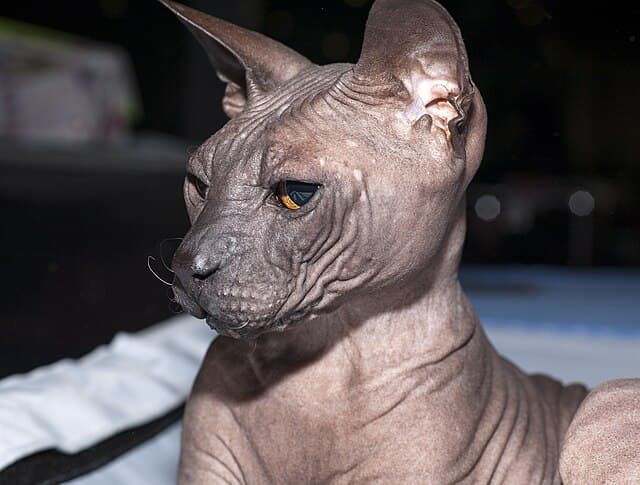
Source: Wikimedia Commons
Donskoy
AdvancedRussian hairless breed from Rostov-on-Don. Dominant hairless gene differs from Sphynx. Muscular with warm, soft skin.
ความยาก
Advanced
อุณหภูมิ
18〜28℃
อายุขัย
12-15 years
ขนาด
Weight 2.5-5kg
อาหาร
Cat food (complete nutrition)
เกี่ยวกับ
The Donskoy, also known as the Don Sphynx, is a hairless cat breed originating in Russia, discovered by Elena Kovaleva in Rostov-on-Don in 1987. Unlike the Canadian Sphynx, the Donskoy's hairlessness is caused by a dominant gene mutation, meaning hairless offspring can result from crossing a Donskoy with a coated cat. Donskoy cats have medium-sized, muscular bodies with wrinkled, warm skin. Their coat can range from completely hairless to a soft, brush-like fuzz, and some individuals grow a partial winter coat. They require regular bathing and warm environments. Donskoys are highly affectionate, social, and intelligent cats that dislike prolonged solitude.
ข้อมูลพื้นฐาน
แหล่งกำเนิด
Russia
อายุขัย
12-15 years
ขนาด
Weight 2.5-5kg
อุณหภูมิ
18〜28℃
อาหาร
Cat food (complete nutrition)
คู่มือการดูแล
Temperament
Affectionate and social. Craves attention, dislikes being alone
Exercise
Active and playful. Intellectual toys recommended for stimulation
Coat Care
Fully hairless to light fuzz. Baths 1-2 times weekly for oil management
Origin
Russia
HairlessAdvancedSocialMuscular
คำถามที่พบบ่อยDonskoy
Qการเลี้ยงDonskoyยากแค่ไหน?
A
Advanced. นี่เป็นสายพันธุ์ระดับสูง ต้องการอุปกรณ์เฉพาะทางและทักษะการเลี้ยงขั้นสูงพร้อมการควบคุมสภาพแวดล้อมที่แม่นยำ
Qอุณหภูมิที่เหมาะสมสำหรับDonskoyคือเท่าไร?
A
อุณหภูมิที่เหมาะสมสำหรับDonskoyคือ 18〜28℃ หลีกเลี่ยงการเปลี่ยนแปลงอุณหภูมิอย่างกะทันหันและรักษาสภาพแวดล้อมให้คงที่
QอายุขัยของDonskoyคือเท่าไร?
A
อายุขัยเฉลี่ยของDonskoyคือ 12-15 years ด้วยการดูแลและโภชนาการที่เหมาะสม พวกเขาสามารถมีชีวิตที่ยืนยาวและแข็งแรง
QDonskoyโตได้ขนาดเท่าไร?
A
Donskoyโดยทั่วไปจะโตได้ Weight 2.5-5kg เมื่อเป็นผู้ใหญ่ ขนาดอาจแตกต่างกันขึ้นอยู่กับสภาพการดูแลและพันธุกรรม
Qควรให้อาหารDonskoyอะไร?
A
Donskoyกินอาหาร: Cat food (complete nutrition) มุ่งเน้นอาหารที่สมดุลและความถี่ในการให้อาหารที่เหมาะสม
Qราคาทั่วไปของDonskoyคือเท่าไร?
A
ราคาของDonskoyแตกต่างกันอย่างมากขึ้นอยู่กับมอร์ฟ ขนาด และสายพันธุ์ ตรวจสอบหน้าราคาตลาดของเราสำหรับข้อมูลราคาล่าสุด
สายพันธุ์ที่เกี่ยวข้อง
ค้นหารายการสำหรับสายพันธุ์นี้
ดูรายการCatบทความที่เกี่ยวข้อง
Complete Beginner's Guide to Keeping a Cat
Everything beginners need to start keeping a cat: preparation, litter, feeding, indoor environment, and popular breed tips.
Top 10 Popular Cat Breeds Compared — Temperament, Size & Ease of Care
Detailed comparison of 10 popular cat breeds: temperament, size, shedding, affection level, and overall ease of keeping.
Complete Kitten Training Guide — Litter, Scratching & Socialization
Essential kitten training during the 2-4 month socialization window: litter box success, designated scratching spots, curbing biting, and early socialization.
Cat Health Checklist — Daily Observation Points & Warning Signs
How to perform daily health checks on your cat: eyes, ears, mouth, coat, urine output, and recognizing symptoms that require a vet visit.