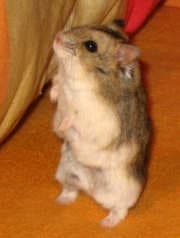
Source: Wikimedia Commons
Siberian Hamster
BeginnerSmall hamster from cold climates. Distinctive colors like sapphire blue and pearl. Hardy, cold-tolerant, and relatively easy to keep.
Dificuldade
Beginner
Temperatura
18〜26℃
Expectativa de vida
1.5-2.5 years
Tamanho
7-10cm / 30-45g
Umidade
40〜60%
Dieta
Hamster pellets, seeds, vegetables, grains
Sobre
The name 'Siberian hamster' is commonly applied in the pet trade to dwarf hamsters of the genus Phodopus native to Siberia and adjacent regions, most often the winter white dwarf hamster (P. sungorus) or Campbell's hamster (P. campbelli). Adults measure 7–10 cm and weigh 30–45 g. Originating in the cold steppes of Siberia, Russia, and Kazakhstan, these hamsters have adaptations for cold tolerance, including the ability to develop a whiter winter coat in response to shortened daylight hours. They are energetic and fast-moving, requiring a cage of at least 40 cm width with adequate ventilation and a wheel no smaller than 15 cm in diameter. Diet consists of dwarf hamster pellets supplemented with small amounts of fresh vegetables; sugary foods must be avoided due to susceptibility to diabetes. Optimal temperature is 18–25 °C; summer temperatures above 25 °C can be stressful. Common health concerns include neoplasia, diabetes mellitus, and dermatitis. Lifespan is 1.5–3 years.
Informações básicas
Origem
Siberia, Russia, and Kazakhstan
Expectativa de vida
1.5-2.5 years
Tamanho
7-10cm / 30-45g
Temperatura
18〜26℃
Umidade
40〜60%
Dieta
Hamster pellets, seeds, vegetables, grains
Guia de Cuidados
Cage
Cage 40cm+ wide. Ensure good ventilation
Temperature
Cold-tolerant but heat-sensitive. Keep below 25°C in summer
Temperament
Generally gentle but varies. Tame gradually for best results
Notes
Dwarf species has diabetes risk. Limit sunflower seeds
Beginner-friendlyCold-tolerantUnique colorsHardy
FAQ de Siberian Hamster
QQual a dificuldade de manter Siberian Hamster?
A
Beginner. Esta é uma espécie amigável para iniciantes. Não é necessário equipamento especial ou experiência, e pode ser mantida com sucesso com uma configuração básica de cuidados.
QQual é a temperatura ideal para Siberian Hamster?
A
A temperatura ideal para Siberian Hamster é 18〜26℃. A umidade recomendada é 40〜60%. Evite mudanças bruscas de temperatura e mantenha um ambiente estável.
QQual é a expectativa de vida de Siberian Hamster?
A
A expectativa de vida média de Siberian Hamster é 1.5-2.5 years. Com cuidados e nutrição adequados, podem viver uma vida longa e saudável.
QQual o tamanho que Siberian Hamster atinge?
A
Siberian Hamster normalmente atinge 7-10cm / 30-45g quando adulto. O tamanho pode variar dependendo das condições de cuidado e genética individual.
QO que devo alimentar Siberian Hamster?
A
Siberian Hamster se alimenta de: Hamster pellets, seeds, vegetables, grains. Busque uma dieta equilibrada com frequência de alimentação adequada.
QQual é o preço típico de Siberian Hamster?
A
O preço de Siberian Hamster varia significativamente dependendo do morfo, tamanho e linhagem. Consulte nossa página de preços de mercado para informações atualizadas.
Espécies relacionadas
Encontrar listagens desta espécie
Explorar listagens de Small AnimalArtigos relacionados
Hamster Escape Prevention & Safety — Cage Selection & Room Exploration
Preventing hamster escapes: secure cage selection, safe room exploration practices, and recapture methods if escape occurs.
Hamster Escape Prevention Guide — Causes, Cage Security & Recapture Methods
Preventing hamster escapes: why hamsters escape, cage-type security measures, search techniques, and safe recapture methods.
Hamster Genetics and Breeding: From Coat Color Gene Basics to the Mechanisms Behind Color Variation
A guide to coat color genetics in Djungarian and golden hamsters, and basic breeding strategies for developing color varieties.
Hamster Species Comparison Guide — Characteristics and Selection of Golden, Djungarian, and Roborovski
Comparing popular pet hamster species: Syrian, Djungarian, and Roborovski — personality, size, care difficulty, and how to choose the right type for your lifestyle.