Source: Wikimedia Commons
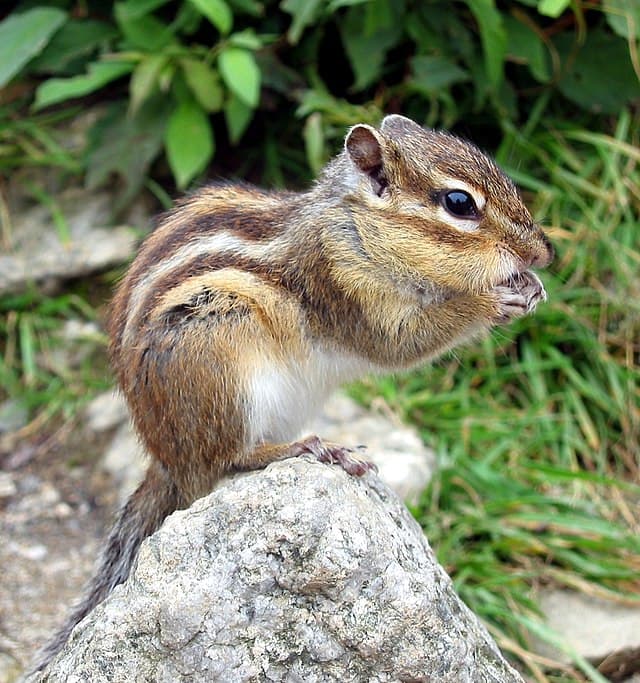
Siberian Chipmunk
AdvancedSiberian chipmunk
Small striped squirrel with beautiful back markings. Active and fast-moving, entertaining to watch. May become aggressive in autumn/winter.
Difficulté
Advanced
Température
18〜26℃
Durée de vie
6-10 years
Taille
12-15cm (25cm with tail) / 80-120g
Humidité
40〜60%
Régime alimentaire
Squirrel pellets, seeds, nuts, fruits, insects
À propos
Chipmunks are small, striped rodents of the family Sciuridae, found across North America (genus Tamias) and Eurasia (T. sibiricus, distributed across central Russia, China, and the Korean Peninsula). The Siberian chipmunk is the species most commonly kept as a pet in Europe and Japan. Adults measure 12–16 cm in body length with a bushy tail of similar length, and weigh 80–140 g. Their distinctive five black-and-white dorsal stripes are their most recognizable feature. In autumn, they fill their cheek pouches with food and store it in their burrows for winter. Wild instincts remain strong in captive chipmunks; they are generally better suited for observation than handling, though patient socialization can produce tamer individuals. Housing should be a spacious cage (minimum 60 cm width) with branches, a nest box, and burrowing substrate. They undergo seasonal torpor (hibernation) in winter. Diet is omnivorous: seeds, nuts, vegetables, and insects. Common health concerns include hibernation-related problems, parasites, and fractures from falls. Lifespan is 5–8 years.
Source: Wikipedia (CC BY-SA 4.0)
Informations de base
Origine
northern Asia from central Russia to China, Korea
Durée de vie
6-10 years
Taille
12-15cm (25cm with tail) / 80-120g
Température
18〜26℃
Humidité
40〜60%
Régime alimentaire
Squirrel pellets, seeds, nuts, fruits, insects
Guide d'entretien
Cage
Tall large cage with many climbing branches
Seasonal
Watch for aggressive 'tiger' behavior in autumn/winter
Diet
Omnivore. Loves walnuts and sunflower seeds but limit amounts
Notes
Master escapers. Check every gap. Strong bite force
AdvancedStripedActiveSeasonal temperament
FAQ Siberian Chipmunk
QQuelle est la difficulté de garder Siberian Chipmunk ?
A
Advanced. C'est une espèce de niveau avancé. Elle nécessite un équipement spécialisé et des compétences avancées en élevage avec un contrôle environnemental précis.
QQuelle est la température idéale pour Siberian Chipmunk ?
A
La température idéale pour Siberian Chipmunk est 18〜26℃. L'humidité recommandée est 40〜60%. Évitez les changements brusques de température et maintenez un environnement stable.
QQuelle est la durée de vie de Siberian Chipmunk ?
A
La durée de vie moyenne de Siberian Chipmunk est 6-10 years. Avec des soins et une alimentation appropriés, ils peuvent vivre longtemps en bonne santé.
QQuelle taille atteint Siberian Chipmunk ?
A
Siberian Chipmunk atteint généralement 12-15cm (25cm with tail) / 80-120g à l'âge adulte. La taille peut varier selon les conditions de soins et la génétique individuelle.
QQue dois-je donner à manger à Siberian Chipmunk ?
A
Siberian Chipmunk se nourrit de : Squirrel pellets, seeds, nuts, fruits, insects. Visez un régime équilibré avec une fréquence d'alimentation appropriée.
QQuel est le prix typique de Siberian Chipmunk ?
A
Le prix de Siberian Chipmunk varie considérablement selon le morph, la taille et la lignée. Consultez notre page de prix du marché pour les dernières informations.
Q&R sur Siberian Chipmunk
Espèces apparentées
Trouver des annonces pour cette espèce
Parcourir les annonces Small AnimalArticles connexes
Complete Beginner's Guide to Small Pet Keeping
Everything beginners need to start keeping small pets: species comparison, cage and bedding selection, feeding, temperature management, and preparation checklist.
Small Pet Cage Setup Guide — Optimal Layouts by Species
Species-specific cage setup guide for hamsters, rabbits, chinchillas, hedgehogs, and guinea pigs: sizing, bedding, accessories, and cleaning tips.
Small Pet Health Checklist — Daily Observation & Warning Signs
Daily health checklist for small pets: appetite, droppings, fur condition, behavior changes, choosing an exotic vet, and emergency first aid.
Summer & Winter Care for Small Pets — Keeping Safe Without AC
Seasonal care for small pets: preventing hamster torpor, rabbit heatstroke prevention, chinchilla summer management, and heater/cooling product recommendations.