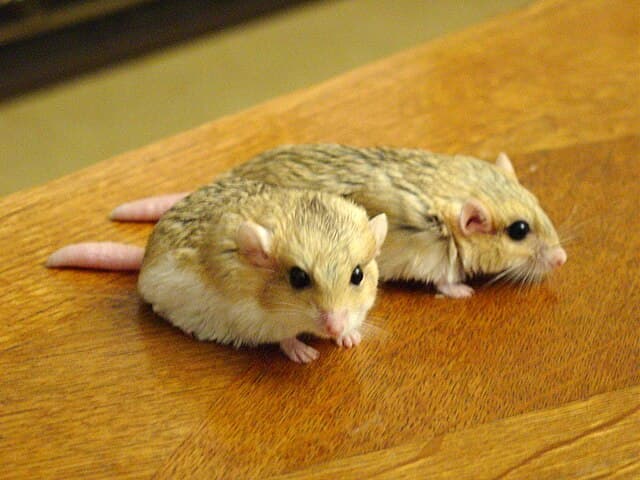
Source: Wikimedia Commons
Fat-tailed Gerbil
IntermediateGerbil with a distinctive fat, club-shaped tail. Also called Duprasi. Docile desert rodent that tames easily.
Dificultad
Intermediate
Temperatura
18〜26℃
Esperanza de vida
5-7 years
Tamaño
10-12cm / 40-60g
Humedad
40〜60%
Dieta
Gerbil pellets, seeds, dried vegetables, occasional insects
Acerca de
The fat-tailed gerbil (Pachyuromys duprasi), also known as the duprasi or bubble rat, is a small rodent native to the sandy deserts of North Africa, including Algeria, Morocco, and Tunisia. Adults measure 10–12 cm in body length and weigh 40–60 g. The defining feature is a short, club-shaped tail that stores fat reserves as an adaptation to desert food scarcity—analogous to the fat-tailed sheep or gecko. Compared to the Mongolian gerbil, fat-tailed gerbils are calmer and less prone to biting, making them relatively easy to handle. They are most active at dusk and dawn. Housing in a glass tank is recommended to prevent escapes and maintain the dry environment they prefer. A sand bath area and deep, diggable substrate should be provided. Diet consists of seed mix supplemented with small amounts of fresh vegetables; high-moisture foods should be limited. Optimal temperature is 20–26 °C. Common health concerns include neoplasia, dermatitis, and respiratory infections. Lifespan is 3–5 years.
Source: Wikipedia (CC BY-SA 4.0)
Información básica
Origen
North Africa (Algeria, Morocco, Tunisia)
Esperanza de vida
5-7 years
Tamaño
10-12cm / 40-60g
Temperatura
18〜26℃
Humedad
40〜60%
Dieta
Gerbil pellets, seeds, dried vegetables, occasional insects
Guía de cuidado
Cage
Glass tank type recommended. Provide sand bath area
Diet
Desert species — less water needed. Focus on dry foods
Temperament
Calm with slow movements. Easy to handle
Notes
Stores nutrition in tail. Thin tail indicates malnutrition
IntermediateFat tailDocileDesert species
Preguntas frecuentes de Fat-tailed Gerbil
Q¿Qué tan difícil es mantener Fat-tailed Gerbil?
A
Intermediate. Esta es una especie de nivel intermedio. Se recomienda algo de experiencia previa y conocimiento de gestión ambiental.
Q¿Cuál es la temperatura ideal para Fat-tailed Gerbil?
A
La temperatura ideal para Fat-tailed Gerbil es 18〜26℃. La humedad recomendada es 40〜60%. Evita cambios bruscos de temperatura y mantén un ambiente estable.
Q¿Cuál es la esperanza de vida de Fat-tailed Gerbil?
A
La esperanza de vida promedio de Fat-tailed Gerbil es 5-7 years. Con cuidados y nutrición adecuados, pueden vivir una vida larga y saludable.
Q¿Qué tamaño alcanza Fat-tailed Gerbil?
A
Fat-tailed Gerbil típicamente alcanza 10-12cm / 40-60g como adulto. El tamaño puede variar según las condiciones de cuidado y la genética individual.
Q¿Qué debo alimentar a Fat-tailed Gerbil?
A
Fat-tailed Gerbil se alimenta de: Gerbil pellets, seeds, dried vegetables, occasional insects. Apunta a una dieta equilibrada con una frecuencia de alimentación adecuada.
Q¿Cuál es el precio típico de Fat-tailed Gerbil?
A
El precio de Fat-tailed Gerbil varía significativamente según el morfo, tamaño y linaje. Consulta nuestra página de precios de mercado para información actualizada.
Preguntas sobre Fat-tailed Gerbil
Especies relacionadas
Buscar listados de esta especie
Explorar listados de Small AnimalArtículos relacionados
Complete Beginner's Guide to Small Pet Keeping
Everything beginners need to start keeping small pets: species comparison, cage and bedding selection, feeding, temperature management, and preparation checklist.
Small Pet Cage Setup Guide — Optimal Layouts by Species
Species-specific cage setup guide for hamsters, rabbits, chinchillas, hedgehogs, and guinea pigs: sizing, bedding, accessories, and cleaning tips.
Small Pet Health Checklist — Daily Observation & Warning Signs
Daily health checklist for small pets: appetite, droppings, fur condition, behavior changes, choosing an exotic vet, and emergency first aid.
Summer & Winter Care for Small Pets — Keeping Safe Without AC
Seasonal care for small pets: preventing hamster torpor, rabbit heatstroke prevention, chinchilla summer management, and heater/cooling product recommendations.