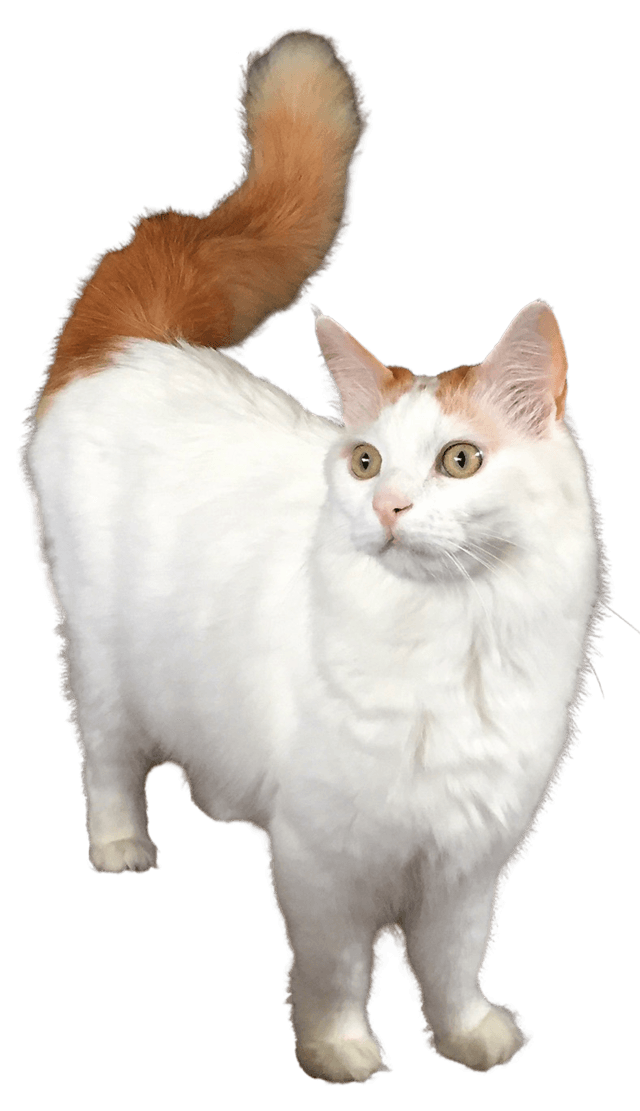
Source: Wikimedia Commons
Turkish Van
IntermediateUnique van pattern with color only on head and tail. 'Swimming cat' that loves water. Large and energetic.
Dificultad
Intermediate
Temperatura
18〜28℃
Esperanza de vida
12-17 years
Tamaño
Weight 3-8.5kg
Dieta
High-quality large-breed cat food.
Acerca de
The Turkish Van is a semi-long-haired, standardised breed of domestic cat, which was developed during the 1950s the United Kingdom from a selection of cats obtained from various cities of modern-day Turkey, especially southeast Turkey. This rare cat breed is one of the larger ones, and is distinguished by the Van pattern, where the colour is restricted to the head and the tail, and the rest of the cat is white; this is due to the expression of the white spotting gene, a type of partial leucism. A Turkish Van may have blue or orange eyes, or be odd-eyed.
Source: Wikipedia (CC BY-SA 4.0)
Información básica
Origen
Turkey (Lake Van region)
Esperanza de vida
12-17 years
Tamaño
Weight 3-8.5kg
Temperatura
18〜28℃
Dieta
High-quality large-breed cat food.
Guía de cuidado
Temperament
Active and energetic. Loves water; some play with faucets.
Exercise
Very active with high exercise needs. Provide water play opportunities.
Coat Care
Semi-long waterproof coat. Brush twice weekly.
Origin
Turkey (Lake Van area)
Notes
White cats risk deafness. Watch for HCM.
IntermediateWater-lovingVan patternLarge
Preguntas frecuentes de Turkish Van
Q¿Qué tan difícil es mantener Turkish Van?
A
Intermediate. Esta es una especie de nivel intermedio. Se recomienda algo de experiencia previa y conocimiento de gestión ambiental.
Q¿Cuál es la temperatura ideal para Turkish Van?
A
La temperatura ideal para Turkish Van es 18〜28℃. Evita cambios bruscos de temperatura y mantén un ambiente estable.
Q¿Cuál es la esperanza de vida de Turkish Van?
A
La esperanza de vida promedio de Turkish Van es 12-17 years. Con cuidados y nutrición adecuados, pueden vivir una vida larga y saludable.
Q¿Qué tamaño alcanza Turkish Van?
A
Turkish Van típicamente alcanza Weight 3-8.5kg como adulto. El tamaño puede variar según las condiciones de cuidado y la genética individual.
Q¿Qué debo alimentar a Turkish Van?
A
Turkish Van se alimenta de: High-quality large-breed cat food.. Apunta a una dieta equilibrada con una frecuencia de alimentación adecuada.
Q¿Cuál es el precio típico de Turkish Van?
A
El precio de Turkish Van varía significativamente según el morfo, tamaño y linaje. Consulta nuestra página de precios de mercado para información actualizada.
Especies relacionadas

Buscar listados de esta especie
Explorar listados de CatArtículos relacionados
Complete Beginner's Guide to Keeping a Cat
Everything beginners need to start keeping a cat: preparation, litter, feeding, indoor environment, and popular breed tips.
Top 10 Popular Cat Breeds Compared — Temperament, Size & Ease of Care
Detailed comparison of 10 popular cat breeds: temperament, size, shedding, affection level, and overall ease of keeping.
Complete Kitten Training Guide — Litter, Scratching & Socialization
Essential kitten training during the 2-4 month socialization window: litter box success, designated scratching spots, curbing biting, and early socialization.
Cat Health Checklist — Daily Observation Points & Warning Signs
How to perform daily health checks on your cat: eyes, ears, mouth, coat, urine output, and recognizing symptoms that require a vet visit.