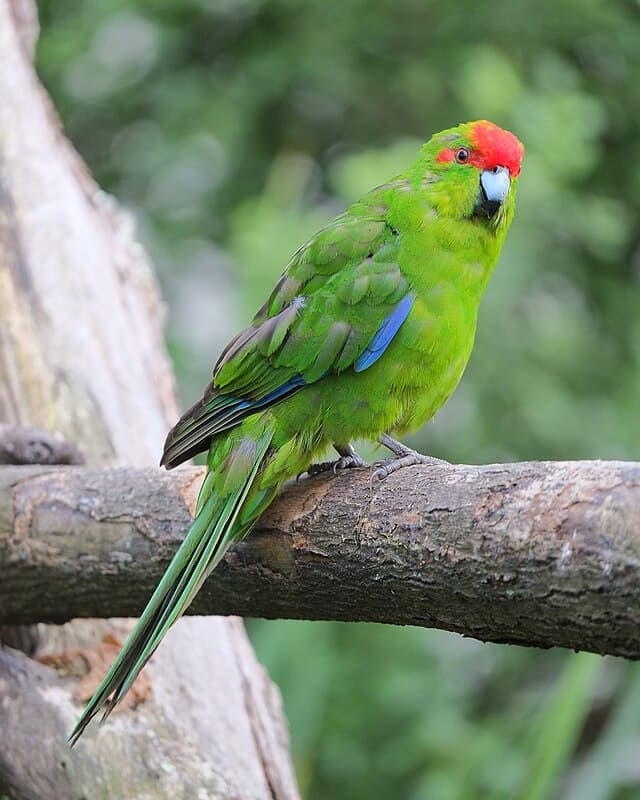
Source: Wikimedia Commons
Kakariki
BeginnerAn active parakeet from New Zealand. Unique ground-walking behavior and extremely curious personality.
Dificultad
Beginner
Temperatura
15〜30℃
Esperanza de vida
10-15 years
Tamaño
25-28cm
Humedad
40〜60%
Dieta
Seeds, Pellets, Vegetables, Fruits
Acerca de
The three species of kākāriki, or New Zealand parakeets, are the most common species of parakeets in the genus Cyanoramphus, family Psittaculidae. The most commonly used name kākāriki is Māori in origin meaning "small parrot"; it has also been used to refer to the colour green because of the birds' predominantly green plumage. The patches of red on the birds' rumps are, according to legend, the blood of the demigod Tāwhaki.
Source: Wikipedia (CC BY-SA 4.0)
Información básica
Origen
New Zealand
Esperanza de vida
10-15 years
Tamaño
25-28cm
Temperatura
15〜30℃
Humedad
40〜60%
Dieta
Seeds, Pellets, Vegetables, Fruits
Guía de cuidado
Notes
地面を歩き回るユニークな行動
Notes
非常に好奇心旺盛で活発
Notes
水浴びが大好き
Difficulty
噛む力は弱めで初心者向き
Breeding
繁殖力が強い
KakarikiNZ originGround walkerVery curious
Preguntas frecuentes de Kakariki
Q¿Qué tan difícil es mantener Kakariki?
A
Beginner. Esta es una especie amigable para principiantes. No requiere equipo especial ni experiencia, y puede mantenerse con éxito con una configuración de cuidado básica.
Q¿Cuál es la temperatura ideal para Kakariki?
A
La temperatura ideal para Kakariki es 15〜30℃. La humedad recomendada es 40〜60%. Evita cambios bruscos de temperatura y mantén un ambiente estable.
Q¿Cuál es la esperanza de vida de Kakariki?
A
La esperanza de vida promedio de Kakariki es 10-15 years. Con cuidados y nutrición adecuados, pueden vivir una vida larga y saludable.
Q¿Qué tamaño alcanza Kakariki?
A
Kakariki típicamente alcanza 25-28cm como adulto. El tamaño puede variar según las condiciones de cuidado y la genética individual.
Q¿Qué debo alimentar a Kakariki?
A
Kakariki se alimenta de: Seeds, Pellets, Vegetables, Fruits. Apunta a una dieta equilibrada con una frecuencia de alimentación adecuada.
Q¿Cuál es el precio típico de Kakariki?
A
El precio de Kakariki varía significativamente según el morfo, tamaño y linaje. Consulta nuestra página de precios de mercado para información actualizada.
Especies relacionadas
Buscar listados de esta especie
Explorar listados de BirdArtículos relacionados
How Much Does Bird Keeping Cost? Monthly Running Costs Explained
Monthly bird keeping costs by species — parakeets, cockatiels, Java sparrows — covering food, toys, cage supplies, and vet bills.
Pet Bird Lifespan — Tips for Longevity by Species
Pet bird lifespans from budgies to African greys, with diet, exercise, and mental health tips for longevity.
Summer Pet Bird Care — Heat Management Guide
Pet bird summer care: AC settings, avoiding direct sunlight, bathing frequency, and diet adjustments to prevent heat stroke.
Winter Pet Bird Care — Cold Weather Protection Guide
Winter pet bird care: heater selection and placement, insulating covers, and balancing ventilation with humidity in cold weather.