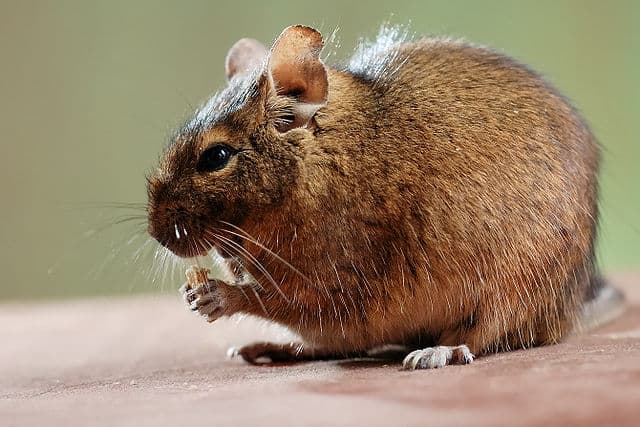
Source: Wikimedia Commons
Degu
IntermediateHighly intelligent and social rodent from Chile. Called the singing mouse of the Andes for its vocalizations. Diurnal and easy to bond with.
Schwierigkeit
Intermediate
Temperatur
18〜26℃
Lebensdauer
5-8 years
Größe
12-15cm (25cm with tail) / 170-300g
Luftfeuchtigkeit
40〜60%
Ernährung
Degu pellets, timothy hay, small amounts of vegetables
Über uns
The common degu (Octodon degus) is a small rodent native to the western slopes of the Andes in Chile, where it lives in large, complex social colonies. Adults measure 12–15 cm in body length with an additional tail length of 10–14 cm, and weigh 170–300 g. Degus are highly intelligent and vocal, with a rich repertoire of sounds for communication. They thrive in companionship and should be housed in pairs or small groups. The most critical dietary consideration is their extreme sensitivity to sugar: degus have a pancreatic structure that predisposes them to diabetes mellitus when given sugary foods. Fruits, sweet vegetables, and treats must be strictly avoided; diet should consist of timothy hay and degu-specific pellets. A notable biological defense mechanism is tail autotomy—the skin of the tail detaches easily if grabbed, so the tail must never be held. Daily dust baths are required. Optimal temperature is 18–24 °C. Common health concerns include diabetes, cataracts, and neoplasia. Lifespan is 6–8 years.
Grundinformationen
Herkunft
Chile (western Andes)
Lebensdauer
5-8 years
Größe
12-15cm (25cm with tail) / 170-300g
Temperatur
18〜26℃
Luftfeuchtigkeit
40〜60%
Ernährung
Degu pellets, timothy hay, small amounts of vegetables
Pflegeanleitung
Diet
Extremely susceptible to diabetes. No fruits or sugary vegetables
Sociality
Highly social. Keeping in groups is strongly recommended
Cage
Tall multi-level cage. Provide dust bath area and exercise wheel
Notes
Never grab the tail — it deglobes. Diurnal so matches human schedule
IntermediateIntelligentSocialDiurnal
Degu-FAQ
QWie schwierig ist es, Degu zu halten?
A
Intermediate. Dies ist eine Art mittleren Schwierigkeitsgrades. Etwas Vorerfahrung und Kenntnisse im Umgebungsmanagement werden empfohlen.
QWas ist die ideale Temperatur für Degu?
A
Die ideale Temperatur für Degu ist 18〜26℃. Die empfohlene Luftfeuchtigkeit beträgt 40〜60%. Vermeiden Sie plötzliche Temperaturänderungen und halten Sie eine stabile Umgebung aufrecht.
QWie ist die Lebenserwartung von Degu?
A
Degu Q&A
Angebote für diese Art finden