Source: Wikimedia Commons
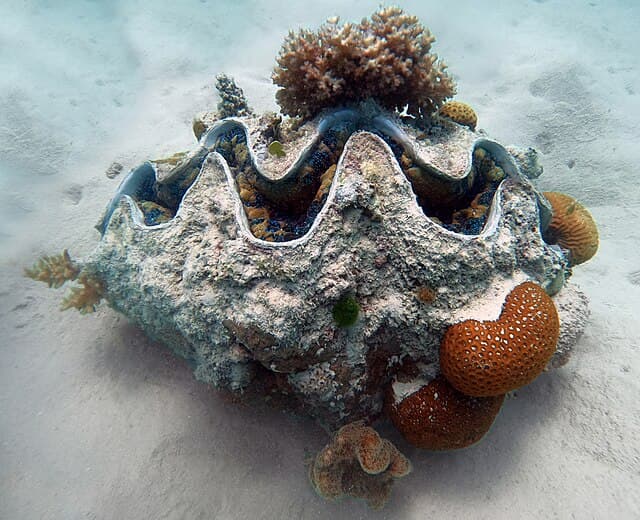
Giant Clam
IntermediateTridacna sp.
Bivalve with brilliantly colored mantle. Photosynthetic and requires strong lighting. Jewel of the reef tank.
Schwierigkeit
Intermediate
Temperatur
24〜27℃
Lebensdauer
10+ years with proper care
Größe
5-30cm (varies by species)
Ernährung
Primarily photosynthesis + trace elements
Über uns
Giant clams (genus Tridacna) are the world's largest bivalve molluscs, housing symbiotic zooxanthellae in their iridescent mantles to derive most of their nutrition from photosynthesis. Native to shallow reefs of the Indo-Pacific, Tridacna gigas can reach 1.2 m in length and 200 kg. Mantle coloration spans electric blues, greens, golds, purples, and browns, making giant clams prized display animals. Successful husbandry demands intense lighting (300–500+ PAR) and stable reef chemistry—calcium 400–450 ppm, alkalinity 7–11 dKH, and magnesium above 1280 ppm. Starting with juveniles (3–5 cm) eases acclimatization; large specimens are placed directly on the tank floor.
Source: Wikipedia (CC BY-SA 4.0)
Grundinformationen
Herkunft
shallow tropical reefs of the Indo-Pacific
Lebensdauer
10+ years with proper care
Größe
5-30cm (varies by species)
Temperatur
24〜27℃
Ernährung
Primarily photosynthesis + trace elements
Pflegeanleitung
Lighting
Strong lighting essential (metal halide or powerful LED)
Water Quality
Ca 400-450ppm, KH 7-11 required
Placement
Upper tank where light is strongest
Growth
Slow but steady growth
Notes
Do not forcibly detach byssal threads
BivalvePhotosyntheticColorfulStrong light needed
Giant Clam-FAQ
QWie schwierig ist es, Giant Clam zu halten?
A
Intermediate. Dies ist eine Art mittleren Schwierigkeitsgrades. Etwas Vorerfahrung und Kenntnisse im Umgebungsmanagement werden empfohlen.
QWas ist die ideale Temperatur für Giant Clam?
A
Die ideale Temperatur für Giant Clam ist 24〜27℃. Vermeiden Sie plötzliche Temperaturänderungen und halten Sie eine stabile Umgebung aufrecht.
QWie ist die Lebenserwartung von Giant Clam?
A
Die durchschnittliche Lebensdauer von Giant Clam beträgt 10+ years with proper care. Bei richtiger Pflege und Ernährung können sie ein langes und gesundes Leben führen.
Giant Clam Q&A
Angebote für diese Art finden