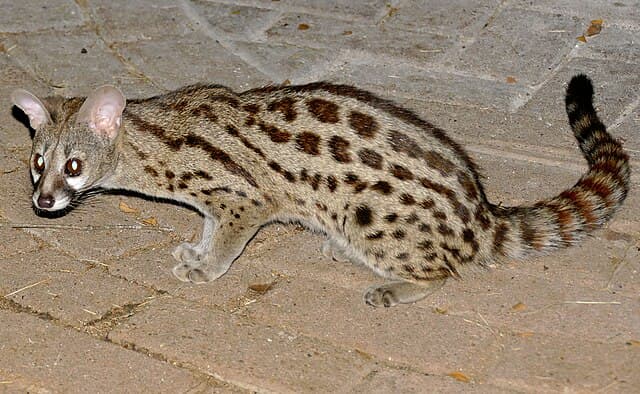
Source: Wikimedia Commons
Genetta
IntermediateNew breed resembling a Genet. Short legs and wild spotted pattern are its hallmarks.
Schwierigkeit
Intermediate
Temperatur
18〜28℃
Lebensdauer
12-16 years
Größe
2-4kg
Ernährung
Dry food, high protein recommended
Über uns
The Genetta is a designer breed developed in the United States around 2006 by breeder Frank Stranges, intended to resemble the African genet (a small, spotted wild mammal). The breed was created by crossing Savannahs, Bengals, Munchkins, and domestic shorthaired cats to combine a slender, elongated body, spotted coat, and short legs. The Genetta is not recognized by major cat registries and is considered an experimental breed. They are active, curious, and sociable cats with a playful temperament. Health considerations include the skeletal implications of the short-leg mutation and the various hereditary risks associated with its mixed ancestry.
Source: Wikipedia (CC BY-SA 4.0)
Grundinformationen
Herkunft
United States
Lebensdauer
12-16 years
Größe
2-4kg
Temperatur
18〜28℃
Ernährung
Dry food, high protein recommended
Pflegeanleitung
Temperament
Active, curious, playful
Exercise
Active indoor play
Coat Care
Short coat, easy maintenance
Origin
United States
Notes
Extremely rare, choose a reputable breeder
Small catShort-leggedWild patternRare breed
Genetta-FAQ
QWie schwierig ist es, Genetta zu halten?
A
Intermediate. Dies ist eine Art mittleren Schwierigkeitsgrades. Etwas Vorerfahrung und Kenntnisse im Umgebungsmanagement werden empfohlen.
QWas ist die ideale Temperatur für Genetta?
A
Die ideale Temperatur für Genetta ist 18〜28℃. Vermeiden Sie plötzliche Temperaturänderungen und halten Sie eine stabile Umgebung aufrecht.
QWie ist die Lebenserwartung von Genetta?
A
Die durchschnittliche Lebensdauer von Genetta beträgt 12-16 years. Bei richtiger Pflege und Ernährung können sie ein langes und gesundes Leben führen.
QWie groß wird Genetta?
A
Genetta erreicht als Erwachsener typischerweise 2-4kg. Die Größe kann je nach Haltungsbedingungen und individueller Genetik variieren.
QWas sollte ich Genetta füttern?
A
Genetta ernährt sich von: Dry food, high protein recommended. Streben Sie eine ausgewogene Ernährung mit angemessener Fütterungshäufigkeit an.
QWas ist der typische Preis für Genetta?
A
Der Preis von Genetta variiert erheblich je nach Morph, Größe und Abstammung. Überprüfen Sie unsere Marktpreisseite für aktuelle Preisinformationen.
Genetta Q&A
Verwandte Arten

Angebote für diese Art finden
Cat-Angebote durchsuchenVerwandte Artikel
Complete Beginner's Guide to Keeping a Cat
Everything beginners need to start keeping a cat: preparation, litter, feeding, indoor environment, and popular breed tips.
Top 10 Popular Cat Breeds Compared — Temperament, Size & Ease of Care
Detailed comparison of 10 popular cat breeds: temperament, size, shedding, affection level, and overall ease of keeping.
Complete Kitten Training Guide — Litter, Scratching & Socialization
Essential kitten training during the 2-4 month socialization window: litter box success, designated scratching spots, curbing biting, and early socialization.
Cat Health Checklist — Daily Observation Points & Warning Signs
How to perform daily health checks on your cat: eyes, ears, mouth, coat, urine output, and recognizing symptoms that require a vet visit.