Source: Wikimedia Commons
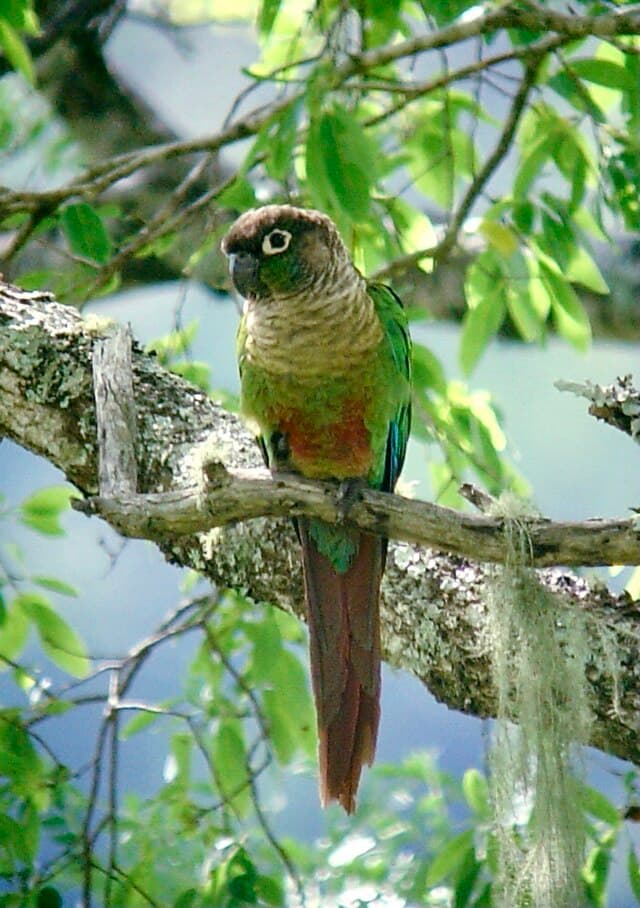
Green Cheek Conure
BeginnerA popular conure with big personality in small body. Affectionate and mischievous, relatively quiet.
Schwierigkeit
Beginner
Temperatur
15〜30℃
Lebensdauer
20-30 years
Größe
25-26cm
Luftfeuchtigkeit
40〜60%
Ernährung
Pellets, Seeds, Vegetables, Fruits
Über uns
The green-cheeked conure, or green-cheeked parakeet, is a small parrot of the genus Pyrrhura, native to the forests of western-central South America, including Argentina, Bolivia, Brazil, and Paraguay. It is a popular pet bird, prized for its playful and affectionate nature. Compared to other conures, it is relatively quiet, making it more suitable for apartment dwellers. Numerous colour mutations have been developed in aviculture.
Grundinformationen
Herkunft
Argentina, Bolivia, Brazil, and Paraguay
Lebensdauer
20-30 years
Größe
25-26cm
Temperatur
15〜30℃
Luftfeuchtigkeit
40〜60%
Ernährung
Pellets, Seeds, Vegetables, Fruits
Pflegeanleitung
Housing
Medium cage with daily out-of-cage time
Diet
Varied diet with pellets as staple
Temperament
Affectionate and mischievous
Notes
Bite training important
Green CheekAffectionateMischievousConure
Green Cheek Conure-FAQ
QWie schwierig ist es, Green Cheek Conure zu halten?
A
Beginner. Dies ist eine anfängerfreundliche Art. Es sind keine spezielle Ausrüstung oder Erfahrung erforderlich, und sie kann mit einer einfachen Pflegeeinrichtung erfolgreich gehalten werden.
QWas ist die ideale Temperatur für Green Cheek Conure?
A
Die ideale Temperatur für Green Cheek Conure ist 15〜30℃. Die empfohlene Luftfeuchtigkeit beträgt 40〜60%. Vermeiden Sie plötzliche Temperaturänderungen und halten Sie eine stabile Umgebung aufrecht.
QWie ist die Lebenserwartung von Green Cheek Conure?
A
Die durchschnittliche Lebensdauer von Green Cheek Conure beträgt 20-30 years. Bei richtiger Pflege und Ernährung können sie ein langes und gesundes Leben führen.
QWie groß wird Green Cheek Conure?
A
Green Cheek Conure erreicht als Erwachsener typischerweise 25-26cm. Die Größe kann je nach Haltungsbedingungen und individueller Genetik variieren.
QWas sollte ich Green Cheek Conure füttern?
A
Green Cheek Conure ernährt sich von: Pellets, Seeds, Vegetables, Fruits. Streben Sie eine ausgewogene Ernährung mit angemessener Fütterungshäufigkeit an.
QWas ist der typische Preis für Green Cheek Conure?
A
Der Preis von Green Cheek Conure variiert erheblich je nach Morph, Größe und Abstammung. Überprüfen Sie unsere Marktpreisseite für aktuelle Preisinformationen.
Verwandte Arten
Angebote für diese Art finden
Bird-Angebote durchsuchenVerwandte Artikel
Conure Care Guide
Care guide for conures including green-cheek and sun conures: personality traits, noise levels, diet recommendations, enrichment needs, and building a strong bond through daily interaction.
Green Water Guide for Medaka — How to Make & Use It Effectively
Guide to green water for medaka: benefits, three preparation methods, concentration management, and precautions.
Growing Nepenthes Without a Greenhouse — Indoor Pitcher Formation
Growing Nepenthes indoors without a greenhouse: pitcher formation tips, humidity solutions, species selection, and winter care.
Mini Greenhouse for Carnivorous Plants: Types, Environment & Equipment Guide
Beginner's guide to growing carnivorous plants in mini greenhouses and terrariums: types, humidity/temperature control, and lighting for Nepenthes, Sarracenia, and Drosera.